AI Energy Myth Exposes Power Reality: The Silicon Power Quicksand

The Power Arbitrage: How Silicon’s Energy Quicksand Is Forcing a Crypto Infrastructure Metamorphosis
Silicon's insatiable energy appetite has transformed energized grid access into the ultimate modern asset class.

While the human brain operates on a modest 20 watts, frontier artificial intelligence facilities draw tens of millions of watts, exposing a critical bottleneck in digital expansion. The baseline energy cost for a single standard AI query sits around 0.31 watt-hours, but complex reasoning models consume exponentially more. With global data center electricity consumption reaching 485 terawatt-hours in 2025 and AI-focused demand surging by 50% year-over-year, the primary constraint on technological scale has officially shifted from silicon availability to megawatt access.
🔌 Grid Access Replaces Microchips as the Apex Bottleneck
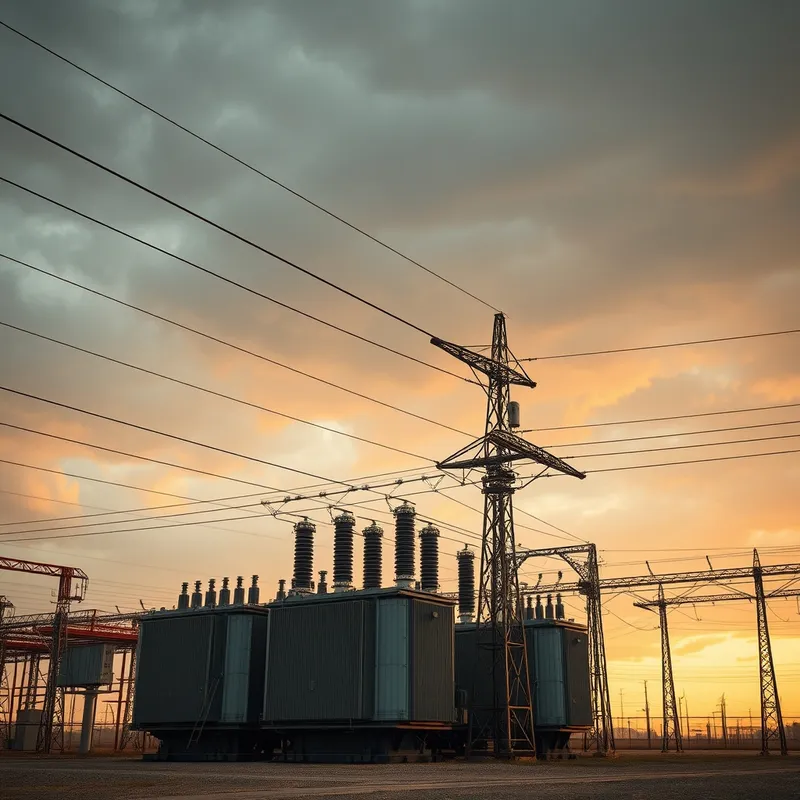
When evaluating macro liquidity cycles, institutional capital naturally flows toward the narrowest structural bottleneck. In the current paradigm, chip production capacity has been surpassed by pure power availability. Grid operators are experiencing historic backlogs, with the median duration between an interconnection request and commercial operation stretching beyond five years. Hyperscalers currently find themselves holding massive inventories of advanced graphics processors that remain unpluggable simply because the underlying power infrastructure does not exist.
This reality has triggered a structural repricing of energy rights. Building a greenfield data center facility from scratch requires significantly higher capital deployment and years of administrative delays compared to retrofitting existing industrial sites. Consequently, market dynamics now heavily favor entities that spent the last decade securing physical power allocations, interconnect agreements, and substation access.

"Capital stretches far more easily than local power grids can transform."
⚙️ The Great Mining Realignment and Capital Reallocation
Bitcoin network validators have spent years systematically acquiring and developing high-density electrical infrastructure across remote jurisdictions. What was once viewed by traditional finance as a single-purpose speculation vehicle has overnight become the premier pipeline for high-performance compute hosting. The valuation metrics for proof-of-work entities are decoupling from underlying asset block rewards and attaching to energized capacity ratios.
However, the execution path is far from seamless. While major mining firms have announced massive multi-billion-dollar hosting commitments, the actual capacity switched on and delivering compute remains a small fraction of total contracted energy. Retrofitting facilities designed for flexible, interruptible loads into hyper-reliable, water-cooled environments requires intense capital outlays, as evidenced by recent quarterly operating losses across top-tier public miners attempting the transition.
The operational divide between legacy token mining and compute hosting is vast. Proof-of-work mining tolerates dynamic power throttling, whereas high-performance enterprise workloads demand constant uptime, extreme rack density, and immediate fiber interconnectivity. What this signals is a structural bifurcation: only a elite fraction of existing digital asset mining sites possess the physical parameters necessary to execute a successful infrastructure pivot.

🏛️ The 1880s Railroad Rights-of-Way Playbook
To understand the current land grab for power interconnections, one must analyze the expansion of American transcontinental railroads in the late 19th century. During the late 1880s, corporate entities did not extract their primary long-term enterprise value merely from hauling cargo; they derived it from holding non-replicable physical rights-of-way, land grants, and telegraph conduit lines. When industrial demand shifted, those holding established physical pathways monetized them at astronomical markups while pure transport operators faced margin compression.
In my view, the current power infrastructure race is a direct mirror of that historical real estate dynamic. Digital asset miners holding active power purchase agreements are acting as modern right-of-way holders, selling access to hyper-scarce grid real estate. Strip away the corporate messaging, and this is not a technological pivot—it is a pure real estate arbitrage play executed under severe macro supply constraints.
The lesson from the 19th-century infrastructure boom is clear: companies that over-leveraged to acquire remote, un-energized land collapsed, while those controlling dense, connected corridors secured multi-decade cash flows. The uncomfortable reading of current market dynamics is that miners holding long-dated power contracts without immediate energization capabilities risk burning cash before their grid connections ever materialize.
| Competing Force | The Irreconcilable Friction |
|---|---|
| Hyperscale AI Tenants vs Pure Mining Operations | 💱 Trading flexible interruptible energy for inflexible firm capacity guarantees. |
| Legacy Electrical Grids vs High-Density Compute Demand | Five-year interconnection delays colliding with immediate capital deployment demands. |
| Neuromorphic R&D vs Commodity GPU Silicon | Lack of production-ready software ecosystems halting alternative hardware scaling. |
🔮 The Thermodynamic Ceiling and Alternative Architectures
Given this structural grid congestion, hardware engineering teams are aggressively seeking algorithmic and structural workarounds. Biological brain efficiency relies heavily on sparse activation patterns and unified memory-compute locations, contrasting sharply with traditional digital hardware where transferring data from separate memory modules consumes vast orders of magnitude more energy than calculations themselves.
While software models are successfully reducing active parameters per execution pass, hardware built specifically to emulate biological neural structures has repeatedly failed to achieve production scale. Specialist chip ventures and experimental neuromorphic systems remain trapped in research loops due to a classic chicken-and-egg dilemma: commercial software developers will not build applications for non-standard architectures without deployable hardware, and chipmakers cannot finance mass production without an existing enterprise customer base.
"Efficiency gains do not reduce aggregate consumption; they simply expand total demand."
The market is approaching a firm multi-year infrastructure divide. Firms capable of energizing high-density sites within 18 months will capture structural monopoly rents. Equity valuations for infrastructure operators will increasingly mirror utility assets rather than high-beta digital asset sentiment.
⚡ Interconnection Queue: The formal administrative and physical line established by power grid operators to evaluate and approve new high-voltage electrical connections.
🧠 Neuromorphic Computing: Hardware architecture designed to mimic biological neural structures by combining memory and processing into unified physical nodes.
🏢 Colocation: A data center business model where an infrastructure owner provides power, space, and cooling while clients supply their own computing hardware.
- If grid queue delays exceed 60 months regionally → capital shifts heavily toward pre-energized retrofitted infrastructure balance sheets.
- If quarterly miner hosting conversion capital outlays exceed operating revenues → balance sheets face structural dilution threats.
- If colocation revenue percentage crosses 75% of gross operational yield → re-rate equity valuation as pure infrastructure.
— Yogi Berra
This analysis is synthesized from aggregated market data and institutional research insights. It is provided for informational purposes only and should not be construed as financial advice. Cryptocurrency investments carry high risk; please conduct your own due diligence before making any investment decisions.
Related Intelligence

US Treasury debt absorbs cash supply: Sovereign Liquidity Vacuum

Delaware Life hides shadow debt risk: Private Credit Fault Line

IREN debt fuels costly AI transition: The $3B Capital Drag

Nvidia Earnings Expose Market Fatigue: The Valuation Fissure

ECB Seizes Control of Euro Settlement: The Sovereign Override