Apple CEO Shift Exposes Hardware Risk: The Hardware Margin Reset

The Hardware Margin Reset: Apple’s Leadership Shift Exposes Structural AI and Supply Chain Realities
Silicon Valley's premier consumer ledger is trading product mastery for operational defense.

The operational guard at Big Tech's largest capital anchor has officially rotated. John Ternus steps into the chief executive role following Tim Cook's 15-year tenure transition to executive chairman, taking the helm alongside major structural shifts in product governance as marketing veteran Phil Schiller abdicates direct oversight of event production and ecosystem monetization.
📱 Legacy Cash Flows Meet Capital-Intensive Intelligence Shifts
Every tech hardware supercycle eventually encounters a cost wall. What begins as an unmatched ecosystem lock-in eventually faces the reality of physical component cost inflation and shifting user capture dynamics.
While public sentiment remains focused on consumer artificial intelligence integration, the fundamental engine funding this transition remains device throughput. Recent quarterly print data highlighted a revenue acceleration of roughly 21% within core device sales, driving broader public equity performance up roughly 37% over the trailing twelve months. However, the cost of maintainable hardware margins is rising sharply due to component inflation, specifically memory silicon.
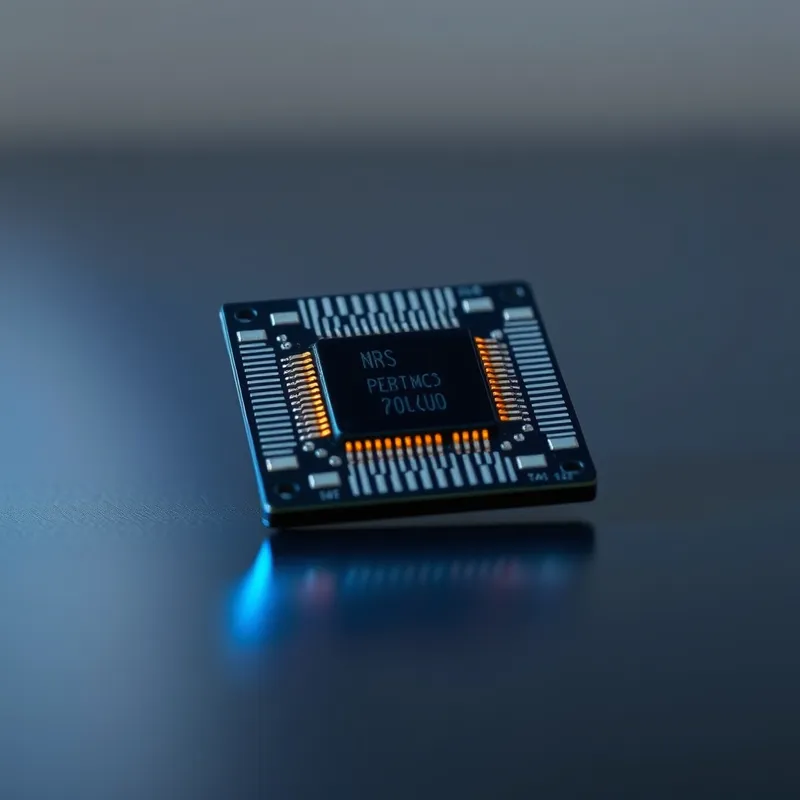
"Outsourcing the intelligence layer while absorbing physical component cost inflation creates a structural squeeze on gross hardware margins."
To navigate this pressure, operational leadership is leaning on external model partnerships—including deep integration with Google’s Gemini framework—to power native assistant upgrades. This strategic dependence highlights a critical industry paradox: hardware gatekeepers are forced to outsource high-margin software intelligence while absorbing physical supply chain inflation.
📉 Market Microstructure and Equity Liquidity Mechanics
Given this strategic tension, institutional capital flows are reacting with immediate risk recalibration. Equity valuations experienced localized downside pressure during active trading, touching intraday lows around the $313 level before settling near $316.85—reflecting a 0.89% single-session pull-back from the previous close near $319.70.
This localized volatility occurs while the broader market cap remains slightly beneath the historic milestone recorded when total market valuation flirted with the $5 trillion mark during mid-summer trading. The failure to instantly push through this capitalization ceiling reveals an institutional market hesitant to grant premium software multiples to companies acting as distribution conduits for third-party AI models.

Here is what the market is missing: the transition of App Store operational oversight to services chief Eddy Cue signals an aggressive attempt to extract higher yield from existing platform fees. If physical device gross margins compress due to memory costs, ecosystem tollbooths must make up the deficit.
⚙️ The Microsoft 2000 Transition Mechanics
To understand the structural crosscurrents of this executive shift, capital allocators must look beyond modern tech narratives and analyze structural historical parallels within enterprise technology cycles.
Consider the transition of executive power at Microsoft in January 2000, when enterprise computing dominance gave way to anti-trust scrutiny and a multi-year stagnation in capital efficiency. Much like today's hardware optimization challenges, legacy monopolies struggled to monetize early web infrastructure while managing hyper-inflated market capitalizations. The resulting decade required massive operational restructuring before cloud services revived gross margin expansion.
The uncomfortable reading of this moment is that corporate handoffs occurring at record market valuations often signal the peak of an operational regime. In my view, this executive re-alignment represents a classic corporate defensive posture—installing engineering-focused leadership to maintain manufacturing discipline while legal and services veterans fortify revenue streams against regulatory erosion.

| Competing Force | The Irreconcilable Friction |
|---|---|
| Hardware Engineering Unit vs. Component Vendors | Absorbing rising memory chip costs without destroying consumer price elasticity. |
| Platform Tollbooth vs. External AI Partners | Surrendering direct model ownership to third parties while attempting to capture API yield. |
| 🏢 Legacy Executive Bench vs. Growth Institutional Capital | Protecting $5T valuation expectations using defensive cost-cutting instead of breakthrough hardware categories. |
🔮 Forward Trajectory: Hardware Form Factors and AI Integration
If this historical precedent of margin pressure holds true, the immediate impact on global capital allocation will pivot entirely on hardware innovation catalysts. The market's attention now turns directly to upcoming product showcases where next-generation form factors, including foldable screen architectures, will face market validation.
From a macro liquidity standpoint, digital asset markets and equity ecosystems are linked through tech-sector capital flows. When mega-cap tech equities experience margin compression, institutional liquidity often rotates into alternative high-beta assets or decentralized compute infrastructure protocols that bypass traditional corporate gatekeepers.
The market is currently treating hardware leadership shifts as routine governance. However, the structural necessity to outsource core artificial intelligence engines to external cloud providers exposes a long-term risk to platform lock-in. Investors should prepare for a medium-term repricing of hardware gross margins as semiconductor supply chains remain tight.
⚖️ Memory Margin Squeeze: The economic pressure exerted on hardware manufacturers when DRAM and NAND flash memory component costs rise faster than retail consumer pricing power.
⚖️ Platform Capture Arbitrage: The strategic extraction of service fees from third-party applications to offset declining gross profit margins on physical device sales.
- If gross hardware margins drop below key historical thresholds → this signals a shift toward defensive infrastructure re-allocation.
- If DRAM memory spot prices surge past multi-year highs → operational earnings risks elevate across consumer hardware sectors.
- If third-party model licensing fees scale linearly with user active addresses → platform services margin expectations face immediate downward pressure.
— — coin24.news Editorial
This analysis is synthesized from aggregated market data and institutional research insights. It is provided for informational purposes only and should not be construed as financial advice. Cryptocurrency investments carry high risk; please conduct your own due diligence before making any investment decisions.
Related Intelligence

Bitcoin Surges Amid Rate Realities: Liquidity Mirage or Structural Shift?

Singapore Summit Exposes TradFi Siege: Corporate Consolidation

Bitcoin Absorbs Geopolitical Shocks: A Trend Decoupling Play

GameStop burns cash to halt dilution: The debt overhang remains

Yen Carry Trade Crisis Hits Liquidity: The Macro Undertow