Bitcoin Mining Suffers Hashrate Drain: AI infrastructure siphons network power

Bitcoin's 316-Day Hashrate Drought: AI Infrastructure Siphons Mining Power in Unprecedented Decoupling
Bitcoin’s security protocol is experiencing an unprecedented structural rift as physical power assets defect to artificial intelligence.

For the first time in crypto market history, a 34.9% price rally failed to trigger a corresponding surge in computational power. Network computing capacity has languished for roughly 316 days below its peak of 1,151.6 EH/s, marking the longest operational stagnation in a decade. The mechanical link between Bitcoin's asset price and its hash rate has effectively fractured.

🔌 Structural Realignment of Global Power Assets
Energy infrastructure built for proof-of-work validation is undergoing a permanent reallocation. While 7-day average network capacity recently stabilized near 914 EH/s, the index remains 20.6% below historical highs. This extended deficit outpaces the previous 252-day record, signaling that institutional operators are securing alternative revenue models rather than waiting out cyclical downturns.
To understand this shift, consider a dual-fuel engine that can run on either raw volatility or fixed utility payments: miners are permanently swapping out the volatile engine for guaranteed long-term throughput. The Puell Multiple spent 30 days averaging approximately 0.73—occupying the bottom 16th percentile of historical miner profitability—forcing inefficient rigs off the grid. When difficulty dropped 18.3% to provide financial breathing room, megawatt capacity did not fully return to the chain.
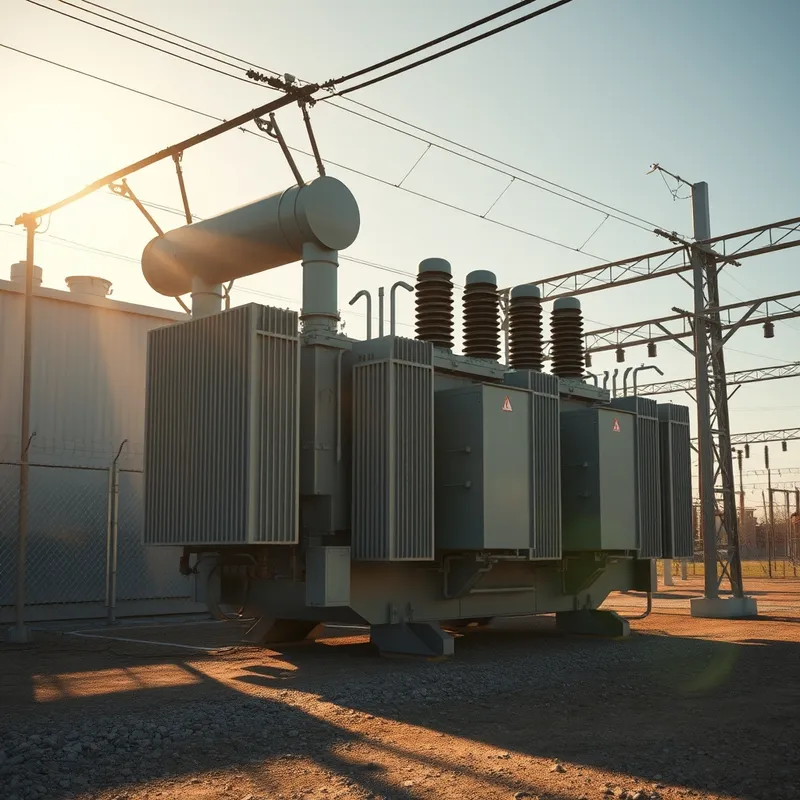
"Energy infrastructure is no longer trapped within the Bitcoin feedback loop."
Instead, megawatt allocations are being locked behind multi-decade enterprise contracts. Capitalizing on pre-secured grid connections, operators are retrofitting sites for high-performance computing. When multi-billion dollar agreements spanning 20 years bind energy capacity to enterprise AI tasks, that power is effectively walling itself off from short-term protocol incentives.
⚡ Mining Economics vs. Enterprise Compute Demands
Building on this infrastructure shift, recent hashprice improvements to $39.36 per petahash per day fail to match the risk-adjusted returns of enterprise AI hosting. When Bitcoin mounted its recovery above $81,000, processing capacity paradoxically contracted by 10.1%. This divergence highlights a permanent shift in how industrial data centers deploy capital.
The operational divide between pure-play block producers and hybrid infrastructure hubs has widened dramatically. Some operators scaled down active mining deployments from 50 EH/s to 23.2 EH/s to allocate 40 megawatts toward enterprise cloud services. Simultaneously, other facilities energized over 100 megawatts of high-performance IT capacity alongside 145 megawatts of traditional validation hardware.

"Difficulty relief cannot retroactively break a 20-year corporate data contract."

Conversely, dedicated scale operations are continuing to expand raw hashing power, pushing individual company targets past 70 EH/s and 76 EH/s respectively. This creates an ecosystem split into two distinct factions: specialized state-backed or hyper-efficient pure miners, and diversified energy landlords who view block rewards merely as an opportunistic energy hedge.
🏭 The 1920s Industrial Power Standard Parallel
Following this market split, the current migration of power assets mirrors the early 20th-century consolidation of industrial electrification. During the post-WWI industrial boom, independent factory owners who previously generated private, single-use steam power rapidly sold their infrastructure access to unified electrical utility grids. They realized that selling steady power to municipal and diversified industrial clients yielded higher risk-adjusted capital returns than running single-product manufacturing lines subject to commodity price swings.
The structural outcome of that 1920s transition was a permanent loss of localized industrial control in favor of financial stability. Today's mining sector is executing an identical structural pivot. Industrial operators are transforming from pure-play commodity producers into generalized compute landlords, fundamentally altering the security baseline of decentralized networks.

| Competing Force | The Irreconcilable Friction |
|---|---|
| Pure-Play Mining Expansion vs. AI Infrastructure Conversion | 🆙 Trading unhedged block rewards for 20-year fixed enterprise yields. |
| Automated Difficulty Adjustments vs. Capital Lock-in | Protocol relief cannot break long-duration high-performance compute contracts. |
The ongoing separation of asset price from processing power indicates that hash rate growth will no longer automatically track market rallies. Expect network security growth to moderate into a multi-tiered structure governed by institutional power access rather than retail mining participation.
⚖️ Hashprice: A real-time metric representing the expected daily revenue value of a specific unit of hashing power (e.g., dollars per petahash per second per day).
⚖️ Puell Multiple: An analytical indicator calculated by dividing daily issuance value of Bitcoin in USD by its 365-day moving average, measuring overall miner stress.
- If the 7-day average network computational power remains below 900 EH/s during price surges → indicates structural power migration.
- If miner revenue index drops below $35 per petahash daily → triggers secondary fleet shutdowns across regional grids.
- If corporate compute reallocation exceeds 500 megawatts globally → points to an institutional centralization regime shift.
— coin24.news Editorial
This analysis is synthesized from aggregated market data and institutional research insights. It is provided for informational purposes only and should not be construed as financial advice. Cryptocurrency investments carry high risk; please conduct your own due diligence before making any investment decisions.
Related Intelligence

Arbitrum rally hides key unlock risk: Subsidized Growth Illusion

XRP Ledger masks low economic value: The 3 Billion Tx Facade

Robert Kiyosaki Debt Crisis Threat: Leveraged Real Estate Meets Reality

Core DAO Token Issuance Flaw Triggers: Unresolved Supply Fault Line

Japan Debt Surge Breaks Yield Curve: Liquidity Undertow