Bitcoin Plunges Past Support Levels: Liquidity Illusion - Institutional Exodus Unmasked

Bitcoin's $62,080 Flashpoint: Why Institutional Redemptions Are Exposing the Liquidity Illusion
Bitcoin's brief plunge to $62,080.91 proves that a $3,000 intraday bounce cannot mask $2.35 billion in institutional exits.

The cryptocurrency market is currently experiencing a structural stress test that goes far beyond routine weekend volatility. While spot prices managed to claw back above $65,000 after touching a four-month low, the underlying capital flows tell a far more sobering story of defensive positioning.

📉 The Anatomy of a Liquidity Vacuum
To understand why a routine pullback turned into a broad-based rout, you have to look at how modern crypto order books react when traditional finance pulls the plug. When institutional vehicles become the primary marginal buyer, their absence leaves spot exchanges dangerously thin.
The recent slide below $70,000 triggered a cascading risk-off event that wiped roughly $2.26 trillion in total digital asset valuation down by 4% in a single 24-hour window. What began as a Bitcoin-specific correction rapidly mutated into an ecosystem-wide deleveraging event, with Ethereum dropping 19.5% and Solana shedding 20.7% over the same seven-day stretch.
Here is what everyone is ignoring: high-beta altcoins are no longer decoupling during downturns; they are acting as leveraged proxies for Bitcoin's liquidity stress. When Bitcoin loses nearly 15% in a week, the resulting margin calls force multi-asset funds to liquidate their most liquid altcoin positions first to raise cash.

"Liquidity is a fair-weather friend that vanishes the exact moment institutional risk committees demand cash."
🏦 ETF Redemptions and the New Market Microstructure
If this liquidity vacuum explains the speed of the drop, the mechanics of US spot exchange-traded funds explain its persistence. Unlike retail traders who panic-sell on weekends, institutional allocators execute redemptions through regulated, T+1 settlement windows that create sustained, multi-day selling pressure.
Over the two weeks ending November 13, US spot Bitcoin ETFs bled approximately $2.35 billion in net outflows, marking seven consecutive trading sessions of capital flight. Specifically, $1.07 billion exited during the most recent week, compounding the $1.28 billion that left the prior week.
Even the market's supposed fortress, BlackRock's iShares Bitcoin Trust (IBIT), has not been immune, logging its 11th straight session of outflows on Friday. Let's be honest: when the flagship institutional vehicle experiences nearly two weeks of uninterrupted redemptions, the narrative of "sticky" Wall Street capital requires a serious reality check.
| Market Metric | Recent Performance / Flow | Structural Signal |
|---|---|---|
| Bitcoin (BTC) Weekly Change | -15% (Low of $62,080.91) | 🗝️ Loss of key psychological support |
| Ethereum (ETH) Weekly Change | -19.5% | High-beta contagion across majors |
| Solana (SOL) Weekly Change | -20.7% | Aggressive deleveraging in altcoins |
| US Spot BTC ETFs (2-Week Flow) | -$2.35 Billion | 🏛️ Sustained institutional de-risking |
| Crypto Fear & Greed Index | 10 (Extreme Fear) | Defensive retail and fund positioning |
Under the hood, Authorized Participants (APs) must unwind spot Bitcoin positions to fulfill these ETF share redemptions, creating a mechanical sell-wall every time the New York equity market opens. This creates a structural conflict between spot crypto natives hoping for a quick V-shaped recovery and traditional asset managers rebalancing quarterly risk budgets.

🧭 Sentiment Extremes vs. Macro Reality
Given this relentless mechanical selling from traditional finance, it is no surprise that market psychology has completely fractured. The Crypto Fear & Greed Index plummeted to 10 on Sunday, sliding rapidly from 13 on Saturday and 20 on Friday.
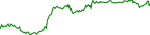
In my view, treating an Extreme Fear reading as an automatic buy signal is a dangerous relic of the 2021 retail-driven cycle. In a market dominated by institutional ETFs, sentiment indices measure retail anxiety, not the pace of corporate treasury or hedge fund de-risking.
The uncomfortable reading of this is that extreme fear can persist for weeks if macro liquidity conditions tighten and ETF desks remain net sellers. Price stabilization requires more than exhausted sellers; it demands an active, sustained bid that retail dip-buyers simply cannot provide at this scale.
"Bottoms are not formed when retail panics; they are formed when institutional selling runs out of inventory."
🔮 Navigating the Post-Correction Landscape
Looking ahead, the market faces a critical test of whether the recent rebound above the mid-$60,000 range can hold without fresh institutional inflows. If ETF outflows continue into the coming trading week, the market's newly found support will face an immediate, severe stress test.

Altcoin investors face an even steeper climb, as the broader ecosystem rarely stages a sustainable rally while Bitcoin's primary institutional on-ramp is bleeding capital. Until the daily ETF flow data flips decisively back to green, any upward price action should be viewed through the lens of short-covering rather than genuine accumulation.
The current market dynamics suggest that crypto has officially entered an era where Wall Street's risk-management calendar dictates on-chain reality. Until the multi-session redemption streak in flagship spot ETFs reverses, upside momentum will remain structurally capped.
Smart capital will watch the Tuesday and Wednesday institutional settlement windows closely, as these sessions will reveal whether the recent dip below $63,000 was enough to entice sidelined allocators back into the arena.
⚖️ Authorized Participant (AP): Financial institutions that manage the creation and redemption of ETF shares, directly buying or selling the underlying spot Bitcoin to keep the fund's price aligned with its net asset value.
📉 High-Beta Assets: Cryptocurrencies like Ethereum and Solana that exhibit higher volatility than Bitcoin, often experiencing amplified percentage losses during broader market corrections.
- If US spot Bitcoin ETFs record three more consecutive days of net outflows → this signals a prolonged institutional distribution regime.
- If Bitcoin fails to hold its recent four-month low on high spot volume → altcoin correlations will spike, triggering deeper deleveraging.
- If the Crypto Fear & Greed Index remains below 15 while ETF flows stabilize → this indicates seller exhaustion and a potential accumulation base.
— Warren Buffett
This analysis is synthesized from aggregated market data and institutional research insights. It is provided for informational purposes only and should not be construed as financial advice. Cryptocurrency investments carry high risk; please conduct your own due diligence before making any investment decisions.
Related Intelligence

Anthropic IPO Pulls Bitcoin Liquidity: A Classic Liquidity Reset

AI Autonomous Agents Demand Bitcoin: The Machine Economy Pivot

Fed Rate Hikes Break Bitcoin Support: Macro Liquidity Reset

Tesla SpaceX Merger Unites 30221 BTC: Zero Net Buy Pressure

Bitcoin 200 Day Average Holds Demand: Liquidity Squeeze Near 70k