Bitcoin Recovery Masks Market Fragility: Liquidity Trap Below 80k

Bitcoin Recovery Stalls Below $80K: The Structural Fragility of Solvency Backstops
Exchanges absorb multi-billion-dollar balance sheet hits, yet systemic order books refuse to follow through.

The cryptocurrency market staged a fragile rebound as Bitcoin reclaimed the $78,000 threshold, printing an intraday band between $77,303 and $78,134 on November 1. This localized recovery followed severe liquidation pressure triggered by an unprecedented $6.3 billion security breach at Binance on October 29, which had briefly pushed prices down to $76,100.

While the overall digital asset capitalization inched up 0.7% to roughly $2.68 trillion, Bitcoin maintained a commanding 58.4% dominance over aggregate valuations. Despite exchange operators stepping in to replace 95% of stolen assets and restoring native withdrawals, market breadth remains disjointed, leaving weekly performance down approximately 3.7% and exposing structural vulnerabilities beneath the surface.
🛡️ Solvency Backstops and Systemic Counterparty Friction
Whenever an exchange uses corporate reserves to patch a balance sheet shortfall, it functions essentially like a private central bank executing an emergency bailout. The immediate consequence of the operational restoration is an illusion of immediate stability, masking the profound friction introduced into institutional counterparty risk models.
Strip away the noise and the reality becomes stark: institutional desks do not treat an exchange-funded backstop as an all-clear signal. Corporate restitution solves regulatory liability, not counterparty anxiety. When a venue must tap proprietary reserves to absorb losses of this magnitude, prime brokers respond by widening spreads and rationing depth, drying up the continuous liquidity required to push past dense overhead resistance blocks.

"Corporate restitution solves regulatory liability, not counterparty anxiety."
📊 Order Flow Bifurcation: Large-Cap Fatigue Versus Altcoin Dispersion
If institutional desks are reducing net exposure on primary centralized rails, the capital distribution across secondary assets must inevitably diverge. Rather than a coordinated risk-on rally lifting all boats, the market has fragmented into hyper-selective liquidity pockets, leaving major assets stagnating while speculative capital chases isolated micro-caps.
During the relief move, Ethereum hovered near $2,269 with a muted 1.1% lift, BNB traded near $714, XRP changed hands at $1.25, and Solana flatlined around $95.43. In total contrast, idiosyncratic assets broke away entirely: Lighter's LIT surged roughly 18% to $3.19 on over $100 million in turnover, pushing its market capitalization to $797 million. Wild divergence was evident down the risk curve, where Dessa climbed 68%, dKargo rallied 34%, and Powerledger gained 25%, while speculative exits hammered FUNToken down 29.1%, UnifAI Network down 22.3%, and Cap down 17.1%.
| Asset | Segment Profile | 24H Trajectory | Structural Behavior |
|---|---|---|---|
| Bitcoin (BTC) | Macro Benchmark | +1.0% | 📊 Support defense without expansion volume |
| Major Layer-1s (ETH, SOL) | Core Infrastructure | Flat to +1.1% | Complete lack of aggressive buyer follow-through |
| Lighter (LIT) | Mid-Cap Decentralized Rail | +18.0% | 🏛️ Concentrated institutional rotation into alternatives |
| Long-Tail Alts (Dessa / FUN) | Speculative Periphery | +68.0% / -29.1% | Extreme illiquidity triggering erratic whipsaws |
This wide chasm in performance reveals a market where systemic leverage is absent, forcing hot capital to hunt for isolated momentum in peripheral names rather than supporting aggregate market beta.
⚙️ The Mechanical Fragility of Low-Depth Rebounds
Behind the headline price tick lies the actual wiring of order book microstructure, which dictates whether a bounce can evolve into a genuine structural trend. When spot market makers take risk offline following an infrastructural disruption, the spread between bids and asks widens drastically, allowing tiny amounts of volume to push price upward without creating durable support.

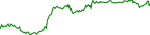
What this signals is an asymmetric liquidity profile. Resting bids below current trading ranges remain paper-thin, meaning that any secondary distress event could slice through these newly established levels far faster than the market crawled upward. The recovery observed over the weekend occurred under thin Sunday liquidity, completely lacking the aggressive spot taker volume that previously characterized institutional absorption regimes.
"Thin book bounces look identical to bull trends until size hits the bid."
🎯 Regime Trajectory and Strategic Positioning
Because the mechanical recovery lacks broad institutional validation, the medium-term market structure faces a rigorous verification phase over the coming trading sessions. Historically, when major custodial incidents intersect with exhausted macro order books, price action forms prolonged consolidation ranges rather than violent V-shaped reversals.
The immediate hurdle is not simply defending the lower boundary of the recent breakdown, but breaking through heavy distribution clusters higher up. Until the market demonstrates sustained daily closes above major distribution levels, every relief rally should be viewed through the lens of structural defense rather than expansion. Capital preservation in this regime takes precedence over momentum chasing.
The current technical rebound represents a defensive reaction to operational containment, not a structural pivot. Without continuous multi-session spot taker flow above the overhead psychological resistance barrier, this market remains trapped in a low-depth consolidation range. Expect capital to continue rotating into specialized alternative narratives while major assets experience range compression.

Medium-term stability will hinge entirely on prime institutional conduits re-engaging with spot order books. Until custodial trust metrics fully normalize across primary venues, upside momentum will encounter heavy distribution from defensive portfolio managers de-risking their exposure.
- If daily spot closes fail to reclaim the overhead psychological benchmark → systemic de-risking favors an accelerated defensive reallocation strategy.
- If exchange reserve withdrawal velocity accelerates over consecutive sessions → counterparty exposure models dictate reducing exchange-hosted collateral balances immediately.
- If Bitcoin dominance breaks below recent consolidation ranges during market drops → selective mid-cap rotation signals late-cycle speculative exhaust regimes.
⚖️ Solvency Backstop: The direct deployment of proprietary internal reserves by an operating exchange to absorb catastrophic balance-sheet deficits, shielding user deposits from immediate haircut risks.
📉 Order Book Depth: The aggregate volume of resting limit orders available across price tiers, determining how much capital can be executed before triggering severe slippage.
— — coin24.news Editorial
This analysis is synthesized from aggregated market data and institutional research insights. It is provided for informational purposes only and should not be construed as financial advice. Cryptocurrency investments carry high risk; please conduct your own due diligence before making any investment decisions.
Related Intelligence

Bitcoin Bear Bets Reveal Hubris Trap: Capital vs Sentiment

Bitcoin Chart Pattern Mirrors Silver: Multi Year Structural Decay

BlackRock absorbs crypto ETF outflows: Institutions Take Control

South African Crypto Growth Threatens: Treasury Permission Chokehold

South Africa Crypto Economy: Regulatory Chokehold Threatens Growth