BitGo buys thin margin trading unit: The Great Compute Pivot
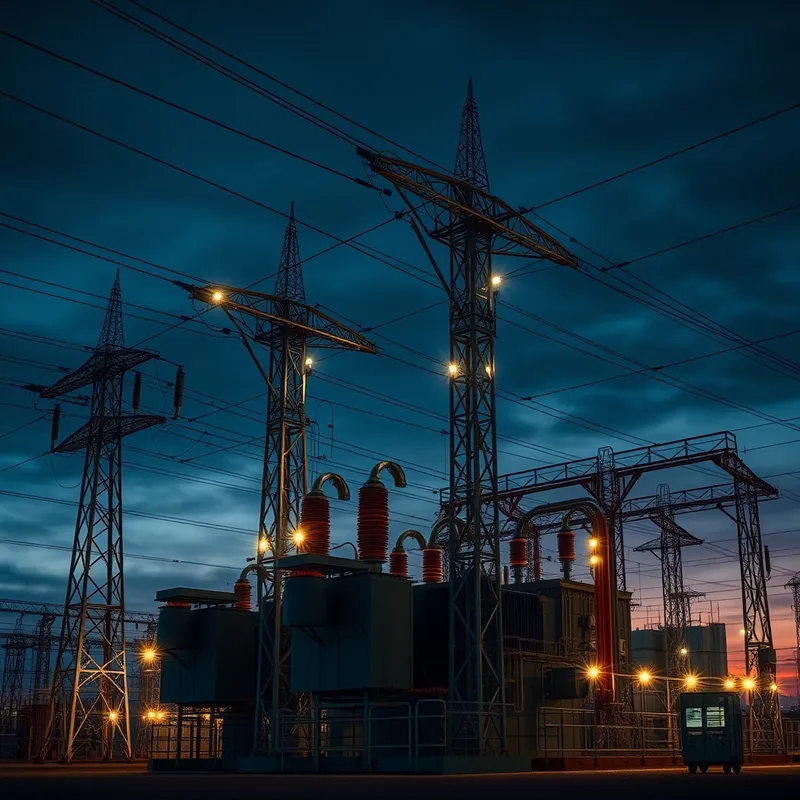
The Great Compute Pivot: Why Crypto Intermediaries Are Trading Virtual Liquidity for Physical Power
Crypto brokers are realizing that routing billions in digital tokens yields pennies compared to owning physical power grids.

A quiet restructuring is sweeping through the institutional digital asset landscape today. As capital efficiency demands rise, top-tier infrastructure providers are forced to choose between capital-intensive physical computing and low-margin financial brokerage.
🔌 The Great Infrastructure Bifurcation: Trading Volumes vs. Gigawatts
The strategic reallocation of capital is perfectly illustrated by the landmark transaction finalized on August 27, 2026, where BitGo acquired the institutional trading unit of NYDIG. This deal transfers NYDIG's spot and derivatives trading, virtual-currency asset management, borrowing and lending, and loan servicing operations to BitGo for an upfront consideration of approximately $42.5 million, consisting of $7 million in cash and 5,933,577 BitGo shares valued at a reference price of $5.9829 per share.

When a financial firm acts as a principal, it records the entire value of the asset sold as revenue and the purchase price as a direct cost, inflating its top-line numbers without reflecting true profitability. Under this accounting treatment, BitGo's second-quarter filing for the period ending June 30, 2026, revealed a staggering $4.197517 billion in Digital Asset Sales revenue, yet direct costs swallowed $4.190435 billion of that sum, leaving a gross spread of just $7.082 million—or roughly 16.9 basis points—and contributing to a consolidated net loss of $19.025 million for the quarter.
Conversely, NYDIG is completely shedding these thin-margin financial services to double down on physical infrastructure, boasting a North American power and compute footprint exceeding 3 GW, with over 1 GW deliverable in 2027 and 2028. This pivot, accelerated by its March 2025 acquisition of Crusoe's Bitcoin mining business, signals a massive bet on energy acquisition over financial intermediation, setting up two entirely different scorecards for the future of digital asset infrastructure.
📉 The Illusion of Volume: Dissecting the Basis Point Trap
While the transaction details highlight the diverging paths of these two institutional titans, the underlying economic realities of digital asset brokerage suggest a deeper structural problem. The pattern suggests that the high-volume, capital-light brokerage model is facing an existential margin squeeze as institutional order routing becomes commoditized.

"In the institutional digital asset game, massive volume is often a vanity metric masking razor-thin margins."
For years, market participants assumed that processing billions of dollars in digital asset transactions would yield a highly profitable fee pool. The reality is closer to a high-speed transit system where the operator pays for the entire train but only collects a fraction of a cent per passenger. To survive in this regime, brokers must build massive product suites—including derivatives, structured financing, and custody—to increase "asset stickiness" and extract more value from every dollar of flow.
What this signals is that custody providers can no longer rely on simple settlement and storage fees to sustain growth. They are forced to acquire trading books and lending desks to cross-sell higher-margin financial products, even if it means taking on the operational and compliance costs of integrated prime brokerages.

⚡ The Telecom Fiber Glut: Why Hard Infrastructure Outlasts Financial Intermediation
If this margin squeeze sounds like a modern digital asset anomaly, we must look to the physical infrastructure buildouts of the late twentieth century to understand its trajectory. During the telecom boom of the late 1990s, global telecommunications giants laid millions of miles of fiber-optic cables, assuming that the explosion of internet traffic would guarantee massive financial margins for bandwidth brokers.
Instead, bandwidth quickly became a commodity, and the intermediaries who merely routed the data went bankrupt, while the physical fiber networks remained, eventually becoming the highly valuable bedrock of the modern internet. In my view, this transition is a calculated acknowledgment that digital financial services are highly cyclical and hyper-competitive, whereas secured energy access is a structural monopoly that cannot be replicated by software.
Today, the bottleneck is not fiber-optic bandwidth, but gigawatts of power. By divesting its trading unit, the seller is positioning itself as a landlord to the artificial intelligence and high-performance computing industries, recognizing that a single gigawatt of contracted power is far more defensible than a multi-billion dollar trading book that can migrate to a competitor overnight.
| Competing Force | The Irreconcilable Friction |
|---|---|
| 🌊 BitGo (Volume Aggregation) | 🌊 Chasing high-volume, low-margin transactions over capital-efficient profit. |
| NYDIG (Compute Monopolization) | Locking up massive capital in physical grids before tenant revenues materialize. |
| Financial Intermediaries (Capital-Light Scale) | Operating high-risk derivatives desks to subsidize commoditized custody services. |
| Energy Providers (Hard-Asset Moats) | Navigating severe grid capacity constraints while funding multi-year construction cycles. |
🔮 The Next Regime: High-Performance Compute vs. Consolidated Brokerage
Armed with the lessons of past infrastructure cycles, institutional investors must now prepare for a polarized digital asset ecosystem. The comfortable reading of this trend is that both companies are simply optimizing for their core strengths; the uncomfortable reality is that the market is bifurcating into capital-intensive energy monopolies and ultra-consolidated financial platforms.
For investors, this means the mid-sized crypto broker is effectively dead. If a platform cannot achieve the massive scale required
— — coin24.news Editorial
This analysis is synthesized from aggregated market data and institutional research insights. It is provided for informational purposes only and should not be construed as financial advice. Cryptocurrency investments carry high risk; please conduct your own due diligence before making any investment decisions.
Related Intelligence

Tokenized shares hide liquidity traps: The Closed-Loop Illusion

Helium Rally Exposes Retail Illusion: Chasing Phantom Value

Altcoin Breakouts Face Liquidity Wall: The Speculative Undertow
Polygon Network Upgrade Requirement: Silent protocol patch averts collapse

Cronos halt exposes central control: The Decentralized Facade