Charles Hoskinson Warns AI Outage: Geopolitical fault line in tech infrastructure
The AI Single-Point Vulnerability: What the Simultaneous Outage Exposes About Infrastructure Centralization
Centralized compute infrastructure is a ticking time bomb for the modern digital economy.

When multiple competing frontier models experience simultaneous service degradation across a narrow 90-minute window, the tech sector faces a structural reckoning. The illusion of algorithmic redundancy vanishes the moment underlying physical dependencies converge on identical hardware and localized data centers.
⚡ Unpacking the Multi-Model Cascade Mechanics
Before evaluating the systemic risks, it is essential to understand compute clustering: front-end interface endpoints are distinct, but back-end matrix multiplication tasks often rely on shared hardware facilities. When physical hosting or power delivery fails, isolated software layers collapse simultaneously.
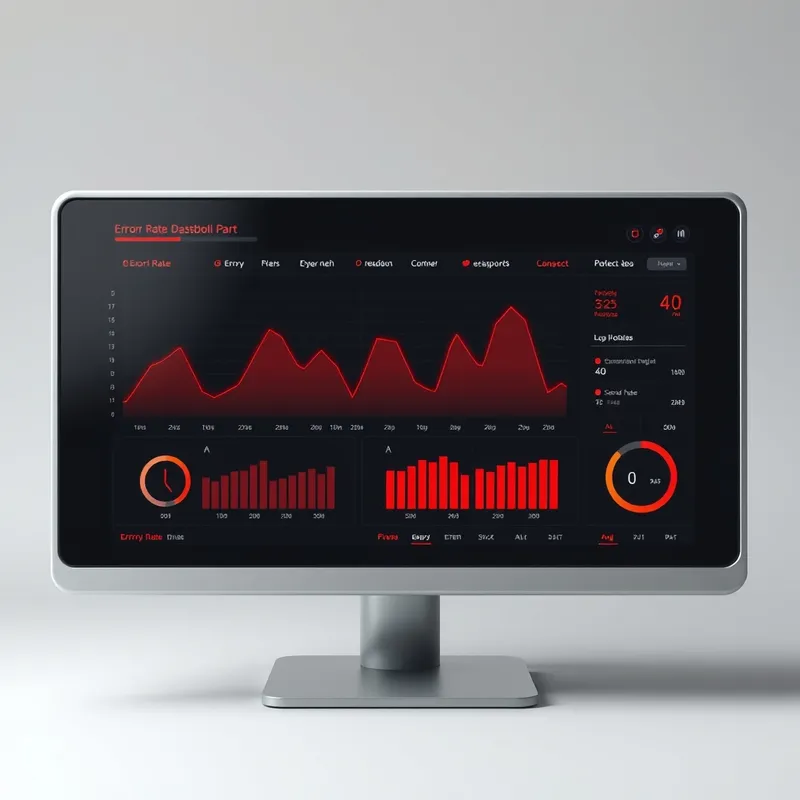
The cascading event began around 9:00 AM ET when initial service disruption reports emerged for Grok and Claude, culminating roughly 90 minutes later as ChatGPT user complaints escalated exponentially from 5,000 to over 22,000 within a 10-minute window. At peak disruption, complaint volumes for ChatGPT crossed 35,000, while secondary platforms like Claude and Grok registered concentrated localized spikes near 1,500 reports each.
The operational profiles across labs varied significantly, highlighting distinct back-end bottlenecks. OpenAI logged system-wide elevated error rates affecting both its primary conversational interface and Codex development agents across 19 separate infrastructure components. Conversely, Anthropic users encountered explicit capacity ceiling errors, particularly across its Opus architecture models, while xAI experienced silent model unavailability despite official channels declaring no primary status incident.
"Software diversity is a vanity metric if the underlying hardware resides on the same physical power grid."
🌐 Physical Compute Aggregation and the Memphis Bottleneck
Building on the mechanics of this operational disruption, the underlying fragility traces directly back to physical supply chain concentration. What appears to be independent software ecosystems often terminates at the same physical server racks, power sub-stations, and hardware vendors.
A primary structural nexus centers on the Colossus 1 facility in Memphis. Following corporate restructuring where SpaceX merged with xAI earlier in the year, Anthropic leased substantial compute capacity at the site, anchoring over 300 megawatts of power demand across 220,000 Nvidia chips. This single facility houses significant operational dependencies for two of the primary casualties, situated alongside xAI's broader cluster of roughly 500,000 GPUs.
Conversely, platforms using bespoke infrastructure paths showed distinct resilience profiles during the event. Google's Gemini logged no core model outage, driven largely by its reliance on proprietary Tensor Processing Units (TPUs) rather than external GPU clusters, though localized API key generation disruptions occurred. This architectural divergence underscores how silicon supply chains dictate operational continuity.
🏛️ The Great Cloud Outages: Anatomy of a Single-Point Failure
The failure of seemingly disparate digital services due to localized physical infrastructure risks is not a new phenomenon; it represents a repeating structural vulnerability across centralized computing history.
In November 2025, a global Cloudflare outage abruptly severed access to dozens of major decentralized finance protocols and exchange interfaces, despite the underlying blockchain networks running without interruption. Months prior, back-to-back Amazon Web Services (AWS) data center failures in US-East-1 took down major institutional trading desks and retail applications simultaneously. In both instances, market participants realized too late that structural redundancy had been sacrificed for operational convenience and reduced latency.
In my view, treating centralized physical hosting as a benign risk factor is a fundamental miscalculation. Strip away the corporate branding, and today's AI landscape mirrors the early web hosting consolidation of the late 2010s. When foundational compute becomes bottlenecked inside specialized mega-clusters, a localized power grid failure, firmware corruption, or physical interdiction instantly converts localized exposure into systemic systemic risk.

| Competing Force | The Irreconcilable Friction |
|---|---|
| Centralized Cloud Scale vs. DePIN Architecture | 🔁 Trading physical resilience for localized latency and capital efficiency gains. |
| Monopolistic Silicon Hardware vs. Proprietary TPUs | Single-vendor hardware dependencies creating universal attack vectors across competitors. |
| 🏛️ Sovereign Security Narratives vs. Shared Data Infrastructure | ⚡ Exposing critical productivity infrastructure to single-point geopolitical or physical disruption. |
🔮 Decentralized Compute as the Structural Alternative
Given the historical precedents of cloud infrastructure chokepoints, the strategic rationale for decentralized physical infrastructure networks (DePIN) shifts from speculative narrative to operational necessity. As specialized workloads scale, reliance on centralized mega-clusters introduces unacceptable tail risk for enterprise operations.
The systemic vulnerability exposed by coordinated outages accelerates the value proposition of distributed compute networks and cryptographic verification layers. Projects focusing on privacy-preserving smart contracts and distributed compute verification—such as Cardano's Midnight sidechain initiative—aim to decouple execution environments from single-vendor physical infrastructure, distributing workloads across geographically dispersed nodes.
As model development cycles accelerate—evidenced by rapid iterative deployments across the industry—the underlying compute demand will increasingly stress centralized grid and hardware capacity. Enterprise capital will inevitably seek multi-cloud and decentralized fallback mechanisms to hedge against catastrophic downtime events.
The simultaneous freeze of primary AI interfaces demonstrates that cloud redundancy is often an optical illusion. Capital allocation will increasingly favor protocols that provide verifiable, hardware-agnostic compute distribution over centralized speed. As enterprise AI integration deepens, operational resilience will command a distinct valuation premium over raw benchmark performance.
⚖️ DePIN (Decentralized Physical Infrastructure Networks): Blockchain protocols that deploy incentive mechanisms to build and operate real-world physical infrastructure, such as distributed GPU compute clusters or wireless networks.
⚖️ TPU (Tensor Processing Unit): Custom application-specific integrated circuits (ASICs) developed specifically to accelerate machine learning workloads, serving as an alternative to graphics processing units (GPUs).
- If core AI API error rates cross 5% across three distinct providers → portfolio exposure shifts toward distributed compute hedges.
- If centralized data center power usage exceeds regional grid capacity allocations → expect elevated operational stability risks for hosted models.
- If GPU hardware concentration in top three facilities exceeds 60% → structural tail risk premiums apply to centralized AI tokens.
— — coin24.news Editorial
This analysis is synthesized from aggregated market data and institutional research insights. It is provided for informational purposes only and should not be construed as financial advice. Cryptocurrency investments carry high risk; please conduct your own due diligence before making any investment decisions.
Related Intelligence
Druckenmiller acquires power grids: The AI Power Arbitrage Play
Solana governance exposes power play: The Governance Illusion

Bitcoin rallies on hollow peace talk: Oil Exposes Peace Bluff

Revolut exposes US bank gatekeepers: The Trust Charter Illusion

Solana capital shifts signal danger: A Speculative Undertow