CLARITY Act Defeat Exposes Hidden: Political Quicksand

The CLARITY Act's Collapse Proves Capital Markets Cannot Out-Lobby Executive Ethics
Regulatory progress stalled not over market architecture, but over unresolved executive conflict-of-interest mandates.

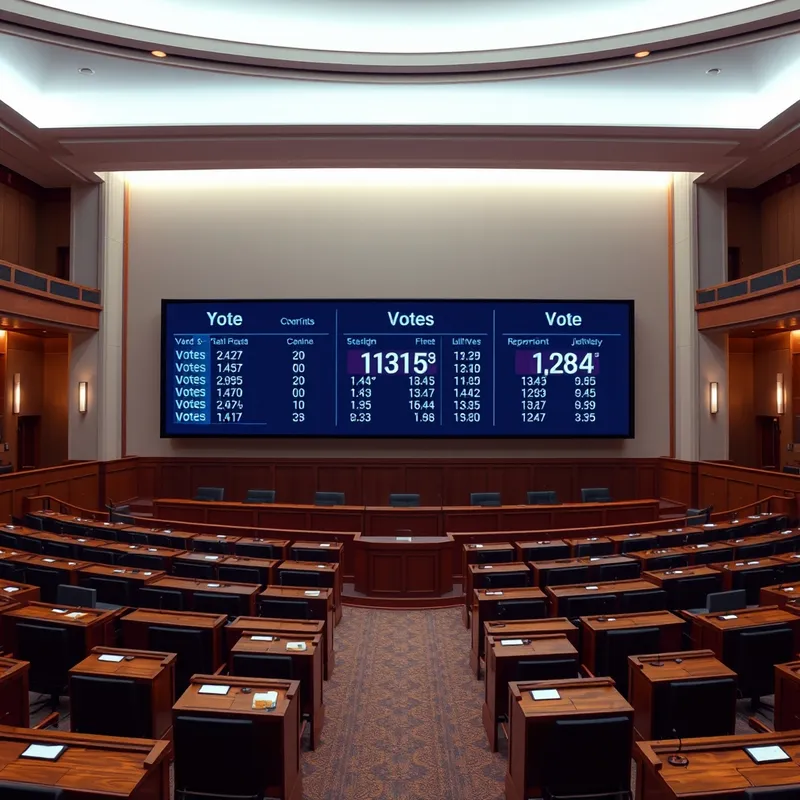
The Senate procedural deadlock on the CLARITY Act—failing to reach the 60-vote threshold in a narrow 49-50 decision—reveals a fundamental structural friction in modern digital asset policy. Wall Street and crypto lobbyists built a consensus around regulatory jurisdictions, yet the entire framework collapsed under the weight of executive ethics disputes and stablecoin yield limits.
🏛️ Ethics Deadlocks Overwrite Institutional Market Architecture
Legislative failure in Washington is rarely about the core mechanics of a market; it is almost always about political leverage. What begins as a technology integration story ultimately transforms into a sovereign governance dispute. While industry advocates pushed for clear divisions between commodity and security oversight, the final hours of negotiation disintegrated over conflict-of-interest enforcement surrounding high-ranking officials and their immediate family members.
The core impasse centered on asset divestment versus passive holding structures. Proposed compromises included forcing senior officials to place crypto holdings exceeding specific concentration thresholds into blind trusts, but counter-demands mandated complete liquidation. This friction was exacerbated by proposed expansions of these rules to cover extended family networks linked to commercial tokenized ventures and promotional deals.

"When systemic regulation is held hostage by executive ethics clauses, institutional capital does not wait—it reallocates."
Furthermore, enforcement mechanisms generated deep partisan division. Proposals shifting authority from federal departments toward state attorneys general highlighted systemic distrust regarding administrative self-policing. Concurrently, traditional financial institutions aggressively lobbied for emergency Treasury powers to restrict yield-bearing stablecoins, fearing capital flight from regional bank balance sheets.
📉 Market Repricing Dynamics and Macro Coincidence
Following the failure of this legislative milestone, risk assets across the digital sector registered immediate downward repricing. Domestic infrastructure plays and tokens tightly bound to US regulatory clearance experienced sharper repricing than global base-layer protocols, reflecting localized policy risk rather than protocol-level failures.
However, viewing this market drawdown solely through a political lens misses the broader liquidity picture. The legislative impasse coincided with macroeconomic tightening signals, including benchmark sovereign yields pushing above historic thresholds and energy market supply shocks driving oil higher. These macro forces created a systemic liquidity drain across all high-beta assets.
Pre-vote positioning indicates that derivatives markets had already priced in a low probability of legislative passage prior to the floor vote. Prediction market odds had dropped to roughly 16% in the weeks leading up to the session. Consequently, while spot assets pulled back significantly, systemic liquidations remained isolated rather than triggering a broader cascading unwinding event.
🏛️ The Glass-Steagall Echo: Banking Protectionism in Legislative Disguise
To understand why stablecoin yield provisions derailed a broader market structure bill, one must look to the banking panics of the early 1930s and the subsequent passage of the Glass-Steagall Act in 1933. That historical intervention was explicitly designed to erect rigid walls between commercial deposit-taking institutions and speculative capital markets to prevent liquidity drain from real-economy lending.
Today, traditional community banking networks face a structurally identical threat from tokenized dollar instruments offering yield. Just as early 20th-century banks fought private shadow currencies to protect their low-cost deposit baselines, modern banking coalitions lobbied for executive veto power over stablecoin rewards. The underlying mechanism is not novel: established capital custodians consistently utilize federal statutory protections to suppress yield competition under the guise of systemic risk management.
In my view, treating the legislative breakdown as a temporary political disagreement misses the strategic reality entirely. What the market witnessed was a calculated defense of commercial bank deposits wrapped in executive ethics debates. Established financial institutions successfully utilized political friction to delay the mass migration of capital into high-velocity digital yield products.

| Competing Force | The Irreconcilable Friction |
|---|---|
| Traditional Banking Coalition vs. Stablecoin Issuers | 🐻 Protecting low-cost regional deposits versus enabling high-velocity yield-bearing digital dollars. |
| Executive Ethics Reformers vs. Administrative Flexibility Advocates | Mandatory asset divestment versus blind-trust structures for high-ranking elected officials. |
| State Attorneys General vs. Federal Department Mandates | ⚖️ Decentralized state-level legal oversight versus centralized federal administrative enforcement power. |
🔮 Administrative Enforcement Becomes the Default Regime
The structural consequences of this stalled vote ensure that federal regulatory agencies will continue governing through enforcement actions and targeted administrative rule-making rather than statutory mandates. Institutional entities planning domestic product launches must now navigate an extended period of regulatory ambiguity, favoring offshore capital deployment and sovereign jurisdictions with established legal clarity.
Looking toward remaining legislative calendar windows, procedural rules allow for motion reconsiderations before standard congressional recess periods. However, unless negotiators reach a binding consensus on executive divestment definitions and family coverage scope, the probability of enacting comprehensive statutory oversight before the next legislative session remains exceptionally low.
The market must now adjust to prolonged executive enforcement dominance. Capital will increasingly flow toward jurisdictions offering statutory certainty over domestic operational promises. The primary risk factor over the next two quarters is not further price capitulation, but institutional capital stagnation.
⚖️ Motion for Cloture: A procedural Senate vote required to end debate on a bill and bring it to a final vote, demanding a 60-vote supermajority to pass.
⚖️ Qualified Blind Trust: A financial arrangement where a trustee manages an official's private assets without the owner's knowledge, designed to prevent conflicts of interest.
⚖️ Yield-Bearing Stablecoin: Digital fiat tokens that distribute interest or protocol rewards directly to holders, competing directly with commercial bank deposits.
- If Senate cloture motions fail twice consecutively → institutional capital transitions toward defensive international exposure protocols.
- If Treasury yield curves steepen past critical macro resistance → digital asset market liquidity enters a prolonged compression regime.
- If regional bank deposit outflows surpass seasonal norms → legislative pressure against stablecoin yield mechanisms intensifies rapidly.
— Frederick Douglass
This analysis is synthesized from aggregated market data and institutional research insights. It is provided for informational purposes only and should not be construed as financial advice. Cryptocurrency investments carry high risk; please conduct your own due diligence before making any investment decisions.
Related Intelligence

Clarity Act faces fierce opposition: The Stablecoin Fault Line

Copper Prices Fall Despite Shortages: The Bull Market Illusion

CoinEx Shuts Down Exchange Platform: Regulatory Chokehold and Liquidity Drain

aelf Network Halts Staking Rewards: A week of ghost blocks exposes infrastructure illusions

Solana RWA Inflow Surges Past Rivals: Institutional Capital Reconfigures Networks