Cyber Attacks Exploit Freezers: Critical Infrastructure Vulnerability

Physical Infrastructure Under Cyber Siege: The Industrial IoT Security Crisis
When malicious actors manipulate physical temperatures through network software, real-world physical destruction becomes a direct vector of corporate liability.

The recent escalation in software-driven infrastructure disruption underscores a structural shift in global vulnerability. Rather than targeting purely digital assets, attackers are increasingly weaponizing connected Internet of Things (IoT) hardware to force real-world operational failures.
This physical operational threat is transforming enterprise defensive strategies. Capital flows demonstrate that market participants view legacy infrastructure hardware as an unhedged operational risk across global supply chains.
🔥 Weaponized IoT Infrastructure and Supply Chain Risk
Operational technology breaches have moved past theoretical risk. Recent incidents across European retail operations highlight how centralized environmental control systems can be exploited to cause immediate inventory destruction and structural property loss.
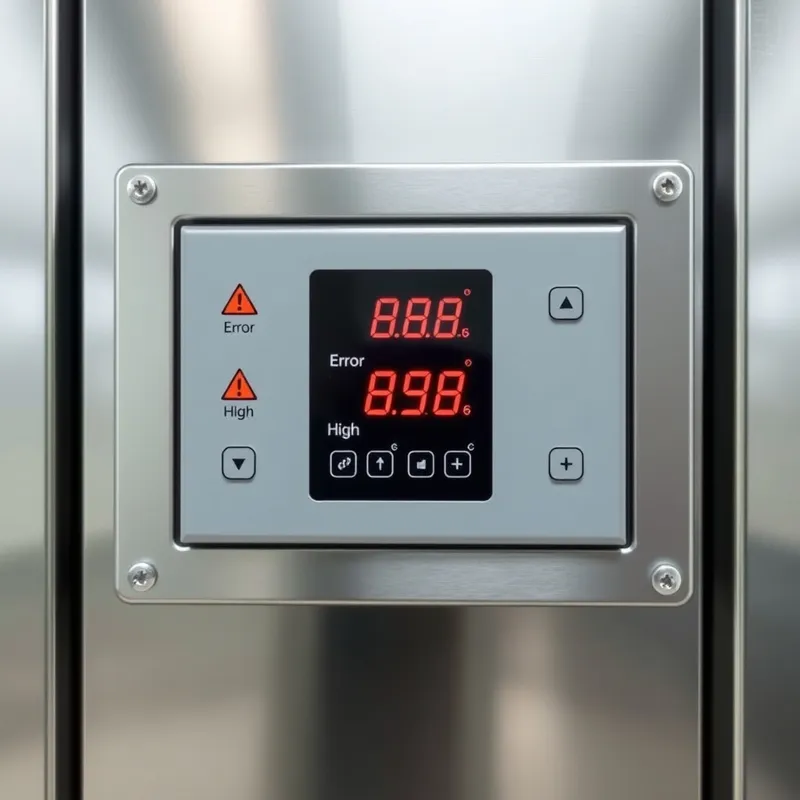
In France, software managing commercial refrigeration units was manipulated to increase interior temperatures up to 50°C. Carrefour confirmed 80 locations were compromised, while Les Mousquetaires, owner of Intermarché, reported impact across roughly 150 facilities, ultimately destroying millions of euros in inventory and causing localized fires.
"Physical hardware controls represent the most underpriced liability surface in modern enterprise risk."
France’s National Cybersecurity Agency (ANSSI) was directed by Prime Minister Sébastien Lecornu’s office to launch a formal investigation into the attack vector. This systemic vulnerability in distributed commercial architecture demonstrates how easily physical operations can be halted without directly touching primary databases.
🌐 The Asian Cyberspace Emergency: AI-Enhanced Penetration
Expanding the scope beyond Western Europe, the operational threat surface in Asia reflects a parallel increase in attack frequency. The integration of automated tooling has significantly reduced the friction required to execute complex systemic compromises.
In Japan, over 20 major corporations announced operational intrusions in recent weeks. Masaaki Taira, head of the Liberal Democratic Party’s cybersecurity strategy headquarters, formally characterized the dynamic as a state of emergency in cyberspace. Data indicates Japan registered a higher volume of cyber incidents in the first nine months of 2026 than in the entirety of 2025.
In South Korea, financial institutions suffered compromises that exposed data belonging to tens of thousands of account holders. President Lee Jae Myung noted that automated artificial intelligence systems likely facilitated the intrusion. Industry monitoring by CrowdStrike linked these breaches to actors deploying open-source AI penetration frameworks alongside large language models.

🏛️ The Stuxnet Blueprint: Anatomy of Physical Cyber Contagion
The strategic deployment of software code to cause physical degradation traces back to the 2010 Stuxnet incident. In that event, specialized malicious code targeted industrial programmable logic controllers (PLCs) to alter motor speeds while spoofing monitoring systems, directly causing physical destruction of hardware without raising immediate digital alarms.
The mechanics exposed in 2010 established that air-gapped or remote supervisory systems carry systemic vulnerability if their base control protocols lack cryptographic authentication. Current operational technology vectors operate on identical structural incentives, leveraging networked management systems to cause real-world supply disruption.
What this signals is that industrial management software remains structurally under-defended compared to consumer data infrastructure. Until hardware control interfaces require cryptographically verified consensus or immutable local state checks, physical assets remain vulnerable to remote thermal manipulation.
| Competing Force | The Irreconcilable Friction |
|---|---|
| Centralized IoT Automation vs Legacy Hardware Safety | Efficiency gains of remote management compromise physical fail-safe isolation measures. |
| 📈 Enterprise Equity Selloffs vs Cybersecurity Re-Allocation | 🏛️ Broad market equity pullbacks divert capital into specialized defensive security firms. |
📈 Enterprise Re-Allocation and Equity Market Realignment
The escalation in automated physical threats is directly reshaping equity market allocations. During broad regional index contractions, security-focused software operators have demonstrated decoupled, non-correlated performance.
During a recent trading session where the KOSPI index dropped 5.46% driven by a semiconductor selloff—slashing SK Hynix by 10.09% and Samsung Electronics by 7.39%—specialized security providers decoupled. South Korea’s AhnLab closed up 10.51%, alongside notable gains in Genians. Similarly, while Tokyo's Nikkei 225 declined 1.82%, Cyber Security Cloud advanced 12.97% to ¥4,180.

In US capital markets, the First Trust Nasdaq Cybersecurity ETF (CIBR) has surged, logging a YTD return of approximately 50%. Valuations have sparked debate among institutional desks: Morgan Stanley expanded its target on Palo Alto Networks to $410 from $394, emphasizing that only about 1.5% of enterprise AI capital is currently designated for defensive security, whereas Bernstein downgraded the same equity on valuation concerns following its multi-quarter expansion.
The market is experiencing a realignment of risk assessment. Mandatory security compliance spending will outpace general software capital expenditures as physical liabilities escalate. Institutions will increasingly demand verified hardware security layers prior to underwriting enterprise insurance policies.
⚖️ Operational Technology (OT): Hardware and software systems that monitor and control physical industrial equipment, infrastructure assets, and facility management processes.
⚖️ Air-Gapping: A security mechanism that isolates a secure network or computer physically from unsecured external networks, preventing direct remote intrusion.
- If enterprise cybersecurity spending mandates fall below 2% of total IT allocation → institutional risk metrics shift toward defensive equity re-allocation.
- If non-correlated security software tokens or equities hit key distribution barriers → hedge structures require rebalancing into cash equivalents.
- If regional regulatory bodies enact strict OT hardware liability laws → capital flows favor specialized physical-layer security firms.
— — coin24.news Editorial
This analysis is synthesized from aggregated market data and institutional research insights. It is provided for informational purposes only and should not be construed as financial advice. Cryptocurrency investments carry high risk; please conduct your own due diligence before making any investment decisions.
Related Intelligence

South Korea Crypto Seizure Rules: The State Claims Every Key

Tokenized Stock Volatility Surges: Liquidity illusion masked by round-the-clock trading.

Starknet Rally Facing Supply Wall: Unlocking Token Overhang

TRON Settles Trillions in Stablecoins: Quiet Plumbing for Global Flows
South Korea Blocks 27 Exchanges: Capital Exodus Realignment