Ethereum Hardware Race Lowers Barriers: ZisK Benchmarks Signal Decentralization Pivot
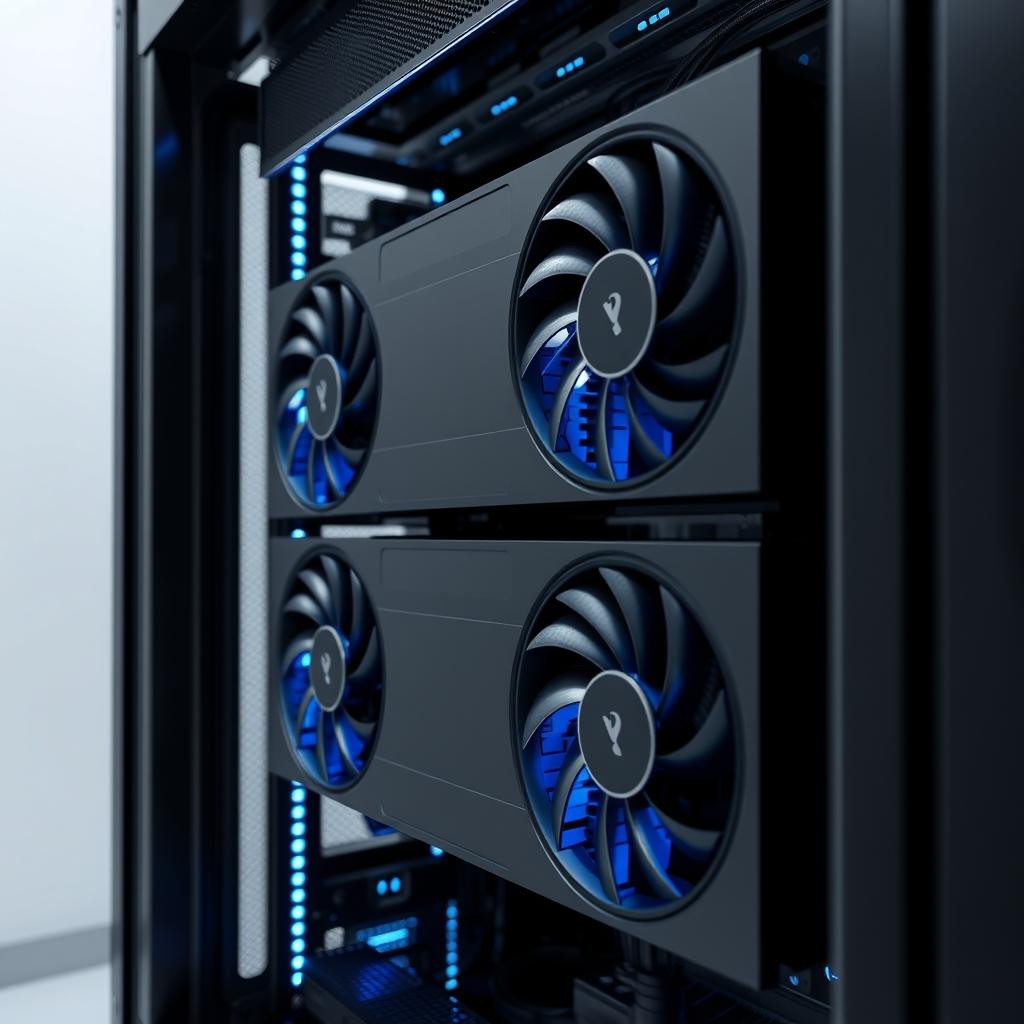
Ethereum zkEVM Proving Drops to 4 GPUs: The Illusion of Democratized Verification
Cutting hardware requirements by two-thirds does not democratize a network if operational thresholds remain structurally unviable for retail participants.

The race to achieve real-time zero-knowledge proving on Ethereum mainnet reached a major checkpoint with the open-source zero-knowledge virtual machine project ZisK announcing that its v1.1.0-alpha prover achieved a 9.62-second p99 latency across four Nvidia RTX 5090 GPUs on August 18. This announcement directly challenges earlier benchmarks that required roughly 12 GPUs to approach the 10-second proving window, lowering the estimated baseline hardware acquisition to $7,996 based on the card's $1,999 launch MSRP.
While industry figures such as Jordi Baylina highlighted the milestone for combining four-GPU proving with claimed 128-bit security and post-quantum resistance, significant reproducibility gaps remain. The Ethereum Foundation requires 99% of mainnet blocks to be proven under 10 seconds alongside strict power and cost budgets, yet ZisK has not yet published its sample size, timing boundary intervals, whole-system power draw, or proof-size metrics.
⚡ The Six-Part Protocol Standard and the Prover Compression Race
Zero-knowledge verification is the computational process of mathematically proving a batch of transactions is valid without re-executing every instruction. To prevent validator consolidation into specialized data centers, the Ethereum Foundation established a strict six-part framework: on-premises hardware under $100,000, total power draw below 10 kilowatts, fully open-source code under permissive licenses, at least 128-bit cryptographic security, and proofs under 300 KiB generated without trusted setups.
The latest benchmark signals an aggressive algorithmic optimization push across the zkEVM landscape. Four commercial graphics cards demand a combined GPU-only continuous rating of 2.3 kW based on standard 575-watt specifications. While this metric easily clears the broad 10 kW protocol ceiling, it introduces severe localized operating frictions that prevent casual residential deployment.
"A sub-ten-second proof means nothing if the system's thermal exhaust melts the premise of residential node operation."
Strip away the noise and the reality emerges: capital expenditure is rarely the real gatekeeper in specialized cryptographic infrastructure. Host motherboard bandwidth, enterprise cooling, and persistent electrical stability remain the unmodeled overheads that institutional operations absorb with ease while independent validators struggle to maintain continuous uptime.
⏱️ Microstructure Discrepancies in Production Proof Benchmarks
Building on these hardware constraints, competitive market dynamics reveal significant variance in how performance benchmarks are structured and reported. In July, OpenVM reported a 9.8-second p99 across 7,200 mainnet blocks starting at block 24,000,000, but achieved this using eight graphics processors at a lower 100-bit security margin. Comparing these figures demonstrates the ongoing trade-offs between computational throughput and cryptographic soundness.
What this signals is an asymmetric reporting environment where headline latencies mask critical architectural compromises. Standard industry telemetry frameworks, such as the Ethproofs standard, define proving intervals strictly around witness generation while excluding network data retrieval and submission overhead. As of today, independent benchmarking repositories list historical configurations up to 16 GPUs for earlier implementations, leaving the newest four-unit claims waiting for reproducible public verification.
Furthermore, execution speed cannot bypass rigorous cryptographic audit standards. Historical code reviews conducted by OpenZeppelin in late 2025 flagged critical and high-severity constraint issues in earlier codebases. The pattern suggests that achieving high-speed SNARK generation often requires pushing mathematical constraints to boundaries where formal verification vulnerabilities can emerge if codebases are rushed into production environments.
🏛️ Mechanism Anatomy: The 1999 Server Appliance Consolidation
In 1999, the telecommunications sector witnessed the rapid commoditization of web-hosting server appliances, where enterprise providers marketed inexpensive rack hardware under the promise that any small business could host sovereign infrastructure. Within two years, the physical realities of multi-homed bandwidth costs, redundant power grids, and thermal management centralized the entire hosting industry into dedicated carrier-neutral colocation facilities.

In my view, the zkEVM prover market is executing an identical structural migration. Prover teams celebrate lowering the raw silicon requirement, but running continuous multi-kilowatt mathematical compression at low latencies requires commercial-grade power infrastructure that systematically favors colocation facilities over domestic operators.
The lesson from the server appliance era is clear: software optimization expands theoretical access, but secondary operational expenditures enforce industrial centralization. While Ethereum successfully avoids the multi-million-dollar ASIC barriers seen in proof-of-work systems, proving at mainnet cadence inevitably concentrates block generation into specialized entities equipped to manage power-grid reliability and sub-second pipeline orchestration.
| Competing Force | The Irreconcilable Friction |
|---|---|
| Protocol Designers (Democratic Proving) | ⚖️ Demanding 128-bit security while expecting home electrical panels to run continuous multi-kilowatt proving workloads. |
| Commercial Prover Fleets (Operational Scale) | Centralizing low-latency proof aggregation into industrial data centers to eliminate residential power variance. |
| ⚖️ Security Auditors (Cryptographic Soundness) | ⚖️ Refusing to compromise mathematical constraints to meet arbitrary sub-ten-second block confirmation deadlines. |
📊 Ecosystem Trajectories and Institutional Infrastructure Economics
Given this operational friction, institutional investors and infrastructure funds must recalibrate how they evaluate decentralized compute and proving networks. As Ethereum Layer-1 approaches native zkEVM integration and Layer-2 rollups mandate faster finality, prover efficiency will directly dictate sequencer margins and base-layer settlement costs.
The market is entering a transitional phase where specialized proving pools will emerge as critical middleware. Rather than individual solo-validators generating their own proofs, capital will aggregate into syndicated prover organizations that bid on block-proving rights. This structural shift transforms proving from a raw hardware race into an algorithmic arbitrage market centered on energy hedging, custom FPGA/GPU acceleration pipelines, and optimized memory bus routing.
The compression of prover hardware to smaller GPU configurations will not democratize validation to home offices; instead, it will compress operating margins for commercial prover networks, accelerating a shift toward specialized zero-knowledge cloud providers.
Expect Layer-2 rollups and decentralized infrastructure networks (DePIN) to reprice proof-generation subsidies downwards over the coming quarters. Investors should anticipate that protocols relying on un-audited high-speed proving schemes will face severe discount multiples due to the existential risk of constraint vulnerabilities.
⚡ p99 Latency: A statistical benchmark indicating that 99% of all observed operations complete within the specified timeframe, exposing extreme tail-end delays.
🔒 128-Bit Security: A cryptographic benchmark requiring an adversary to execute 2^128 operations to break the underlying mathematical proof system.
⚙️ zkVM (Zero-Knowledge Virtual Machine): An execution engine that processes arbitrary software code while generating a succinct mathematical proof of its correct execution.
- If public prover audits reveal unresolved critical constraint vulnerabilities → discount infrastructure token valuations by a defensive factor.
- If independent benchmark frameworks fail to reproduce four-card latencies → shift allocations toward vertically integrated data-center proof syndicates.
- If average continuous power draw exceeds domestic utility thresholds → price out expectations for consumer-led validator node growth.
— — Edsger W. Dijkstra
This analysis is synthesized from aggregated market data and institutional research insights. It is provided for informational purposes only and should not be construed as financial advice. Cryptocurrency investments carry high risk; please conduct your own due diligence before making any investment decisions.
Related Intelligence

Ripple Prime Secures Corporate Debt: XRP Decouples From Equity

Unitree Stock Pop Exposes Crypto Trap: Derivatives Fail Mainland Demand

Kalshi Expands Crypto Perps to Stocks: Wall Street Embraces Crypto Architecture

Solana Governance Lacks M and A Rules: Dilution Engine Meets Legal Vacuum
HIVE tax liability eclipses revenue: $85M VAT bill drains reserves