Ethereum Rally Masking ETF Outflows: Wall Street Exodus Deepens

The Great Ethereum Divergence: Institutional Capital Flees as On-Chain Activity Fractures
Ethereum is rallying while the very institutions expected to power it are quietly heading for the exits.

Spot markets have pushed Ether toward critical resistance near $2,439 with a modest 6% weekly gain. Yet, beneath the price surface, institutional demand has quietly vaporized across regulated access points.

On-chain tracking highlights 23 consecutive outflow sessions for US spot ETFs through late October, draining $1.61 billion from capital pools. Meanwhile, mainnet active addresses dropped to roughly 365,000, exposing a dangerous divergence between short-term spot pricing and foundational network utilization.
📉 Institutional Flight Meets Mainnet Stagnation
If this persistent institutional retreat continues, the broader market must grapple with a fundamental re-underwriting of Ether's price floor. While headlines focus on short-term price rebounds, the macro liquidity picture shows institutional capital consistently taking liquidity out of the market rather than providing a bid.
This prolonged outflow streak represents the longest period of sustained institutional distribution since regulated spot products entered the market. Strip away the short-term market noise, and the uncomfortable reading is that traditional asset managers are reducing exposure precisely while spot markets attempt to build a bullish continuous structure.
"When institutional capital exits for over twenty consecutive sessions while spot prices rise, the market is living on borrowed time."

Compounding this capital flight is a notable contraction in base-layer engagement. Mainnet user participation metrics recently touched multi-month lows, hovering significantly below the robust baseline established earlier in the year. The lack of organic mainnet expansion suggests that current price rallies are driven primarily by derivative positioning rather than genuine network demand.
⚡ The Layer-2 Paradox and Liquidity Fragmentation
Given this severe contraction in regulated fund flows, the underlying ecosystem dynamics reveal a paradox within Ethereum's scaling architecture. Layer-2 networks are designed to process transactions on secondary rails to reduce mainnet congestion and lower user fees.
While Layer-2 ecosystems continue to scale user operations successfully, they simultaneously drain direct transactional volume away from the primary layer. What begins as a technology story is ultimately a liquidity event: as mainnet throughput drops, the structural transaction fee burn that previously underpinned Ether's deflationary supply thesis contracts significantly.
Furthermore, dormant capital movements show signs of redistribution. Large-scale legacy holders moved substantial nine-figure tranches of capital throughout the past month. This behavior often signals a strategic shift among long-term whales, who appear to be taking advantage of short-term liquidity bounces to de-risk or reallocate capital across competing ecosystems.
🏛️ Technical Squeezes Inside Converging Boundaries
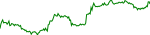
As these fundamental ecosystem frictions build, the daily technical chart structures reflect a market compressed between narrowing parameters. A rising wedge pattern occurs when price action ascends within converging support and resistance lines, frequently signaling fading upside momentum before an aggressive breakdown.
Ether is currently battling a key Fibonacci retracement band while trading inside a converging wedge structure. The upper boundary of this pattern aligns directly with macro resistance clusters, creating an imposing ceiling for bullish continuation. Meanwhile, daily trading volume has trended consistently lower, confirming that recent upward pushes lack strong institutional sponsorship.

"Layer-2 scaling solved Ethereum's execution bottleneck only to create a value-capture crisis for its native token."
This market structure creates a sharp conflict between key market stakeholders. Core developers and ecosystem participants prioritize low transaction costs and throughput expansion, whereas institutional token holders require robust fee-burn mechanics and sustained capital inflows to justify a long-term valuation premium. What this signals structurally is a growing misalignment between operational utility and tokenomic value capture.
In my view, treating Layer-2 expansion as an unmixed blessing ignores the structural fee leakage occurring on the mainnet. Until the protocol establishes clear, direct value-accrual pathways from secondary rollups back to the primary token, market rallies will remain prone to sharp rejections at major technical resistance zones.
🔮 Macro Decoupling and Strategic Roadblocks
Looking beyond immediate technical boundaries, the broader economic context further complicates any sustained bullish recovery narrative. Macroeconomic indicators tracking economic expansion have historically correlated with aggressive crypto adoption cycles, yet current asset behavior reflects an uncharacteristic decoupling.
Even as broader industrial expansion indices show sustained strength, Ether's capital flows remain stubbornly depressed. Investors holding out for forthcoming protocol upgrades—such as network improvements designed to adjust gas parameters—must recognize that technological advancements alone rarely offset macro liquidity withdrawals.
The immediate path forward depends entirely on whether institutional buyers return or primary network metrics experience a sharp structural rebound. Without renewed institutional order flow or an surge in mainnet transactional velocity, the current market consolidation remains highly vulnerable to a downside break toward historic long-term support floors.

The ongoing institutional capital drain highlights a critical repricing of Ether's place in traditional portfolios. Until institutional investment vehicles demonstrate sustained multi-week capital accumulation, spot price increases should be viewed with extreme caution.
$ Traders must closely watch the lower rising trendline boundary. A confirmed daily close below key structural trendline support risks unlocking a rapid, volatility-driven descent back toward long-term historical valuation baselines.
⚖️ ETF Net Flows: The net sum of capital entering or exiting regulated exchange-traded funds, acting as a direct gauge of traditional institutional market sentiment.
⚖️ Layer-2 Value Accrual: The economic mechanism by which economic activity on secondary execution networks generates monetary value or fee revenue for the base Layer-1 token.
⚖️ Rising Wedge: A technical chart pattern formed by two upward-sloping, converging trendlines, typically signaling exhausting buy volume and an impending bearish resolution.
- If spot ETF net redemptions persist through upcoming trading sessions → this signals an extended institutional de-risking regime favoring defensive portfolio positioning.
- If mainnet active user addresses breach multi-month support lows → this triggers an early warning indicator of severe structural utility decay.
- If daily price candles close decisively beneath key trendline boundaries → the market probability shifts toward a retest of historical support levels.
— — Benjamin Graham
This analysis is synthesized from aggregated market data and institutional research insights. It is provided for informational purposes only and should not be construed as financial advice. Cryptocurrency investments carry high risk; please conduct your own due diligence before making any investment decisions.
Related Intelligence

Crypto 176M Campaign Fails Elections: The 176M Lobbying Illusion

Bitcoin Power Law Shapes Yield Curve: 1M Growth Target By 2033
XRP Network Growth Hides US Selloff: Liquidity Illusion

Anthropic Filing Reveals Compute Trap: High Compute Costs Eclipse Scale

XRP Wallet Growth Masks Demand Trap: US Capital Exodus Hits XRP