Gate Money Signals Super App Pivot: A Structural CEX Evolution

The CEX Banking Pivot: How Multi-Asset Super-Apps Are Cannibalizing Traditional Brokerages
Centralized exchanges are no longer trading venues; they are quietly becoming global neo-banks.

As retail and institutional capital demand unified exposure to digital assets and conventional markets, major platforms are aggressively expanding into cross-border fiat settlement, traditional equities, and tokenized commodities. October 2026 trading data demonstrates this structural shift: Gate registered $394 billion in monthly derivatives volume (securing a 10.2% global market share), $49.8 billion in spot trading, and recorded 42% of the global net increase in tokenized gold perpetual futures open interest, maintaining a 7-day average exposure of 1.7 tonnes of gold.
Concurrently, platform reserve audits reflect $8.688 billion in total reserves against $7.332 billion in net customer liabilities—representing an overall reserve ratio of 118.49%, backed by individual reserve ratios of 121.60% for Bitcoin and 123.78% for Ethereum. With gStocks processing over $8.4 billion in cumulative equity volume, Gate ETF surpassing 20 billion USDT across 430 trading pairs, Launchpool monthly staking exceeding $575 million, Idle Earn holding over $340 million, and Polymarket integration volume topping $900 million alongside an 80.57% surge in daily managed assets across AI trading bots, centralized trading desks are fundamentally redesigning their core business models.
🏦 The Great Convergence: CEXs as Sovereign Neo-Banking Hubs
A multi-asset exchange super-app functions like a traditional online bank, but operates on continuous, 24/7 blockchain clearing networks. This model allows capital to pivot instantly between digital tokens, global stocks, and tokenized commodities without leaving the platform ecosystem.
For decades, legacy institutions kept foreign exchange, equities, and precious metals isolated in distinct clearinghouses. The recent surge in tokenized real-world assets has broken these barriers. What this signals structurally is that market participants no longer evaluate exchanges based solely on token listings or liquidity depth. Instead, investor allocation is moving toward platforms that offer comprehensive fiat account capabilities alongside deep exposure to physical commodities, such as tokenized gold futures.

The pattern suggests that trading venues are entering an era of aggressive horizontal integration. Exchanges that successfully merge international banking infrastructure with crypto yield products will gradually absorb retail volume from legacy discount brokerages.
"The platform that controls fiat settlement and real-world asset collateral controls the global liquidity pipeline."
⚙️ Unified Settlement Architecture: Bridging SWIFT Rails and On-Chain Liquidity
Integrating international SWIFT banking rails directly into multi-asset trading applications requires complex, automated liquidity routing behind the scenes. This architecture allows fiat deposits in major currencies to instantly act as collateral for leveraged crypto positions, traditional stock orders, or real-time debit card transactions.
To sustain multi-asset operations without exposing users to insolvency risks, platforms must maintain verifiable excess collateral. Operating at an overall reserve ratio comfortably above full backing—with primary assets maintained well beyond 120% collateralization—provides a critical safety cushion. This structural buffer prevents liquidity runs when automated sweeps clear funds between yield accounts, decentralized trading pools, and real-world debit spending.
In my view, this architecture highlights a key operational conflict between different market stakeholders. Core Web3 developers push for decentralized, non-custodial trading execution, whereas global regulatory frameworks demand stringent identification and centralized balance sheets for multi-market stock trading across international jurisdictions. Merging decentralized prediction market integrations and automated AI trading strategies under a single centralized custodian creates a complex operational balancing act between compliance risk and open-access innovation.
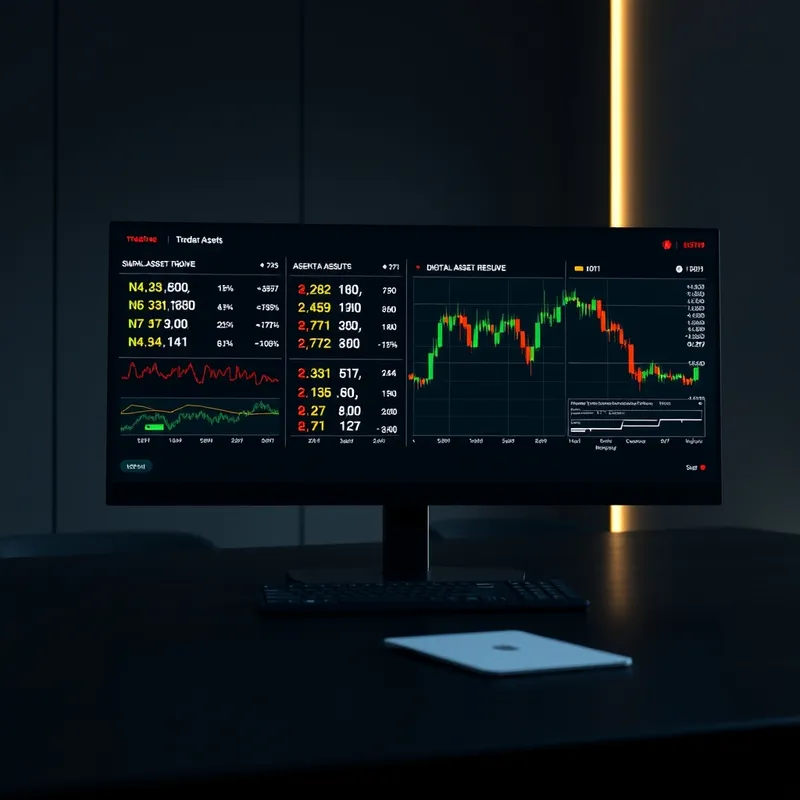
📊 Strategic Platform Metrics Snapshot
The operational landscape reveals a clear divergence between traditional exchange services and next-generation financial super-apps. The table below details key performance benchmarks across trading, asset backing, and ecosystem expansion metrics established during this operational cycle.
| Operating Sector | Volume / Collateral Metric | Market Position / Growth Indicator |
|---|---|---|
| 🌍 Derivatives Market | 📊 $394 Billion Monthly Volume | 🌍 10.2% Global Market Share (Rank #3 CEX) |
| Tokenized Gold Futures | 1.7 Tonnes Average Exposure | ➕ 42% Global Net Increase in Open Interest |
| Proof of Reserves (PoR) | $8.688B Reserves / $7.332B Net Assets | 118.49% Total Ratio (BTC: 121.60%, ETH: 123.78%) |
| Traditional Equities (gStocks) | 📊 $8.4B Cumulative / $2.2B 30-Day Volume | 💰 12,800+ Stocks & ETFs Across 5 Global Markets |
| Ecosystem & Automated Services | 🌍 $900M+ Event Markets / $575M Staking | AI Strategy Managed Assets +80.57% MoM |
📈 Structural Market Impact: The Dissolution of Brokerage Margins
Given this structural shift toward super-app architecture, traditional fintech brokers face severe margin compression. Platforms offering non-stop trading across thousands of global stocks and crypto pairs create an environment where legacy settlement delays are no longer acceptable to active market participants.
Short-term price action across native platform tokens will increasingly reflect total ecosystem velocity rather than pure spot transaction fees. When platforms unify debit card auto-top-ups with yield-generating accounts, capital remains permanently within the exchange ecosystem. Investors can earn yields on idle balances, instantly spend capital at point-of-sale terminals, or allocate funds into leveraged stock and commodity perpetuals without undergoing traditional bank transfer wait times.
Long-term market dynamics indicate that pure-play digital asset exchanges will either evolve into multi-asset managers or be pushed into niche market segments. The continuous expansion of decentralized derivatives, automated algorithmic strategies, and prediction market integrations confirms that liquidity is consolidating around unified hubs capable of serving both Web3 native users and mainstream investors.
"Legacy brokerages compete for quarterly commission fees while crypto super-apps monetize continuous capital velocity."

🔮 Strategic Outlook: Forecasting the Super-App Banking Shift
The expansion of exchange ecosystems into traditional equities and fiat banking rails creates an inevitable regulatory confrontation over cross-border capital flows. As centralized platforms issue personal international bank accounts alongside decentralized financial access, global regulatory bodies will focus on monitoring capital flight vectors and cross-border currency sweeps.
Furthermore, the sharp growth in automated AI-driven strategies and decentralized swapping protocols shows that user interaction is migrating from manual trading terminals to automated asset management programs. Here is what the market is missing: exchange valuations will soon depend more on managed account retention and fiat clearing efficiency than on simple trading volume spikes during crypto bull cycles.
The transformation of digital asset exchanges into multi-asset banking apps marks a point of no return for global capital markets. Expect conventional online brokerages to lobby for strict capital control restrictions as crypto platforms capture market share across traditional equity and commodity sectors.
Over the coming multi-year cycle, exchanges that preserve verified excess collateral while deploying instant payment sweeps across international fiat rails will win the liquidity war. Dominance will belong not to specialized token exchanges, but to integrated financial platforms that connect traditional assets, decentralized protocols, and everyday spending under a single balance sheet.
- If exchange proof-of-reserve ratios for core collateral decline below 110% → this signals a shift toward a defensive self-custody allocation regime.
- If platform traditional stock trading volumes contract over 25% month-over-month → this indicates deteriorating user retention across non-crypto financial products.
- If gold perpetual futures open interest slips below a 25% global share → this triggers a reassessment of platform commodity liquidity dominance.
⚖️ Proof of Reserves (PoR): A cryptographic auditing technique that lets users verify an institution holds on-chain asset reserves matching or exceeding total deposit liabilities in real time.
🌐 Tokenized Real-World Assets (RWAs): Digital representations of physical or legacy financial assets—such as gold bullion or equities—on a blockchain network to enable continuous fractional trading.
💳 Auto-Top-Up Sweep: Automated accounting logic that pulls liquidity from interest-earning yield products or spot accounts to instantly settle point-of-sale card payments.
— Walter Bagehot
This analysis is synthesized from aggregated market data and institutional research insights. It is provided for informational purposes only and should not be construed as financial advice. Cryptocurrency investments carry high risk; please conduct your own due diligence before making any investment decisions.
Related Intelligence

Hot CPI Data Exposes Crypto Fragility: Macro Drag Wipes Out Longs

Leveraged Longs Suffer Market Trap: 1B Liquidation Reset

Ripple Insiders Prefer Equity to XRP: The Equity Disconnect

Crypto Custody Faces Structural Flaws: The Illusion of Multisig

XBTFX Bridges Crypto Fiat Settlement: The Multi Asset Evolution