Genesis Digital Assets AI Pivot: Mining Assets Find New Life

Power Over Hashrate: SWI Group’s €800M Bet Signals the Death of Pure-Play Bitcoin Mining
The real prize of the 2021 crypto mania was never the block reward—it was the grid access.

The institutional capital market has issued a definitive verdict on digital asset infrastructure. In a structural pivot that redefines the value of legacy crypto distressed assets, Amsterdam-listed SWI Group has secured a fresh €800 million capital raise, vaulting its group valuation to roughly €6.1 billion. This equity surge brings total capital raised by the firm since March beyond the €1 billion mark, earmarked explicitly for high-performance computing (HPC) and artificial intelligence data-center builds across North America and Europe.
What makes this allocation remarkable is the cornerstone asset driving the narrative: Genesis Digital Assets. Once the crown jewel of Alameda Research's venture balance sheet—backed by a staggering $1.15 billion deployment prior to the late-2022 collapse—the platform has been fully subsumed by SWI Group, which locked in an equity stake exceeding 70% following complex post-bankruptcy restructurings and the dismissal of reclaim litigation in mid-2026. The asset is being rebranded as SWI Digital, severing its ties to pure-play hash generation.
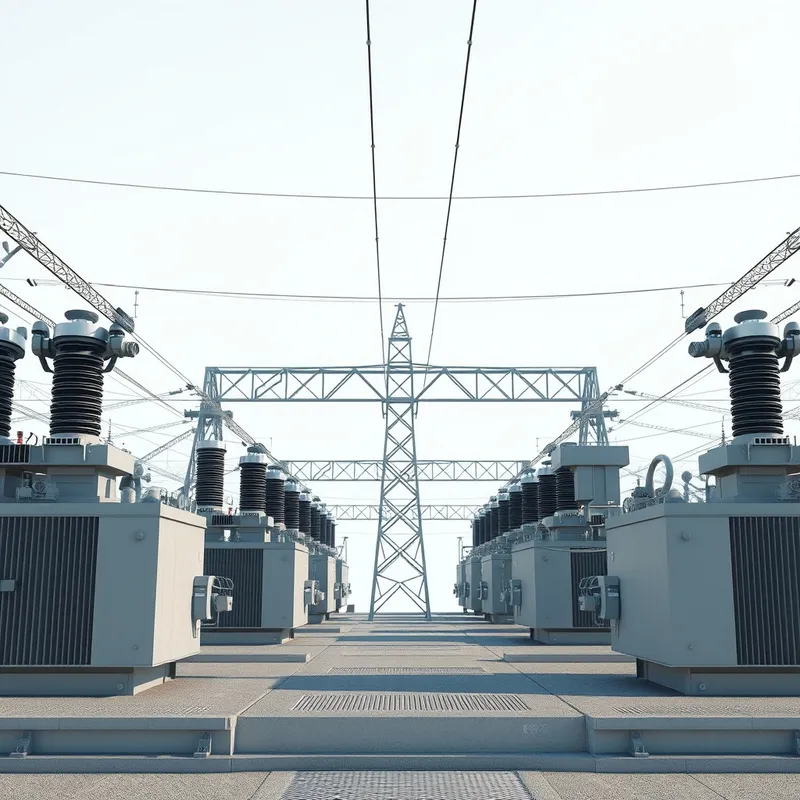
🔌 The Great Power Arbitrage: Why Megawatts Beat Hashrate
To understand why legacy capital is aggressively buying distressed mining footprints, one must examine the baseline unit economics of industrial power allocation. High-performance computing clusters and enterprise AI workloads offer an economic reality that simple Proof-of-Work hashing can no longer match. Current institutional analysis indicates that AI-dedicated computing infrastructure can harvest an estimated $1.5 million in annualized profit per megawatt, compared to roughly $500,000 per megawatt derived from traditional network security validation.
This 3x yield differential has triggered an aggressive market re-rating across publicly traded infrastructure operators. Pure-play miners continue to trade near depressed forward sales multiples in the range of 6.6x. Conversely, operators aggressively pivoting toward HPC models—such as Core Scientific, TeraWulf, Cipher Mining, and Hut 8—command premium valuations averaging 19.4x forward sales. SWI Group’s consolidation of over 4 gigawatts of total power capacity represents a targeted move to monetize power interconnections that would otherwise take up to five years to secure through greenfield grid applications.
"The bottleneck of the machine age is no longer silicon, but municipal grid interconnection queues."

Yet, the migration from SHA-256 validation to high-density matrix math is fraught with severe execution drag. Converting standard air-cooled or basic immersion mining warehouses into Tier 3 or Tier 4 enterprise-grade data centers requires immense upfront capital investment. Retrofitting power sites for AI applications demands an estimated $8 million to $15 million per megawatt in capital expenditure, standing in stark contrast to the standard $700,000 to $1 million per megawatt baseline typical of raw crypto-mining setups.
⚙️ The Telecom Infrastructure Bubble of 1999: An Asset-Flipping Playbook
The current race to convert energy allocations into compute capacity strongly echoes the fiber-optic infrastructure rush of the late 1990s. Following the Telecommunications Act of 1996, overcapitalized network operators spent tens of billions laying thousands of miles of dark fiber across North America, operating under the assumption that immediate bandwith demand would instantly monetize the buildout. When the market collapsed, the physical infrastructure remained intact, allowing secondary consolidators to acquire vast physical networks for pennies on the dollar and lease them to the next generation of internet monoliths.
In my view, SWI’s acquisition of former Alameda assets reflects the exact same structural mechanic: capital-intensive, misallocated crypto equity from the previous bull market cycle is being repurposed into hard infrastructure for the next secular tech expansion. The underlying risk, however, lies in the sheer delay between speculative capital allocation and realized enterprise revenues. Across the publicly traded digital asset mining spectrum, over $100 billion in headline enterprise AI contracts currently correspond to just $1.1 billion in actual annualized billing, with a modest 550 megawatts generating real cash flow against more than 4 gigawatts of pledged capacity.

| Competing Force | The Irreconcilable Friction |
|---|---|
| 📈 Pure-Play Hashrate Maxima vs. Enterprise Infrastructure Capital | 🆙 Sacrificing network security contribution to capture higher enterprise equity multiples. |
| Grid Access Speed vs. CapEx Conversion Drag | Paying 15x higher retrofitting costs to bypass multi-year utility queue delays. |
| 💰 Public Market Valuation vs. Revenue Execution Realities | 🆙 Valuing contracted megawatt intent over actual enterprise cloud contract billing. |
📊 Institutional Capital Flows and the Post-Halving Survival Pivot
This macro reallocation of electrical capacity comes at a time when the underlying network mechanics of Bitcoin are systematically squeezing operating margins. Following successive block reward halvings, pure-play validation cost structures require hyper-efficient, sub-three-cent power purchase agreements (PPAs) just to remain cash-flow positive during localized price drawdowns. The transition toward high-density computing is therefore less of an opportunistic expansion and more of a mandatory survival strategy for large-scale facility owners.
For institutional investors evaluating exposure to public infrastructure proxies, the divergence between hash rate expansion and megawatt repurposing will likely dictate equity performance over the coming 18 to 24 months. As SWI Group deploys its fresh funding, market scrutiny will shift rapidly from total power capacity figures to conversion speed, tenant creditworthiness, and contract execution metrics.
While the valuation rerating for infrastructure pivots appears attractive on paper, market participants must distinguish between announced power allocations and billable compute hours. Firms that fail to bridge the $10M+/MW retrofitting cost barrier face severe margin compression if network difficulty surges. Expect equity market performance to sharply bifurcate between execution-ready facilities and speculative power holders.
⚖️ Grid
— coin24.news Editorial
This analysis is synthesized from aggregated market data and institutional research insights. It is provided for informational purposes only and should not be construed as financial advice. Cryptocurrency investments carry high risk; please conduct your own due diligence before making any investment decisions.
Related Intelligence

Bitcoin Rallies Into Heavy Resistance: Liquidity Wall Threatens Rebound

Bond Yields Threaten Bitcoin Recovery: Liquidity Undertow

Bitcoin Options Expiry Masks Puts: Quiet CPI week hides massive downside overhang

Cross-Margin Liquidation Trap: How Perfect Hedges Fail

Thailand Traps Bitcoin Wealth: Domestic ETF Capital Enclosure

Corporate Bitcoin Holds Debt Danger: The Debt Refinancing Trap
Go Beyond the Headlines
Crypto Market Intelligence
Understand where institutional capital is moving before it impacts the broader crypto market.
Market Brief
Start your day with a concise institutional overview of the crypto market.
Market Stress Index
Monitor real-time market stress to identify fear, panic, and potential reversal zones.
Crypto DCA Calculator
Model long-term accumulation strategies and compare different entry plans.