Hidden Miner Power Traps Undermine: Energy Waste Illusion
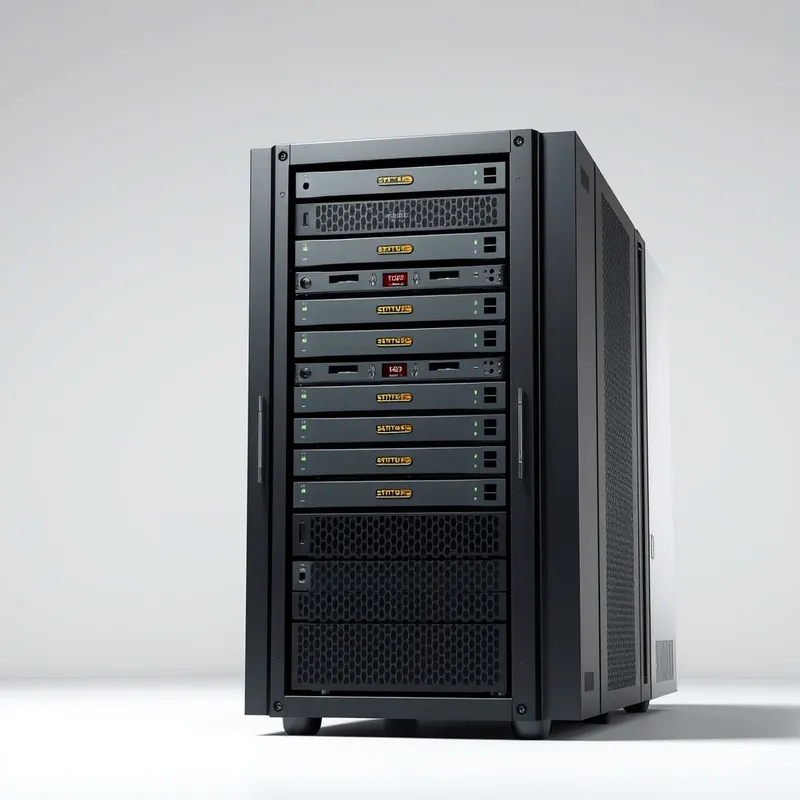
The Silent Thermodynamic Drain: Why Algorithmic Friction Threatens Bitcoin’s Grid-Balancing Thesis
Miners are burning millions to balance power grids, only for algorithms to pocket the change.

As Bitcoin miners increasingly pivot to serving as flexible load-balancers for global energy grids, a silent structural flaw in pool-level communication protocols is quietly eroding their margins.

This technical friction turns what should be a profitable power-down into a thermodynamic trap, challenging the economic viability of green mining initiatives.
⚡ The Algorithmic Friction of Flexible Power Demands
Variable difficulty controllers are software systems used by mining pools to adjust how hard it is for an individual machine to prove its work. On September 18, 2026, a technical highlight by Bitcoin Optech brought public attention to an analysis first published in July by mining engineer Eric Price, exposing a critical vulnerability in these controllers.
When a miner abruptly curtails its physical power output—a common occurrence during extreme weather events like the January 2026 winter storm—the pool-side controller often fails to adjust. If the controller only recalculates difficulty when a new share is submitted, the drastically slowed miner is left facing a target calibrated for its previous, maximum speed.
This creates a digital deadlock. The miner continues to consume electricity and compute hashes, but because the target is set too high, the probability of submitting a valid share drops to near zero, leaving the operator uncompensated for the energy they continue to burn.
📉 The Hidden Cost of Grid Balancing and Hashrate Volatility
Given this algorithmic bottleneck, the immediate financial impact on corporate mining balance sheets is far more severe than a simple temporary drop in hashrate.
When industrial miners participate in demand-response programs, they expect to offset lost mining revenue with grid curtailment credits. However, if their machines continue to run at low power without submitting shares, they are essentially throwing capital into a thermodynamic vacuum.
"When algorithms fail to adapt to physical reality, efficiency becomes an expensive financial illusion."
For pay-per-share miners, this means a complete cessation of payouts during the transition window. Under proportional payout structures, the missing shares from curtailed miners simply redistribute the reward pool to unaffected participants, penalizing the very operators attempting to act as responsible grid partners.
⚙️ The Knight Capital Feedback Loop of 2012
If this structural vulnerability remains unaddressed, the resulting feedback loop mirrors some of the most famous algorithmic failures in traditional financial history.

During the 2012 Knight Capital crisis, an automated trading system became trapped in an unmonitored execution loop, buying and selling millions of shares without verifying the state of its internal inventory. The disaster was not caused by a lack of capital, but by a broken feedback loop that assumed the system was operating under normal conditions while it was actually bleeding funds in real-time.
In my view, the vardiff trap is the thermodynamic equivalent of this classic market-making failure. The mining rig is like a cyclist trying to change gears while stuck on a vertical wall, spinning the pedals furiously without engaging the chain, while the pool controller blindly waits for a signal that cannot physically be delivered.
| Competing Force | The Irreconcilable Friction |
|---|---|
| Industrial Mining Pools | Excluding stalled miners to protect active participant reward shares. |
| Grid Operators | Demanding instant curtailment while protocol loops burn uncompensated energy. |
| Stratum V2 Protocols | 📡 Balancing timer-based updates against network bandwidth overhead. |
🔮 The Protocol Upgrade Race and the DePIN Solution
While this historical parallel highlights the danger of unchecked feedback loops, the future outlook depends heavily on the adoption of modern, protective protocol upgrades.
The transition to advanced pool communication standards offers a technical remedy. Reference implementations of modern protocols utilize timer-based difficulty recalculations, ensuring that even if a miner slows down abruptly, the pool will eventually lower the target difficulty without requiring a share submission.
"Auditability is the ultimate antidote to algorithmic exploitation."
However, because these protections are tied to reference software rather than the core protocol specification, adoption remains highly uneven. Forward-thinking mining operations are now utilizing specialized proxy testing tools to audit their pools, forcing coordinators to upgrade their infrastructure or face rapid miner flight.
The discovery of the vardiff trap will likely trigger a wave of miner-led auditing. Publicly traded mining operations cannot afford to lose margin during grid curtailments. Expect mining pools to face strict SLA demands from institutional clients, forcing a rapid transition to timer-based updates.
Miners who fail to implement local proxy audits will silently bleed capital during periods of high grid volatility.
⚖️ Vardiff (Variable Difficulty): An algorithmic mechanism used by mining pools to dynamically adjust the difficulty of shares required from individual miners to maintain a steady stream of work proofs.
⚖️ Stratum V2: An upgraded next-generation protocol for communication between mining devices and pools, designed to improve security
— — coin24.news Editorial
This analysis is synthesized from aggregated market data and institutional research insights. It is provided for informational purposes only and should not be construed as financial advice. Cryptocurrency investments carry high risk; please conduct your own due diligence before making any investment decisions.
Related Intelligence

Bitcoin ETF Profits Mask Weak Demand: Liquidity Illusion - 81k Cost Basis

Lightning Security Flaws Drain Nodes: The L2 Scaling Fault Line

Software exploits bypass private keys: The Custody Illusion

MicroStrategy faces liquidity limits: The Treasury Bottleneck

Institutions drop Bitcoin exposure: The Eighty Thousand Facade

Cardano Rejects Founder Treasury Bid: The Price of Autonomy
Go Beyond the Headlines
Crypto Market Intelligence
Understand where institutional capital is moving before it impacts the broader crypto market.
Market Brief
Start your day with a concise institutional overview of the crypto market.
Market Stress Index
Monitor real-time market stress to identify fear, panic, and potential reversal zones.
Crypto DCA Calculator
Model long-term accumulation strategies and compare different entry plans.