Hoskinson Forecasts AI Capital Waste: The Decentralized AI Shift

The AI Capital Trap: Why Distributed Compute May Outlast Centralized Silicon
Centralized artificial intelligence is currently consuming capital at a rate that physical infrastructure cannot sustain.

The current race for machine intelligence relies on exponential growth in hyperscale data center capacity, but this trajectory faces compounding structural bottlenecks. Power grids face hard physical expansion limits, while centralized AI labs confront narrowing margins on models that require compounding multi-billion-dollar investments for incremental performance gains.
🔌 Physical Grid Constraints and the Impending AI Capital Reallocation
Data center expansion continues to outpace electrical grid capacity. Industry estimates indicate that centralized facility spending has expanded by an order of magnitude period-over-period, yet municipal utility grids cannot match this timeline due to transformer supply shortages and regulatory approval delays.
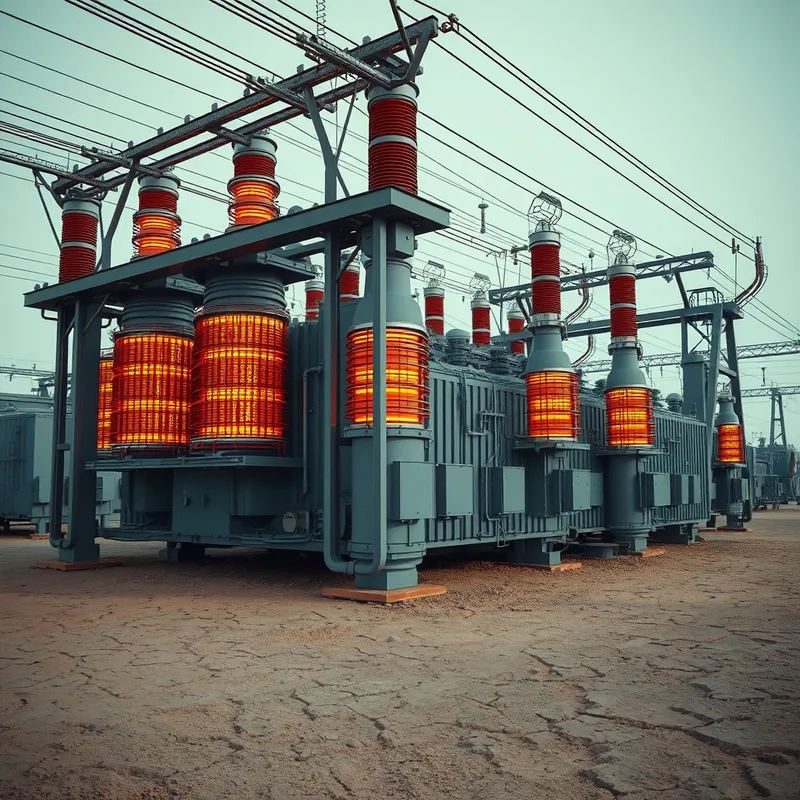
To understand this bottleneck, consider electrical grids as rigid pipeline networks: forcing exponentially higher energy through fixed infrastructure causes severe systemic friction before new capacity can ever be built. Consequently, frontier AI developers face escalating costs to power training runs, directly impacting corporate margins.
This economic reality is driving interest toward alternative network topologies. Distributed networks that pool spare consumer hardware—such as mobile devices and local silicon setups like Apple’s M5 Mac Studio—offer a potential counterweight. Cryptoeconomic rails provide the necessary trustless settlement layer, enabling micro-payments for compute, data provenance tracking, and decentralized governance mechanisms that centralized entities currently struggle to implement seamlessly.
"Data centers are approaching a physical wall that software efficiency alone cannot breach."

🌐 Regulatory Gridlock and the Telecom Fiber Parallel
The current massive capital outlay for centralized data infrastructure reflects historical infrastructure bubbles. During the late-1990s telecommunications buildout, billions of dollars were spent laying vast fiber-optic networks. Following the initial rush, roughly 90% of those newly installed lines lay dark and unused for nearly a decade before market demand caught up to physical capacity.
A similar dynamic is taking shape across centralized AI compute clusters today. Silicon over-provisioning risks creating widespread idle capacity if model optimization shifts demand toward smaller, localized inference networks rather than giant centralized training runs.
Simultaneously, political friction continues to delay legislative frameworks designed to clarify market rules. Following the failure of the Senate to secure the required 60 votes to advance key crypto legislation on September 15, legislative momentum in the U.S. has stalled. Political tie-ins and shifting policy priorities suggest comprehensive statutory frameworks like the CLARITY Act could be pushed back toward 2029, leaving market participants navigating prolonged regulatory ambiguity.

| Competing Force | The Irreconcilable Friction |
|---|---|
| Centralized AI Labs vs Power Grids | Demanding exponential energy scaling against fixed physical grid capacity limits. |
| Hyperscale Capex vs Local Hardware | Sunk capital in mega-clusters challenged by efficient edge-node inference models. |
| Legislative Reform vs Political Inertia | 💰 Failing 60-vote Senate thresholds delays statutory market clarity for years. |
📊 Valuation Metrics and Ecosystem Realignment
Given these structural dynamics, crypto markets are likely to experience sector-specific divergences. Infrastructure protocols focused on DePIN (Decentralized Physical Infrastructure Networks), compute aggregation, and verifiable zero-knowledge inference are positioning to capture market share as centralized training costs escalate.
In contrast, tokens relying entirely on speculative regulatory catalysts may experience lingering sell pressure. With landmark U.S. legislative actions delayed past immediate congressional cycles, institutional capital is likely to prioritize working infrastructure over regulatory-dependent asset plays.
As centralized AI training costs hit physical energy limits, decentralized compute networks will transition from theoretical alternatives to primary infrastructure. Capital allocation will aggressively shift toward decentralized physical infrastructure networks over the next decade. Protocols that solve data provenance, compute verification, and micro-settlements will establish long-term economic moats.
⚖️ DePIN (Decentralized Physical Infrastructure Networks): Blockchain protocols that incentivize individuals to deploy hardware and physical resources, such as GPUs or storage, in exchange for token rewards.
⚖️ Data Provenance: The cryptographically verifiable historical record detailing the origin, ownership, and transformations of a dataset used in AI model training.
- If institutional capital expenditures in centralized data centers slow down → allocate toward decentralized compute aggregation protocols.
- If power grid capacity constraints delay regional hyperscale expansions → monitor network active node growth on distributed GPU networks.
- If Senate voting thresholds fail consistently on crypto bills → hedge exposure to regulatory-dependent tokens in favor of revenue-generating infrastructure.
— — coin24.news Editorial
This analysis is synthesized from aggregated market data and institutional research insights. It is provided for informational purposes only and should not be construed as financial advice. Cryptocurrency investments carry high risk; please conduct your own due diligence before making any investment decisions.
Related Intelligence

S&P Global Acquires OpenZeppelin: Institutional Enclosure of Onchain Code

Trump Tariff Shock Threatens Bitcoin: The Great Liquidity Drag

RWA volume surge masks market reality: The Liquidity Illusion

Brazil blocks stablecoin settlements: The Sovereign Enclosure

Bitcoin battles thin weekend volume: The 82k Resistance Trap