Institutional ETF Buys Mask Real Risk: Inside the ETF Facade

Wall Street's Great Illusion: Decoupling Banking Balance Sheets from Bitcoin’s Directional Liquidity
Banking titans are expanding Bitcoin ETF allocations while spot market liquidity bleeds into weakness.

Regulatory SEC Form 13F disclosures filed on November 6 expose a dramatic surge in Q3 2026 institutional ETF holdings. Barclays expanded its iShares Bitcoin Trust (IBIT) stance by 48.3% to 3,942,900 shares valued at roughly $186.66 million (up from 2.66 million shares), while Citigroup boosted its IBIT exposure by 50% to 521,000 shares alongside a new $119 million entry into Fidelity’s Bitcoin ETF. Meanwhile, corporate entities like Trump Media added 1,510 BTC to their balance sheets. Yet, despite these institutional metrics, Bitcoin’s spot price remains locked in a battle between its $72,000–$74,000 support zone and the psychological $80,000 ceiling, leaving key resistance levels at $75,000 and $76,000–$77,500 unchallenged.

🏛️ The Institutional Accumulation Trap: Why Lagging Disclosures Mislead Retail Traders
Institutional regulatory filings are backwards-looking reports that show past balance sheet positions rather than current trading intentions. Understanding SEC disclosures requires recognizing that major investment banks report historical holdings recorded at the end of the previous quarter, rendering them delayed telemetry rather than real-time directional buy orders.
The global monetary environment is undergoing a structural shift where institutional custodians operate primarily as balance-sheet intermediaries for client market-making rather than net buyers. While prime brokerages expand their paper footprints in spot-backed funds, direct spot order book liquidity on native crypto venues has simultaneously compressed. The market is witnessing an acute decoupling between institutional product adoption and actual spot market price velocity.

"Wall Street is not accumulating your digital scarcity; it is building a high-margin tollbooth around it."
⚙️ Delta-Neutral Mechanics: Deconstructing the Banking Arbitrage Engine
Spot exchange-traded funds rely on specialized financial firms called authorized participants to create and redeem shares by buying or selling the underlying asset. When mega-cap banking networks report significant percentage expansions in spot-backed ETF products, a vast majority of those allocations serve to offset short derivative futures positions or facilitate client swap desks rather than absorbing spot supply from open circulation.
What this signals structurally is a fundamental misunderstanding of bank trading desks. Unlike corporate treasuries making outright spot accumulation buys, traditional banking entities utilize ETF vehicles for cash-and-carry yield arbitrage, structured product creation, and collateral management. In my view, celebrating institutional expansion without analyzing offset derivative liabilities is financial self-deception; the banking sector is capturing basis yield while leaving the underlying asset exposed to spot sell-offs.
📈 Order Book Dynamics: The Structural Pivot Point for Asset Recovery
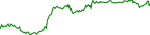
Building upon these mechanical realities, technical market structures present a stark contrast between institutional custody growth and spot market price action. The primary digital asset is currently attempting to hold its lower defensive foundation, where a definitive failure would break structural integrity and risk pushing price discovery down toward major psychological support levels.

For momentum to re-establish a macro bullish trajectory, buying volume must clear the immediate overhead liquidity ceiling and convert that multi-layered resistance zone into definitive support. Strip away the corporate announcement noise, and the market reality remains unchanged: until spot order books confirm aggressive spot bids rather than passive institutional custody, intermediate technical rallies remain highly vulnerable to distribution into local strength.
🔮 Strategic Outlook: Liquidity Regime Shifts Through 2027
The intersection of institutional custody expansion and spot market liquidity constraints signals a transition into a mature, derivative-dominated market cycle. As Wall Street prime brokerages expand their derivative overlay strategies, historical cycles driven purely by spot retail demand are being replaced by institutional risk-hedging mechanics.
Investors must distinguish between custodial balance-sheet growth and true directional spot demand. While financial institutional participation provides long-term infrastructure legitimacy, it also introduces sophisticated short hedging that can cap upward price velocity during cyclical bull runs.
The market is shifting from spot-driven scarcity rallies toward complex institutional balance-sheet facilitation. True bullish momentum will not come from delayed institutional filing reports, but from spot market volume absorption clearing key structural resistance levels. Expect macro volatility to persist as delta-neutral arbitrage unwinds across market cycles.

⚖️ Form 13F Disclosure: A mandatory quarterly report filed by institutional investment managers with the SEC to disclose their equity holdings, offering a historical snapshot rather than real-time trading data.
⚡ Authorized Participant (AP): A specialized financial institution responsible for creating and redeeming ETF shares in the primary market to keep the ETF share price aligned with its underlying net asset value.
🔄 Delta-Neutral Arbitrage: A trading strategy that offsets directional risk by holding equal long and short positions across different venues, capturing yield or basis spreads without taking a directional stance on the asset's price.
- If net daily spot ETF flows turn negative for five consecutive sessions → risk parameters mandate reducing directional leverage exposure.
- If price breaks below key support on heavy spot volume → on-chain metrics signal a transition toward structural re-accumulation.
- If futures basis yields collapse below risk-free benchmark rates → delta-neutral institutional arbitrage unwinds, triggering localized selling pressure.
— — coin24.news Editorial
This analysis is synthesized from aggregated market data and institutional research insights. It is provided for informational purposes only and should not be construed as financial advice. Cryptocurrency investments carry high risk; please conduct your own due diligence before making any investment decisions.
Related Intelligence

MSCI Index Exclusion Hits Strategy: The Capital Flywheel Risk

XBTFX Bridges Crypto Fiat Settlement: The Multi Asset Evolution

Bitcoin Market Fear Masks Bull Trend: Woo Flags 80k Accumulation

Zcash Breaks Key Support Near 1000: Outflows Crush Sector Rally

Retail Crypto Traders Fail to Profit: The Illusion of Fast Wealth