Kalshi Court Battle Tests Regulation: Federal Jurisdictional Overreach

Kalshi’s Jurisdictional High-Wire Act Exposes the Fragility of Federal Crypto Oversight
Federal regulatory clearance does not grant immunity from state-level jurisdictional warfare.

Prediction markets have officially collided with the immovable object of state gaming laws, creating a high-stakes legal battle that threatens to rewrite the rules of digital asset and derivatives innovation. When New York State Supreme Court Judge Melissa Crane declined to immediately block Kalshi from operating during a November 23 hearing, it provided a temporary reprieve—but it also laid bare the profound structural tension between federal authority and state sovereignty. The platform’s fate now hinges on an expedited briefing schedule, with broader implications that stretch far beyond local operations into the core of how financial contracts are classified.
🏛️ The Federal Preemption Clash and State Sovereignty
The core legal friction relies on a fundamental contradiction in American financial regulation: federal oversight versus localized police powers. Kalshi operates under its designation as a federally regulated designated contract market, pointing to the Commodity Futures Trading Commission (CFTC)—led by Chair Mike Selig—as its exclusive regulatory authority.
Conversely, state regulators view these financial instruments through an entirely different lens. New York Attorney General Letitia James argues that offering sports-related event contracts without authorization from the New York State Gaming Commission amounts to unlicensed gambling operations. This creates an impossible regulatory labyrinth where a federally sanctioned product can simultaneously be treated as a criminal enterprise at the state level.

"A federal badge is rapidly becoming a local target."
Judge Crane’s decision to avoid an immediate restraining order reflects the immense complexity of unravelling this dual-regulatory framework. By opting for an expedited briefing process rather than a rushed injunction, the court acknowledged the potential chaos an immediate ban would inflict on cross-jurisdictional financial architecture.
⚖️ Fragmented Jurisprudence and the Supreme Court Horizon
The legal instability surrounding event contracts is not isolated to New York, representing a deeply fractured national judiciary. Three federal appellate courts have ruled in favor of state regulatory authority over these platforms this year, while a fourth appellate court sided with Kalshi, creating a clear circuit split that practically demands intervention from the highest court.
With Kalshi facing a December 7 deadline to respond in a parallel dispute involving New Jersey, the path to the U.S. Supreme Court is rapidly clearing. The Supreme Court is expected to signal early next year whether it will take up the matter and resolve the constitutional standoff.

If the Supreme Court ultimately favors state-level authority, the business model of decentralized and federally registered prediction markets faces an existential constraint. Platforms would be forced to geo-fence individual states or secure dozens of disparate gaming licenses, fundamentally altering the economics of modern fintech infrastructure.
👥 Demographic Guardrails and the Age Verification Trap
Beyond abstract constitutional questions, the litigation has exposed urgent operational vulnerabilities regarding user access and demographic compliance. During the proceedings, judicial scrutiny focused heavily on safeguards for users between 18 and 21 years old, given that New York strictly prohibits gambling for individuals under the age of 21.
This demographic friction highlights a broader operational reality for crypto-native and alternative financial platforms. When products bridge the gap between sophisticated financial derivatives and consumer-facing prediction tools, traditional age-gating mechanisms prove inadequate for rigorous regulatory compliance.
Should the platform fail to reach an agreement on age-protection safeguards with state authorities, a follow-up hearing remains tentatively scheduled. This operational pressure point demonstrates that compliance failures at the user-interface level can easily trigger broader legal defeats.
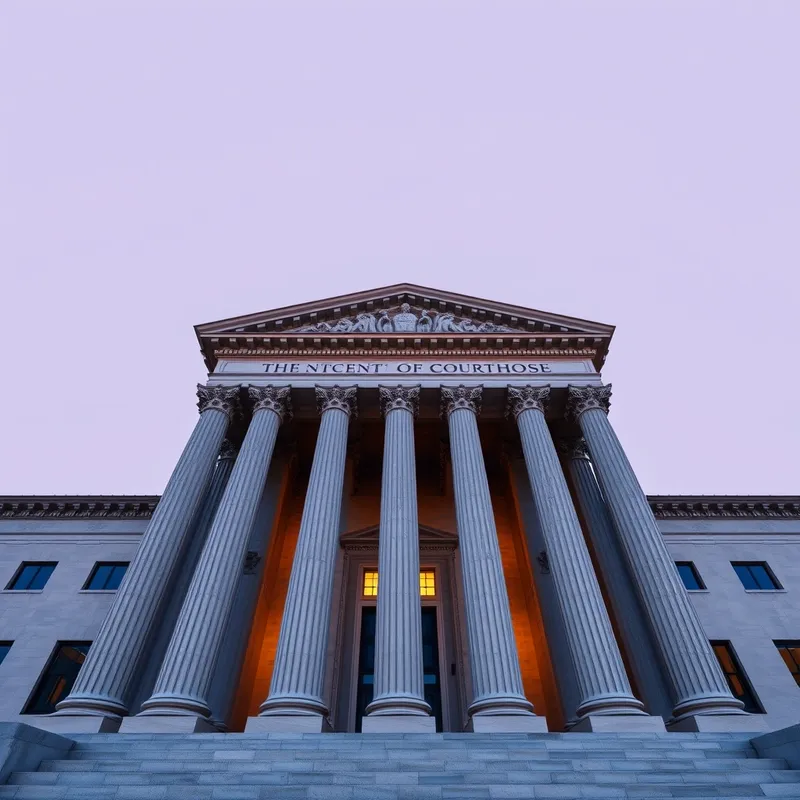
The proliferation of conflicting circuit court rulings creates an untenable operating environment for innovation-driven financial platforms. Capital will increasingly flow toward jurisdictions offering clear preemption rules while shunning states weaponizing localized gaming laws. The upcoming Supreme Court docket will ultimately determine whether federal oversight holds true supremacy over digital-age financial products.
⚖️ Designated Contract Market (DCM): An exchange formally approved by the CFTC to list derivatives and futures contracts, operating under strict federal oversight.
🏛️ Regulatory Preemption: A legal doctrine where higher-level government authority displaces or overrides conflicting regulations enacted by lower-level jurisdictions.
- If the U.S. Supreme Court declines certiorari on state prediction market challenges → institutional allocation to retail prediction protocols experiences systemic contraction.
- If state gaming commissions successfully enforce geo-fencing mandates → cross-border liquidity fragmentation accelerates across alternative derivatives markets.
- If federal appellate rulings achieve harmonization favoring the CFTC → regulatory clarity unlocks expanded institutional venture funding for event-contract platforms.
— coin24.news Editorial
This analysis is synthesized from aggregated market data and institutional research insights. It is provided for informational purposes only and should not be construed as financial advice. Cryptocurrency investments carry high risk; please conduct your own due diligence before making any investment decisions.
Related Intelligence

US Treasury Hacked via AI Bot Exploits: Wall Street Exposed to Chaos

Binance Internal Rift Exposes Risks: House of Cards

Russia Will Impose 22% VAT on USDT Trades as Moscow Exchange Opens

South Korea Crypto Bill Rewrites Asia: Structural Shift in Digital Assets

SpaceX Stock Dilution Risks Rise Now: Trump Accounts Dilution Trap