MEXC Crowns Alpha Arena Champions: Live demo contest exposes hidden trader survival metrics
The Gamification of Liquidity: What Live Trading Arenas Reveal About APAC Capital Dynamics
Live demo competitions are no longer marketing gimmicks; they are real-time stress tests of trader psychology under liquidity stress.

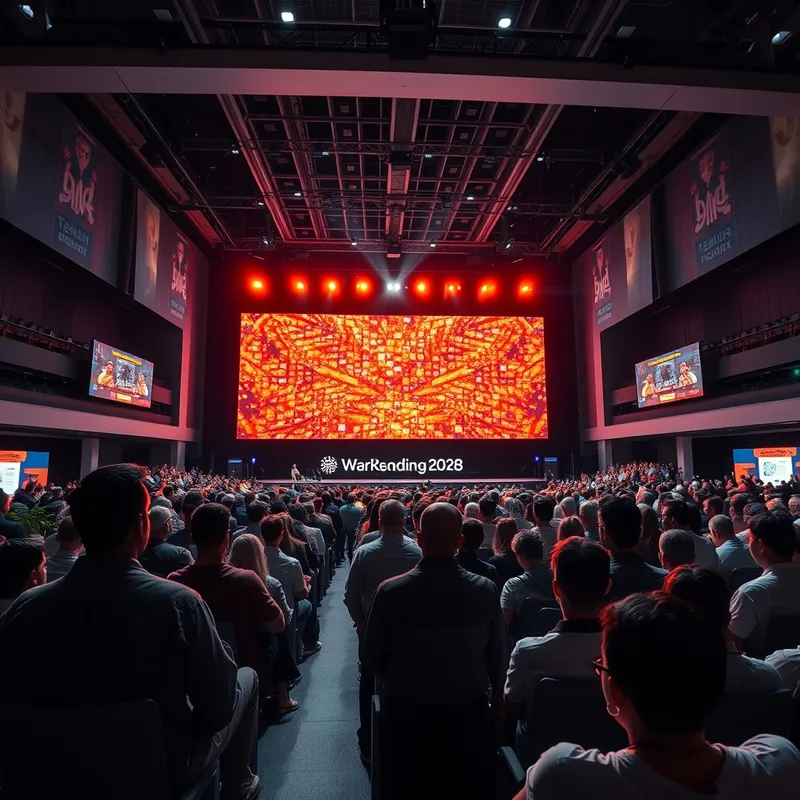
The conclusion of the Alpha Arena S03 Bali Final on August 21 during Coinfest Asia 2026 highlights a decisive pivot in how centralized exchanges cultivate regional volume. By bringing 20 elite finalists from across 12 countries into an in-person, simulated environment with a $100,000 prize pool, the event provided a rare window into the execution strategies favored by Asia-Pacific trading desks.
🌏 The APAC Liquidity Engine Takes Center Stage
Following prior installments in European tech hubs like Amsterdam and Berlin, the expansion into the Asia-Pacific theater represents a calculated geographic reallocation. The competition culminated in Japan’s Arumando capturing the top spot, while Murasaki Trades of the Philippines and South Korea’s Coin6097 secured second and third positions respectively. What this signals is an accelerating concentration of agile, high-frequency manual talent within specific APAC corridors.
When analyzing order flow dynamics, APAC retail and pro-sumer traders consistently exhibit higher turnover velocity than their Western counterparts. The event attracted over 200 physical attendees and an aggregate audience exceeding 10,000 viewers across digital channels. This demonstrates that gamified infrastructure acts as a powerful funnel for platform user acquisition and volume generation.

"Execution speed under artificial constraints reveals structural flaws that paper backtesting consistently misses."
The mechanics of the environment—combining heartbeat tracking, timed execution windows, and randomized market modifiers—forced participants to manage tail risk in real time. In a stark demonstration of microstructural volatility, the leading contender was displaced in the final 30 seconds of the match. Such sharp reversals illustrate how late-stage leverage liquidation mechanics mirror live market cascade dynamics.
🏛️ Anatomy of the Gladiatorial Trading Arena
To contextualize this dynamic within global finance, consider the proprietary trading firm combines of the early 2000s, such as the open-outcry pit conversions during Chicago’s shift to electronic trading in 2001. In that era, institutions used high-stress simulated trading floors to identify operators capable of managing inventory during structural liquidity shocks. The goal was not merely identifying profitable strategies, but isolating behavioral stability under adverse conditions.
In my view, modern crypto arenas serve an identical structural purpose, albeit with a secondary strategic objective: exchange ecosystem locking. Sponsoring entities like venture arms use these talent pipelines to incubate proprietary trading groups, direct market-making grants, and allocate capital into emerging networks like TON and Aptos. The competition environment acts as a filtration layer for human capital.

The lessons learned from historic pit-to-screen transitions demonstrate that traders relying strictly on low-volatility directional strategies fail when liquidity parameters shift unexpectedly. The late-stage leaderboard collapse observed in Bali reflects this precise dynamic—over-leveraged positions built on stable order books crumble when volatility variables change.
| Competing Force | The Irreconcilable Friction |
|---|---|
| 🏢 Exchanges vs. High-Beta Traders | 🔁 Trading volume incentivization vs. retail account survival rates. |
| Ecosystem Builders vs. Speculative Capital | Long-term Layer-1 utility vs. mercenary short-term yield extraction. |
| Gamified Infrastructure vs. Risk Management | Spectator entertainment imperatives vs. disciplined position sizing parameters. |
📈 Ecosystem Incubation and Strategic Order Allocation
Building on the historical imperative of talent discovery, the financial backing provided by investment funds signals a broader trend toward vertical integration. Exchange venture arms are no longer passive capital allocators. By directly connecting talent discovery initiatives with targeted deployment in alternative Layer-1 architectures, institutions establish captive liquidity loops.
For investors, this trend points to a shift in how capital flows into altcoin infrastructure. Early-stage networks require active market makers to maintain narrow bid-ask spreads and ensure deep order books. Arenas function as an informal pipeline where talented traders are onboarded into liquidity provision programs for supported ecosystems.
"Capital allocation is migrating from passive venture holding to active, gamified market-making networks."

Looking ahead, expect centralized entities to increase their exposure to live trading formats as regulatory scrutiny on passive yield generation tightens. By shifting public focus toward skill-based, execution-driven trading competitions, platforms construct a defensible framework for user engagement while building proprietary market-depth data across primary trading pairs.
The integration of live competitive venues with institutional venture funds will likely accelerate capital density within targeted alternative Layer-1 networks. Traders capable of surviving high-stress dynamic environments will increasingly dictate short-term pricing efficiency across emerging token markets. Expect exchange-backed incubator programs to increasingly tie liquidity grants directly to verified execution metrics rather than legacy capital size.
⚖️ Simulated Execution (DEMO): Environment mirroring live order books and latency parameters without risking principal capital, used for testing execution strategies under market stress.
⚡ Market Making Grants: Capital allocations provided by protocols or venture funds to specialized desks to maintain depth and order book stability on target assets.
🛡️ Tail Risk Management: Strategies designed to protect portfolios against extreme, low-probability market events that trigger rapid liquidation cascades.
- If exchange-sponsored tournament volume spikes by 30% month-over-month → monitor associated Layer-1 tokens for short-term liquidity inflows.
- If live derivative spread spreads widen during scheduled stress events → reduce leverage across correlated secondary trading pairs.
- If institutional venture funds pivot toward execution-based grants → track active developer address growth on targeted L1 ecosystems.
— — coin24.news Editorial
This analysis is synthesized from aggregated market data and institutional research insights. It is provided for informational purposes only and should not be construed as financial advice. Cryptocurrency investments carry high risk; please conduct your own due diligence before making any investment decisions.
Related Intelligence

Korea Pension Fund Rejects Bitcoin: The AI Liquidity Illusion

Ledger Security Flaws Expose Wallets: The Cold Storage Illusion

Marvell Stock Sinks Amid AI Reality: The valuation overhead trap

Gold Miners Surge on Debasement Trade: The Scarce Asset Torrent

XRP Whales Defy Heavy Short Sellers: A Tactical Liquidity Duel