NFT Storage Costs Demand Reckoning: The Hidden Rent After the Hype

The Ghost in the Blockchain: How Unfunded Storage Rent Threatens $100B in Digital Assets
The digital art boom promised eternal ownership, but forgotten maintenance costs are breaking the illusion.

When high-profile auction houses cleared Christie's Beeple sale at $69.35 million and Sotheby's $24.40 million collection of 101 Bored Ape Yacht Club tokens, the bull market treated digital scarcity as a solved technological frontier. Five years later, the structural realities of centralized data hosting have finally caught up with non-fungible asset valuations.
The recent shutdown of major legacy marketplaces like Gemini-owned Nifty Gateway—which set an April 23 withdrawal deadline while attempting to migrate metadata to Arweave—highlights an architectural flaw at the heart of Web3 consumer infrastructure. The market is discovering that purchasing a cryptographic token on-chain does not guarantee the longevity of off-chain artwork hosting.
🏗️ The Infrastructure Mismatch: Web3 Scarcity Meets Web2 Hosting Costs
To understand why legacy digital collectibles face systemic data rot, one must separate the ledger record from the underlying asset. Standard smart contracts, including the widely deployed ERC-721 token framework on Ethereum, manage ownership states efficiently by holding only pointer data rather than heavy media files.
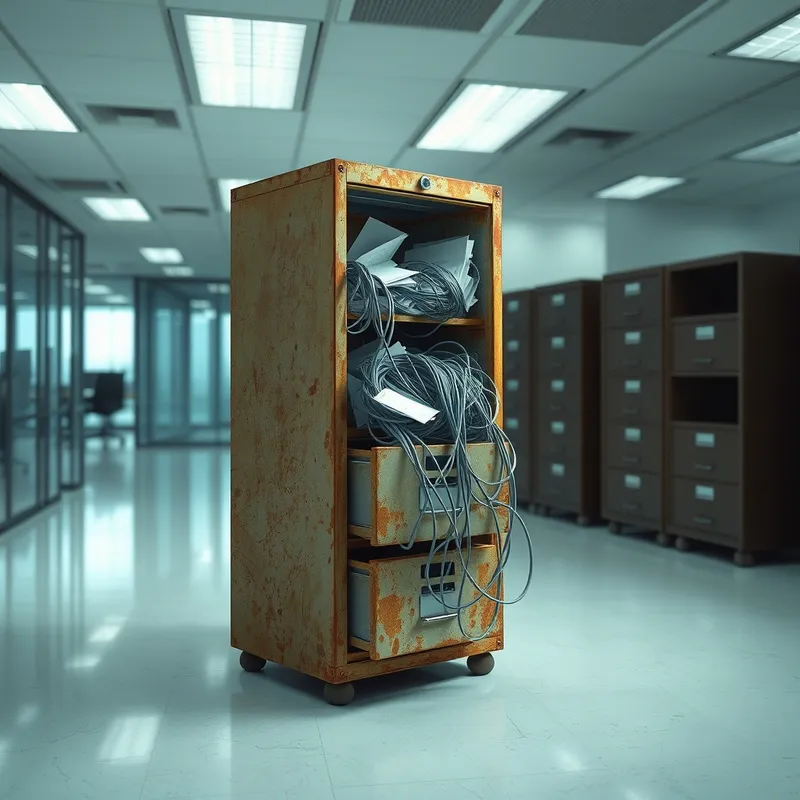
Storing high-resolution image or video files directly within EVM state byte-code is cost-prohibitive for creators, forcing platforms to store media on centralized Web2 cloud servers or hybrid decentralized setups. When the entity funding those traditional cloud servers shuts down operations, the pointer link remains intact on the ledger, but it leads to a broken web gateway.

"An immutable token pointing to an unmaintained Web2 server is simply a digital deed to a vacant lot."
This dynamic exposes a fundamental revenue misallocation across the Web3 primary market model. Minting platforms and creators captured front-loaded upfront capital during high-volume trading phases, but failed to establish perpetual endowment funds to offset ongoing IPFS pinning fees or permanent storage contracts.
📉 Market Repricing and the Custody Shift to Decentralized Storage
Building on this structural vulnerability, secondary market valuations are beginning to bifurcate based on metadata architecture rather than purely aesthetic rarity traits. Institutional collectors and specialized funds are performing rigorous technical audits, discounting assets tied to corporate AWS gateways while assigning a premium to fully on-chain or Arweave-backed collections.
Decentralized pinning solutions like IPFS offer content-addressable storage, yet they require active node participation or ongoing financial incentives to prevent garbage collection. If no node pins the underlying media file, the decentralized gateway fails just as definitively as a powered-down centralized server.
What this signals is an inevitable migration toward sovereign collector responsibility. Investors are forced to evolve from passive app users into active network infrastructure operators, personally maintaining local nodes or paying ongoing decentralized storage contracts to ensure their portfolio remains viewable across global marketplaces.
🏛️ The Museum Conservator Model: Lessons from the 1990s Interactive Media Collapse
If this infrastructure drag feels unprecedented in Web3, traditional art institutions encountered the exact same structural trap decades ago. During the 1990s digital art expansion—epitomized by MoMA’s 2016 restoration effort of Teiji Furuhashi’s 1994 installation Lovers—museums discovered that owning source code and hardware was useless without continuous software environment maintenance.
The institutional decision to migrate legacy MS-DOS and LaserDisc hardware environments to modern software emulators demonstrated a core truth: preservation requires active, perpetual labor that single upfront transaction fees cannot sustain. In my view, the current digital asset market spent four years operating like an automated speculative engine while totally ignoring the century-old lessons of institutional archive management.
Unlike traditional physical assets that incur predictable vault storage fees, early Web3 projects obscured operational overhead beneath platform venture subsidies. Now that venture subsidies have evaporated, collectors are learning that true digital ownership requires ongoing capital expenditure, mirroring the traditional art world's custodial burden.
| Competing Force | The Irreconcilable Friction |
|---|---|
| 🌍 Legacy Marketplace Operators vs. Asset Holders | 🌍 Offloading cloud hosting expenses to minimize operational burn during market downturns. |
| Speculative Traders vs. On-Chain Conservators | Pricing short-term liquidity over expensive perpetual storage smart contract deployments. |
| Decentralized Pinning Services vs. Passive Token Buyers | Expecting free perpetual web hosting without contributing active node resource bandwidth. |
🔮 Long-Term Valuation Metrics: Separating Ledger Integrity from Cloud Volatility
Given this structural shift, future valuation models for digital collectibles will directly incorporate data architecture resilience scores into baseline floor prices. Projects utilizing completely on-chain byte-code rendering or funded decentralized storage protocols will command institutional capital, while legacy assets hosted on proprietary domain names face steady illiquidity.
Regulatory bodies may also intervene as consumer protection agencies audit whether marketplace operators accurately represented the permanent nature of digital asset purchases. The market is heading toward a sharp compliance realization where marketing tokens as permanent investments while hosting underlying assets on temporary web endpoints invites class-action litigation.

The current capitulation of legacy marketplace hosting infra will act as a necessary purge for the digital asset landscape. Assets lacking self-sovereign or permanent on-chain storage frameworks will experience a terminal liquidity haircut.
Moving forward, smart contract standards will natively embed perpetual storage endowment mechanisms directly into royalty structures, ensuring decentralized data availability is funded dynamically at the protocol level rather than relying on corporate altruism.
⚖️ IPFS Pinning: The explicit instruction given to a IPFS node to retain a specific data hash in its persistent local storage, preventing automated garbage collection cleanup.
⚖️ On-Chain Rendering: The process of generating media directly from vector graphics or code stored natively within blockchain smart contract byte-code, eliminating external web hosting dependencies entirely.
- If portfolio media relies on private marketplace URLs → reallocating toward assets with fully decentralized IPFS or Arweave data storage.
- If marketplace node availability drops below consensus thresholds → executing local manual node pinning to secure metadata accessibility.
- If secondary volume shifts away from off-chain assets → establishing long-term exposure to fully on-chain generative art protocols.
— Abraham Lincoln
This analysis is synthesized from aggregated market data and institutional research insights. It is provided for informational purposes only and should not be construed as financial advice. Cryptocurrency investments carry high risk; please conduct your own due diligence before making any investment decisions.
Related Intelligence

MultiversX Network Restarts Today: Exchange Liquidity Illusion

Solana DEX volume hides fake trades: Liquidity Illusion on Chain

NYSE Embraces Tokenized Equities: Wall Street Liquidity Influx
TRON NETWORK SECURITY STANDARD: Institutional Trust Bridge

Cosmos Network Halts To Secure ATOM: Liquidity Illusion Exposed by Exploit