OpenAI Labels Trigger Market Confusion: The High Cost of Narrative Noise
How OpenAI's GPT-5.6 Tiers Exposed the Fragility of Semantic Algorithmic Trading
AI giants now control crypto market caps without writing a single line of Web3 code.
The tech landscape shifted quietly today as internal leaks revealed OpenAI's new GPT-5.6 capability tiers.
By branding these tiers Sol, Terra, and Luna, the AI pioneer triggered immediate speculative waves across decentralized asset classes.
🧠 The Linguistic Hijacking of Decentralized Tickers
To understand the depth of this market phenomenon, one must look at how digital assets compete for narrative real estate.

What this signals is that as artificial intelligence models scale, they are rapidly exhausting the English vocabulary, leading to direct naming collisions with prominent crypto assets. While speculative retail rushed to form narratives around the leaked naming convention, there is zero structural affiliation between the artificial intelligence pioneer and the decentralized networks sharing those names.
The pattern suggests that crypto is no longer trading in a vacuum of its own fundamentals, but has become highly sensitive to broader technological lexicon shifts. When a tech monopoly selects words like Sol or Luna to define its internal capability tiers, the market immediately treats those words as highly concentrated financial catalysts, irrespective of actual operational reality.
⚡ Semantic Arbitrage and the Illusion of Automated Intelligence
While branding overlaps seem like a simple marketing curiosity, the immediate market microstructural impact exposes a structural flaw in how capital is allocated.
Natural Language Processing (NLP) models are widely used by quantitative funds to scan headlines and execute high-speed trades. When algorithmic systems detected these newly introduced terms associated with the upgraded model version, automated execution systems initiated rapid allocations based on literal matches.
"When algorithms confuse branding with partnership, liquidity becomes a victim of vocabulary."
This is where it gets structural: the market is mistaking linguistic popularity for network adoption. If a quantitative fund can be triggered to buy an asset simply because an external tech firm uses a matching word in a software release, the underlying valuation of that asset becomes entirely disconnected from organic utility.
📉 The Tweeter-Ticker Glitch and the Logic of Machine Blindness
To understand why automated trading systems remain so vulnerable to these semantic traps, we must examine historical precedents of automated market failures.
This dynamic is structurally identical to the legendary electronics retailer stock anomaly of the early twenty-tens. During that historical event, automated trading systems flooded capital into a completely unrelated, bankrupt retail entity simply because its stock ticker matched the public buzz surrounding a highly anticipated tech initial public offering.
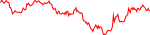
In my view, the current market reaction is functionally identical to this historic execution error. High-speed systems prioritize execution velocity over contextual validation, creating a highly volatile environment where phantom correlations drive millions of dollars in volume before human intervention can stabilize the order books.
| Competing Force | The Irreconcilable Friction |
|---|---|
| OpenAI (Brand Autonomy) vs. Quantitative Funds (Speed Bias) | Sacrificing data context to chase hyper-fast execution signals. |
| Solana / Terra Communities vs. AI Laboratories | 🏛️ Competing for finite premium vocabulary across divergent tech sectors. |
| 2013 Tweeter-Ticker Glitch (Historical Precedent) | Buying the wrong asset ticker due to lack of manual verification. |
🔮 The Rise of Context-Aware Liquidity and Semantic Firewalls
Given this macro tension, technical teams at major quantitative firms are already shifting their strategies to prevent costly execution mistakes.
We are likely entering an era where simple keyword-based scrapers are no longer viable for high-frequency trading. Fund managers will be forced to implement multi-layered semantic firewalls that verify corporate associations and on-chain deployment data before executing automated orders.
"Speed without context is not an edge; it is an automated liquidation waiting to happen."
The uncomfortable reading of this is that the barrier to entry for retail algorithmic trading is rising. As corporate naming overlaps continue to generate noise, only the most sophisticated institutional systems will have the computing power and contextual awareness to filter out phantom catalysts.
The historical lesson of the Tweeter-Ticker glitch teaches us that automated systems remain fundamentally blind to context. Those who rely on raw scraping algorithms to capture early narrative trends will face severe capital decay as corporate AI platforms continue to expand their terminological footprints.
In the near term, we expect a sharp divergence between high-frequency sentiment funds and fundamentally driven market makers. Ultimately, true market stability will only return when automated liquidity providers integrate multi-modal contextual verification before executing on-chain trades.
- If automated semantic scrapers trigger sudden asset volatility on non-affiliated corporate news → risk managers must implement immediate execution circuit breakers.
- If on-chain wallet concentration shifts drastically during high-volume semantic events → retail investors face severe front-running risk by institutional latency engines.
- If the correlation between linguistic search volume and asset valuation exceeds historical deviations → a reversion to fundamental utility becomes inevitable.
⚖️ Semantic Arbitrage: The practice of exploiting price discrepancies caused by algorithmic trading systems misinterpreting linguistic overlaps or brand names.
⚖️ NLP Sentiment Parsing: Natural Language Processing techniques used by quantitative systems to scrape web data and instantly determine market sentiment.