Peter Thiel Bets On Power Infrastructure: Why institutional smart money is bypassing silicon bottlenecks for absolute electricity control.
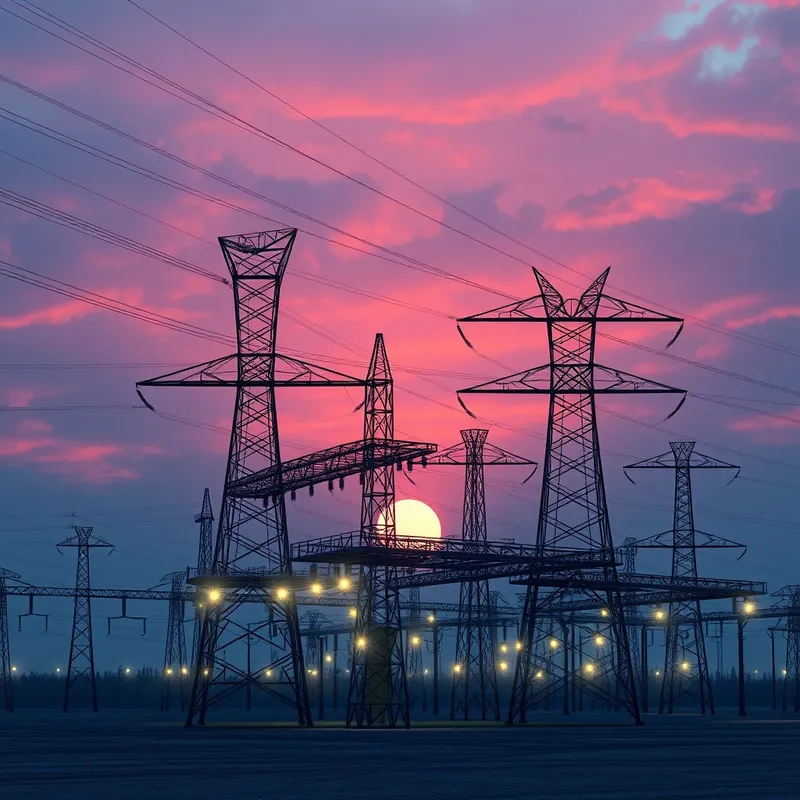
Peter Thiel’s $418M Capital Pivot Reveals Energy Grid Control, Not Silicon, As AI's True Liquidity Bottleneck
Compute capacity is useless without electron flow.

The institutional rush to hoard graphics processors has officially hit an unexpected wall: the physical power grid. Recent regulatory disclosures expose a fundamental pivot among macro allocators away from pure software and semiconductor plays toward baseline energy generation.
⚡ Dissecting Thiel Macro’s Concentrated $418.7M Energy Position
A major regulatory disclosure reveals that Thiel Macro LLC reactivated its public equity exposure after two completely inactive quarters, building a highly concentrated portfolio worth roughly $418.7 million across just eight key holdings. What stands out is not merely the capital re-entry, but the deliberate structural concentration: Amazon represents the fund's single technology holding at a 28.2% allocation, backed by $118 million in capital deployed during the second quarter.
Amazon's expanding capital expenditure strategy—projected at $220 billion primarily dedicated to cloud infrastructure—demands an unprecedented volume of continuous electricity. The remaining 71.8% of the fund’s total assets bypasses chipmakers entirely to lock up generation capacity, utility distribution, and primary energy resources.

"When compute scale outpaces grid capacity, base-load power assets become the ultimate rent-seeking tollbooths."
The allocation layout highlights an explicit focus on nuclear and hydrocarbon baseload producers. Argentine shale producer Vista Energy accounts for 18.1% of the fund with $75.9 million, matching localized executive presence in Buenos Aires. Nuclear-capable generator Vistra follows closely with a $59.1 million position taking up 14.1% of the portfolio. Four regulated utilities—American Electric Power, DTE Energy, FirstEnergy, and CMS Energy—each capture between nine and ten percent, while micro-cap nuclear developer X-Energy rounds out the portfolio under the one percent mark.
🔋 Grid Demands Force an Institutional Infrastructure Paradigm Shift
Building on this dramatic allocation shift, institutional capital is recognizing that the primary constraint on high-performance compute has shifted from hardware production to regional transmission limits. Regional electricity operators are already imposing interconnect delays on hyperscale data centers, forcing cloud providers to fund localized power infrastructure directly.
Data center power demand is competing directly with municipal grids, prompting regional utility providers to rewrite long-term growth estimates. Regulated utilities like American Electric Power and FirstEnergy now explicitly identify artificial intelligence facilities as their primary demand driver, transforming formerly sleepy high-dividend utility stocks into critical technology infrastructure proxies.
For crypto market participants and Proof-of-Work operations, this corporate capital migration into power generation marks a structural turning point. Industrial-scale Bitcoin miners and AI compute facilities are increasingly competing for the exact same power purchase agreements (PPAs), driving up baseline electricity costs across key energy corridors.
📜 The 2001 California Energy Crisis Playbook: Infrastructure Bottlenecks as Leverage
To understand the current dynamic, consider the structural mechanics of the 2001 California Energy Crisis, where physical grid constraints and deregulated power trading allowed energy providers to exert extreme leverage over regional economic activity. During that period, localized supply inelasticity transformed kilowatt-hours into a speculative, gatekept commodity, forcing energy users into onerous long-term fixed contracts.
The current market landscape exhibits a striking mechanical parallel. While market participants focus on compute speed and chip architectures, power suppliers hold the physical key to operational uptime. In my view, allocating toward regulated utilities and baseload energy producers represents a calculated hedge against grid failure and power rationing. As hyperscalers scramble to secure megawatt capacity, energy producers retain the structural leverage once held by dominant semiconductor manufacturers.
| Competing Force | The Irreconcilable Friction |
|---|---|
| Hyperscalers (Compute Scale) vs Utilities (Grid Capacity) | Data center load growth severely outpaces physical grid transmission upgrades. |
| Bitcoin Miners vs AI Data Centers | Direct bidding wars over low-cost long-term power purchase agreements. |
| Silicon Vendors vs Energy Producers | Valuation multiples favoring hardware software over indispensable electron suppliers. |
💡 Long-Term Market Trajectory and Energy Arbitrage Opportunities
Given the intense competition for energy access, the convergence of crypto mining infrastructure and AI compute clusters will accelerate rapidly over the next two to four years. Expect major Proof-of-Work mining firms to either monetize their grid interconnection rights or pivot their facilities directly toward high-performance compute hosting to capture higher margin yield on their secured power access.
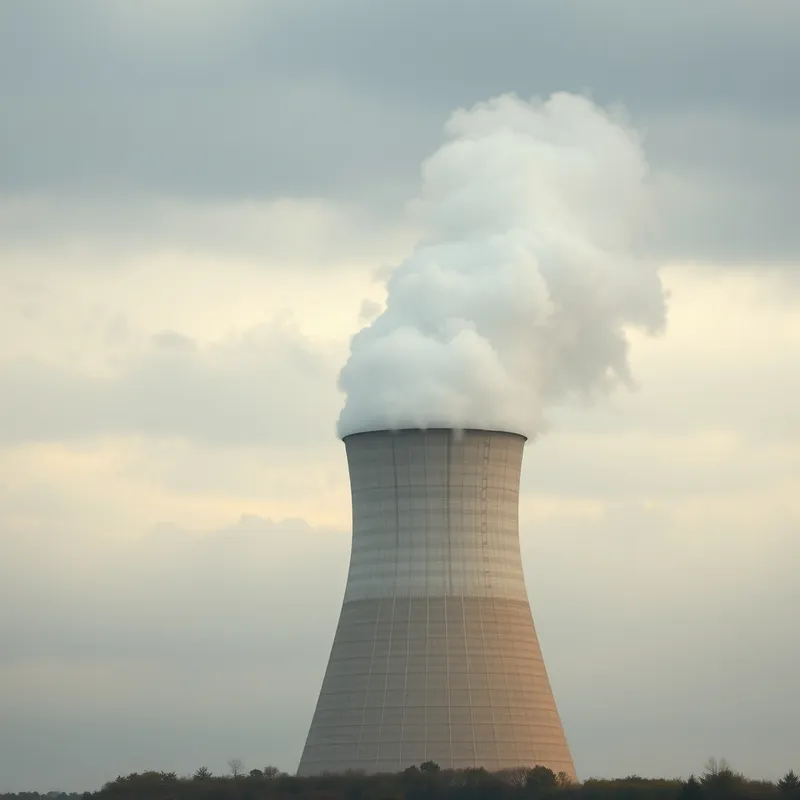
From a valuation perspective, utility providers securing long-term nuclear and natural gas PPAs with technology giants will likely undergo a permanent market re-rating. Power generation capacity is morphing into the core strategic asset of the modern compute economy, redefining how macro investors construct hedges around technological expansion.
The migration of institutional capital into regional power infrastructure signals a broader shift in macro strategy. Securing physical energy access will generate higher risk-adjusted returns than holding over-extended chip equity valuations. Investors who monitor interconnect queues and power purchase terms will identify the true winners of the upcoming infrastructure cycle before standard equity markets react.
⚖️ Baseload Power: The minimum amount of electric power that a utility company must supply continuously to meet unyielding demand across a given power grid.
⚖️ Interconnect Queue: The formal list of power generation or heavy consumption projects waiting for regulatory and physical approval to connect to the central transmission grid.
⚖️ Power Purchase Agreement (PPA): A long-term financial contract between an electricity generator and a customer defining the purchase terms and pricing for energy volume.
- If industrial electricity tariffs rise above $0.08/kWh in key regional grids → Proof-of-Work hash rate migrates to off-grid stranded energy sources.
- If regional grid operators institute multi-year data center interlock moratoriums → compute infrastructure valuations drop relative to integrated power producers.
- If tech hyperscalers acquire direct nuclear generation equity → underlying utility baseload assets experience a structural valuation expansion.
— — coin24.news Editorial
This analysis is synthesized from aggregated market data and institutional research insights. It is provided for informational purposes only and should not be construed as financial advice. Cryptocurrency investments carry high risk; please conduct your own due diligence before making any investment decisions.
Related Intelligence

Bitari IPO Conceals Massive Equity: Public investors fund 99.8 percent of the capital while insiders retain absolute voting control.

Trump Dumps Strategy for Exchanges: Cash Flow Over BTC Debt
TON Network Updates Node Architecture: Validators coordinate structural pivots ahead of high-stakes collator votes.

Avalanche RWA Total Hits 3 Billion: Institutional Capital Anchors Network Growth

Aave Debt Concentration Elevates Risk: Leverage Loops Expose Depeg Risk