SEC targets crypto token buybacks: Decentralization Mandate Creates Regulatory Quicksand

The Decentralization Trap: Why the SEC’s New Buyback Rule Outlaws Protocol Discretion
Regulators just turned emergency protocol safety measures into an admission of federal guilt.

On September 28, 2026, the US Securities and Exchange Commission quietly modified its token buyback guidance, adding a devastating three-word hurdle: "no central party." This update, arriving just three days after its initial draft on September 25, targets a record-breaking $638 million buyback wave that swept the industry through late August.
By demanding absolute decentralization as a prerequisite for non-security status, the agency has effectively outlawed active treasury management. The regulatory perimeter has shifted from what a token does to who controls the emergency brake.
🏛️ The Regulatory Capture of Treasury Discretion
A token buyback is a mechanism where a protocol uses its revenue to purchase its own native assets from the open market, theoretically concentrating value for remaining holders. In the traditional financial world, this is a highly regulated corporate action governed by strict disclosures. By importing this concept into decentralized networks, developers assumed they could mimic corporate efficiency; instead, they imported corporate liability.
The SEC’s latest guidance update targets the very heart of decentralized governance. By declaring that buyback announcements are not promises of managerial effort only if the system has no central party, the regulator is forcing a structural redesign of crypto treasuries. What begins as a technology story is ultimately a liquidity and control event.
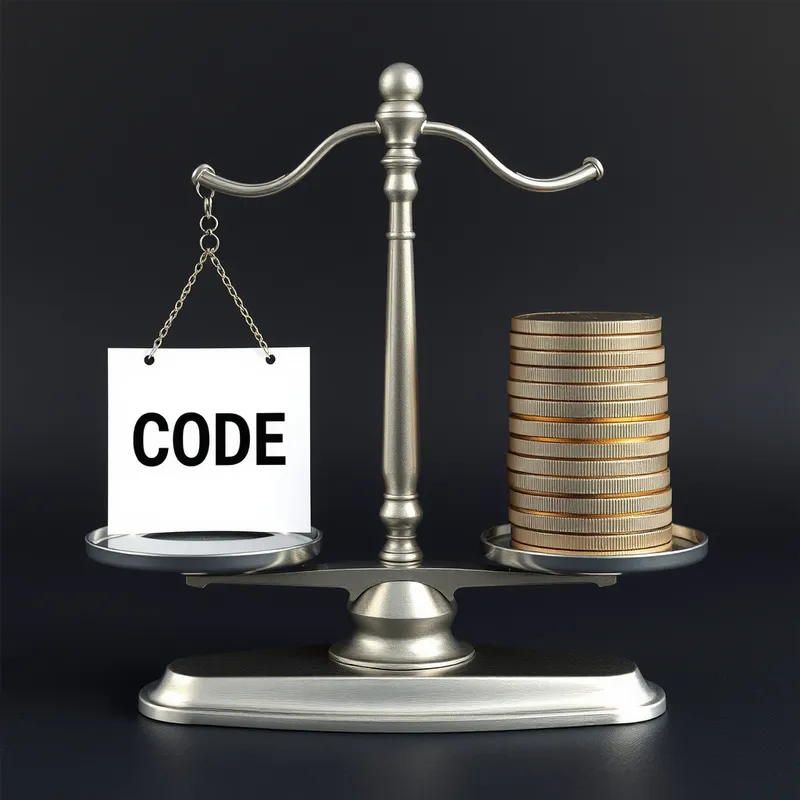
"Treasury discretion is now a regulatory liability."
The uncomfortable reading of this is that the SEC is using buybacks to map the actual power dynamics of decentralized autonomous organizations (DAOs). If a committee can adjust, pause, or cancel a buyback, that committee is, by definition, a "central party." The agency is effectively weaponizing a protocol's risk-management tools against its legal status.
⚖️ The Discretionary Trap: Lessons from the 1982 Safe Harbor Paradigm
The current regulatory squeeze strongly mirrors the implementation of the 1982 SEC Rule 10b-18 in traditional finance. That rule established a "safe harbor" for corporate stock buybacks, but only if corporations strictly adhered to rigid, non-discretionary volume and timing limits to prevent market manipulation. If an executive team deviated from these pre-scheduled boundaries, they lost their safe harbor protection instantly.
In my view, the SEC is attempting to superimpose this exact rigid structure onto a fluid, decentralized landscape. When traditional corporations buy back stock, they operate under clear corporate charters. When a DAO attempts to do the same, it operates in a gray area where any sign of human coordination is viewed as centralized economic manipulation.
The core tension in crypto is that true decentralization cannot easily survive the unexpected. When protocols face crises, they rely on human committees or rapid DAO votes to pivot, pause, or redirect capital. Under the new regulatory framework, this very adaptability is interpreted as centralized economic control, stripping the protocol of its non-security defense.
| Competing Force | The Irreconcilable Friction |
|---|---|
| DAO Committees (Discretionary Risk Management) | 🏛️ Sacrificing emergency capital preservation to avoid security classification. |
| Automated Smart Contracts (Immutable Execution) | Exposing treasury capital to front-running and drain risks without intervention. |
📉 The Extinction of the Discretionary Treasury
The immediate consequence of this regulatory shift will be a bifurcated market. Protocols will either migrate to fully immutable, algorithmic buy-and-burn mechanisms, or abandon buybacks entirely to shield their executive teams and foundations from liability. This is where the market microstructure begins to break down.
This will introduce severe price volatility during market stress. Historically, discretionary treasury intervention acted as a buffer during systemic shocks; removing this buffer means protocol tokens will experience deeper drawdowns as automated systems blindly execute buybacks into cascading liquidations. Smart money is already pricing in this structural vulnerability, shifting capital away from protocols that rely on manual treasury committees.
"Without discretionary buffers, protocol tokens will face unmitigated downward cascades."
We are likely to see a massive decline in announced buyback programs. The risk of triggering an SEC investigation simply by announcing a treasury purchase program will outweigh the temporary price support the buyback provides. Treasuries will be forced to sit on idle capital, reducing capital efficiency across the entire decentralized finance ecosystem.
🔮 The Rise of Invisible Buybacks and Algorithmic Shielding
Looking ahead, the industry will likely adapt through structural workarounds that decouple the protocol from the buying pressure. We anticipate the rise of independent, third-party arbitrageurs who programmatically exploit price discrepancies, effectively executing buybacks without any official protocol announcement or centralized trigger. This shifts the execution from the core team to the open market, albeit at a higher cost.

Furthermore, regulatory pressure will accelerate the migration of governance structures to jurisdictions completely outside US purview. Projects will increasingly lock their treasury codes in immutable smart contracts deployed from offshore entities, rendering the SEC's "central party" test functionally obsolete but legally challenging for US-based participants. The divide between compliant, stagnant protocols and non-compliant, highly active protocols will widen significantly.
The era of the hybrid DAO—where decentralized communities vote but a centralized committee executes—is over. Protocols must choose between total immutability or complete institutionalization. There is no middle ground left in the eyes of the regulator.
I predict that within the next year, multiple blue-chip protocols will suffer severe treasury losses because their smart contracts were programmed to buy back tokens automatically during a smart contract exploit. The lack of an emergency kill switch will be the price of legal compliance.
⚖️ Safe Harbor: A legal provision to reduce or eliminate liability in certain situations as long as specific, pre-defined regulatory conditions are met.
🤖 Programmatic Buyback: An automated token purchase executed entirely by pre-written on-chain smart contracts without human intervention.
👥 Central Party: Under regulatory definitions, any individual or entity exercising operational, economic, or voting control over a decentralized network.
- If a protocol treasury maintains manual multi-sig control over buyback execution → this signals an elevated risk of regulatory classification as a security.
- If on-chain data shows buyback smart contracts lack emergency pause functions → capital exposure to front-running during protocol exploits increases significantly.
- If protocol revenue distribution relies on discretionary committee adjustments → valuation models should discount the token's yield reliability by a governance premium.
— Napoleon Bonaparte
This analysis is synthesized from aggregated market data and institutional research insights. It is provided for informational purposes only and should not be construed as financial advice. Cryptocurrency investments carry high risk; please conduct your own due diligence before making any investment decisions.
Related Intelligence

Streamflow burns token for security: A forced Cayman pivot

Coinbase Clears Derivatives Hurdles: Infrastructure facade masks deeper risk

Raven Corners Prediction Market Flow: The HFT Liquidity Capture

Bitcoin Long Positions Facing Reality: Leverage Flush Threatens Rally

US INFLATION THREATENS BITCOIN PLUNGE: Macro Reckoning Hits Risk Assets