Solana stakers seize governance power: The end of validator dominance
The Illusion of Decentralization: How Solana's SGP Shift Quietly Empowers Custodial Giants
Solana's new democratic upgrade will hand network control to centralized custodians.
The introduction of Solana Governance Proposals (SGP) is framed as a grassroots revolution against validator dominance. By allowing delegators to override their validators' default votes, the network ostensibly democratizes its monetary policy.
However, the uncomfortable reading of this structural shift is that it opens a backdoor for institutional capture. The real battle is no longer between validators and delegators, but between decentralized operators and centralized financial gatekeepers.
🗳️ The New Rules of the POS Sovereignty Game
Proof-of-Stake networks rely on token locking to secure the blockchain, meaning those who hold the tokens ultimately dictate the network's rules. Under the newly implemented SGP framework, a proposing validator must control a stake of at least 100,000 SOL, equivalent to $7.8 million at a token price of $77.97.

To advance any petition to an active vote, validators representing 15% of the active stake must provide formal support. With the network's total active stake sitting at 428.1 million SOL, this entry barrier equates to roughly 64.2 million SOL, representing a capital threshold of nearly $5 billion.
The core mechanism allows individual delegators to break away from their validator's voting default. For instance, if a delegator holding 800 SOL overrides a validator with 1,000 SOL of total delegated power, the validator's voting weight is instantly gutted to just 200 SOL.
"When stakers can override validators, the entity that controls the keys controls the monetary policy."
This dynamic was brought to the forefront during the contentious SIMD-0228 proposal, authored by Multicoin Capital's Tushar Jain and Vishal Kankani, which aimed to tie token issuance to staking participation. The proposal failed with 61.39% approval against a 66.67% requirement, despite a massive 74% voter turnout where smaller validators holding under 500,000 SOL voted "Against" more than 60% of the time.
In retrospect, a minor swing of 5.28 points from "Against" to "For" would have passed the measure. Scaled against current participation rates, this margin represents approximately 16.8 million SOL, or $1.3 billion in market value. This demonstrates that while the previous monetary battle was economically vast, it was governably narrow.
With live protocol inflation resting at 3.76% (commencing at 8% and decaying 15% annually toward a 1.5% terminal floor), these yields directly compete with traditional finance. Notably, the Federal Reserve maintained its federal funds rate target between 3.50% and 3.75% at its June 17 meeting, holding the upper bound at 3.75% as of July 2.
🏢 The 1955 Montgomery Ward Proxy Leverage Play
Given this macro tension, the historical proxy voting battles of traditional finance reveal a recurring structural loophole. Proxy voting is a mechanism where shareholders delegate their voting rights to a representative, but retain the ultimate legal right to override that representative's decision.
During the historic 1955 Montgomery Ward Proxy War, corporate raiders bypassed the company's entrenched board by directly mobilizing passive shareholders who held fractional equity. The raiders leveraged minor structural voting rules to aggregate retail proxy overrides, effectively stripping the established directors of their executive authority and forcing a radical restructuring of the firm's capital allocation.
The pattern suggests that Solana's new SGP system acts as a digital copy of this 1955 leverage play. By enabling independent voting overrides, the network has created a vacuum where aggregated custodial capital can bypass the infrastructure operators entirely. In my view, this is a highly calculated move that shifts power from those running physical hardware to those managing institutional balance sheets.
| Competing Force | The Irreconcilable Friction |
|---|---|
| 🏛️ Institutional Custodians vs. Small-Scale Validators | ⚖️ Sacrificing long-term network security budgets to boost short-term custodial yields. |
| Liquid Staking Protocols vs. Native Delegators | Concentrating voting weight in multi-sig smart contracts at the expense of decentralization. |
| Large Validator Monopolies vs. Long-Tail Operators | 🏢 Forcing margin compression on independent nodes to maintain exchange staking dominance. |
📉 Macro Yield Arbitrage and Token Volatility
If this historical precedent holds true, the immediate impact on token volatility will be driven by yield arbitrage. Blockchain networks adjust token emission rates to balance the incentive for securing the network against the dilutive effect of adding new supply.
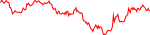
With the new governance rules in play, institutional stakers can now aggressively lobby for emission cuts to protect their capital from dilution. If these large-scale delegators coordinate to force a major reduction in inflation, the sudden drop in new token supply will likely trigger short-term upward price pressure.
The long-term cost of this policy, however, will be borne by the infrastructure providers. Stripping validators of emission revenue compresses their operational margins, likely forcing independent, long-tail nodes to shut down. What begins as a technology story of voter empowerment is ultimately an asset-liability management challenge that risks centralizing the underlying hardware layer.
"A network that lowers inflation to please investors may find itself too cheap to secure."
🔮 The New Hegemony of Exchange Staking
Given this macro tension, the technical consensus will increasingly align with the demands of capital accumulators rather than protocol purists. Liquid staking and exchange custody services pool user assets together, giving these platforms the theoretical capacity to vote on behalf of millions of users.
In the coming epochs, we will likely see exchanges and staking pools offer integrated governance dashboards, allowing retail users to vote with a single click. While this looks like democratic progress, the default settings and curated choices on these platforms will be designed to protect institutional business models.
The survival of independent nodes will depend on their ability to form alliances with decentralized autonomous organizations (DAOs) and native asset holders. Without these capital blocks, the protocol's monetary policy will be driven by entities that treat the network's native asset as a treasury yield vehicle rather than a decentralized utility.
The data points to a future where large-scale exchange-traded vehicles and institutional custody pools will emerge as the de facto central bank of the network. By mobilizing passive retail stake, these entities can veto inflation adjustments at will.
Furthermore, independent, long-tail validators will be forced to consolidate or raise their commissions to survive the impending yield compression. This structural shift will undermine the network's censorship resistance, even if it stabilizes token emissions in the medium term.
- If aggregate exchange-delegated SOL votes exceed the required consensus threshold → this signals structural institutional capture of network monetary policy.
- If active staking participation rates decline below historic turnout levels → the risk of centralized validator collusion rises significantly.
- If real staking yields fall below the federal target upper bound → capital outflows toward traditional risk-free cash equivalents are highly probable.
⚖️ SGP (Solana Governance Proposals): A protocol-level governance mechanism that allows delegators to override their validators' voting decisions.
⚖️ Active Stake: The total amount of tokens locked in the network's consensus mechanism to secure transactions and earn yields.
⚖️ Emissions Dilution: The devaluation of existing tokens caused by the continuous minting and distribution of new supply to stakers.