South Korea Pivots AI Budget Strategy: Factories Replace Sovereign Models
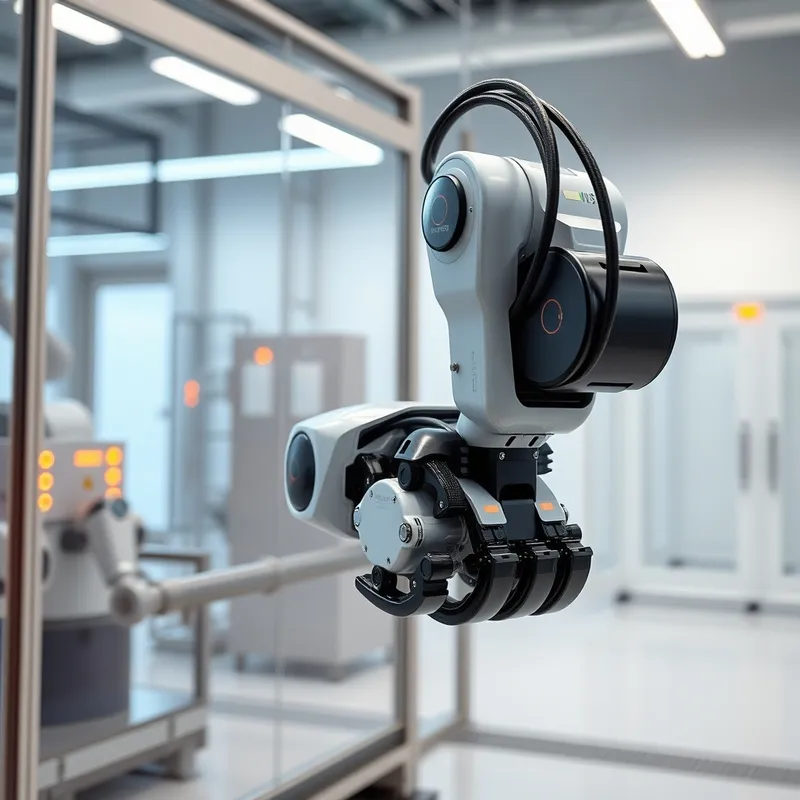
South Korea’s $11.9B AI Pivot: Why Physical Robotics Signals a New Macro Regime for Compute and Crypto
Seoul just committed $11.9 billion to move artificial intelligence out of sovereign labs and onto factory floors.
South Korea’s proposed 2027 AI budget of roughly 16 trillion won ($11.9 billion) marks a decisive break from the 9.9 trillion won allocated this year. Rather than subsidizing isolated GPU clusters and domestic foundation models, the Ministry of Science and ICT is redirecting capital toward "physical AI" and full-stack industrial exports.
🏭 Beyond Sovereign Models: The Industrialization of State Capital
To understand why this matters, you have to look at how state-backed technology cycles evolve. In the initial phase of any infrastructure boom, governments subsidize raw capacity—chips, data centers, and foundational code—to avoid strategic dependence. That phase is now maturing in East Asia, and the capital is chasing tangible productivity.
What begins as a technology story is ultimately a competitive ecosystem restructuring. South Korea recently became only the fourth nation in history to surpass $1 trillion in annual exports, joining the United States, China, and Germany. That milestone was driven largely by semiconductor giants like Samsung Electronics and SK Hynix, alongside a broader global appetite for AI hardware.
The state-run Korea Development Institute even hiked its 2027 GDP growth forecast to 3.9%, up from 2.2%, citing surging demand for AI semiconductors. Yet relying solely on raw chip exports leaves an economy vulnerable to cyclical hardware gluts. By embedding AI directly into logistics, manufacturing, and exportable "full-stack" services, Seoul is attempting to lock in recurring industrial margins before the next hardware downturn arrives.

"Sovereign models burn cash; factory robots print export margins."
⚙️ Under the Hood: How Physical AI and Behavioral Data Hubs Operate
Given this macro tension, the technical architecture of the 2027 proposal reveals where the actual bottlenecks in artificial intelligence now sit. Digital models have largely exhausted easily scraped internet text, meaning the next frontier requires proprietary, real-world kinetic data.
Under the Ministry of Science and ICT’s framework, capital is being routed into two specific operational layers:
First, direct industrial deployment targets high-friction logistics. A dedicated allocation of roughly 26 billion won ($19.4 million) will fund autonomous robots engineered to sort, inspect, and load non-standard mail—tasks where legacy automation consistently fails due to irregular shapes and weights. Second, a 40 billion won ($29.9 million) robot behavioral data hub will deploy around 100 humanoid and dual-arm robots solely to generate real-world training telemetry.
The uncomfortable reading of this is that data scarcity has moved from the browser to the physical warehouse. In my view, this creates an immediate structural conflict between centralized state-backed hubs and decentralized physical infrastructure networks (DePIN) in the crypto sector. While crypto-native robotics and compute networks rely on token incentives to crowdsource edge data, South Korea is using direct fiscal policy to build a sovereign, standardized behavioral dataset.
📊 The 2027 Fiscal Blueprint vs. Market Reality
If this architectural shift holds, the broader fiscal envelope surrounding the AI budget demonstrates the sheer scale of state intervention. President Lee Jae Myung’s record 2027 budget proposal of 820.9 trillion won ($616 billion) includes 21.3 trillion won earmarked specifically for AI, semiconductors, physical AI, and data centers—nearly double the prior year's commitment—alongside 4.7 trillion won for a sovereign AI model.
| Budget Component | 2027 Allocation | Strategic Objective |
|---|---|---|
| Core AI & Physical AI | ~16 trillion won ($11.9B) | Industrial site deployment & full-stack exports |
| Broader Tech & Chips | 21.3 trillion won | Semiconductors, data centers, & compute |
| Sovereign AI Model | 4.7 trillion won | Domestic foundational model maintenance |
| Robotics Data Hub | 40 billion won ($29.9M) | 100 humanoid/dual-arm robots for training data |
Strip away the noise and this fiscal commitment acts like a massive turbine bolted onto an already volatile equity market. The KOSPI has swung sharply alongside global tech sentiment, rebounding only after NVIDIA’s recent surge. For crypto markets, particularly AI-adjacent tokens and decentralized compute protocols, South Korea’s pivot is a double-edged sword: it validates the longevity of the AI hardware cycle, but it also demonstrates that nation-states are willing to outspend token-incentivized networks to control physical-world data.
"When sovereigns subsidize the edge, decentralized networks lose their cost advantage."
🔭 Legislative Hurdles and the 2027 Horizon
The immediate catalyst to watch is the National Assembly, which must approve the budget by early December. If lawmakers pass the framework without significant dilution, South Korea will formally transition from an infrastructure-building phase into large-scale commercial deployment.
For digital asset investors, the second-order effects will play out across liquidity and narrative rotation. If state-backed physical AI delivers measurable export growth, capital will increasingly favor protocols that integrate verifiable real-world telemetry—such as decentralized sensor networks and robotic coordination layers—over generic GPU-rental tokens that lack enterprise distribution.

The current market dynamics suggest that pure software-based AI narratives are approaching diminishing returns. Capital is rotating toward physical-world execution, where hardware margins and proprietary behavioral data create defensible moats.
In the crypto sector, this means AI tokens tied solely to conversational interfaces or redundant compute marketplaces face structural headwinds. Only networks that can aggregate edge-device telemetry cheaper than state-subsidized hubs will capture institutional mindshare in 2027.
- If the National Assembly delays or cuts the AI budget in December → expect short-term distribution across Asian semiconductor equities and AI-correlated crypto assets.
- If DePIN robotics protocols fail to match state-hub telemetry volume → capital will rotate out of decentralized edge-data tokens into centralized hardware equities.
- If South Korean full-stack AI exports gain traction in Q1 2027 → this confirms a sustained industrial capex cycle, supporting broader risk-on liquidity.
🤖 Physical AI: Artificial intelligence systems integrated into physical machinery, such as autonomous robots and industrial sensors, enabling them to perceive and manipulate real-world environments.
🌐 DePIN (Decentralized Physical Infrastructure Networks): Blockchain protocols that use token incentives to crowdsource the deployment and maintenance of real-world hardware, sensors, or compute nodes.
📊 Behavioral Data Hub: A centralized facility where physical robots perform repetitive, complex tasks to generate proprietary kinetic training data that cannot be scraped from the internet.
— — coin24.news Editorial
This analysis is synthesized from aggregated market data and institutional research insights. It is provided for informational purposes only and should not be construed as financial advice. Cryptocurrency investments carry high risk; please conduct your own due diligence before making any investment decisions.
Related Intelligence

Nvidia Open Models Threaten Anthropic: Paid AI Moats Face Erosion

France Debt Rule Threatens Bitcoin: Liquidity Illusion Unravels

OpenVault Secures Seed Investment: Structured Yield Illusion
Binance Internal Rift Exposes Risks: House of Cards

Bitcoin ETFs Lose $4.71B in November as BlackRock’s IBIT Shares Rebound