Tether trades liquidity for farmland: Illiquid Reserve Facade

The Farmland Liquidity Trap: Decoding Tether's $1.55B Agribusiness Pivot
Tether is quietly transforming the backstop of digital finance into a physical energy conglomerate.

The stablecoin issuer has finalized a dominant 70% equity position in South American agribusiness giant Adecoagro. The corporate action, publicly acknowledged alongside lighthearted social media commentary regarding "Stable Cows," effectively ties digital asset liquidity to real-world agricultural infrastructure.
Following the consolidation of equity control, market participants pushed Adecoagro shares up by 5.96% to close at $11.38, lifting the producer's aggregate market valuation near $1.55 billion. But beneath the equity market optimism lies a complex structural tension between short-term stablecoin redemption obligations and illiquid, capital-intensive asset allocations.
🌱 Structural Liquidity Mismatch: Sugar, Cattle, and Redemption Velocity
To understand the mechanics of this corporate acquisition, one must separate immediate reserve access from underlying enterprise balance sheets. Adecoagro operates extensive industrial operations across the Argentine Humid Pampas, controlling free-stall dairy units housing over 14,500 milking cows, alongside large-scale sugarcane and rice farming networks. Integrating physical agricultural footprint into a reserve backing matrix alters the underlying risk profile of the capital reserve pool.

While third-party attestations from KPMG confirmed balance sheet totals, verified excess reserve cushions collapsed by roughly 40% during the preceding evaluation periods. Financial accounting rules dictate that agricultural real estate, biological herds, and biodigesters cannot be liquidated overnight to satisfy sudden capital outflows from digital markets.
"A digital dollar requires instantaneous settlement, but physical farmland settles on seasonal harvest schedules."
When short-term liquidity demands spike, sovereign debt instruments like U.S. Treasury bills provide instant liquidation paths. Conversely, converting sugarcane fields and biogas installations into cash equivalents introduces severe friction, exposing stablecoin holders to underlying operational and execution delays during market panics.
⚡ Megawatt Arbitrage: Transforming Off-Grid Biogas Into Bitcoin
Expanding direct equity ownership into industrial agriculture is not merely a diversification Playbook—it is a vertical integration play targeting stranded energy. Adecoagro commands more than 230 megawatts of renewable power generation capacity across South America, fueled by sugarcane bagasse processing, mill cogeneration, and dual biodigesters converting livestock waste into grid electricity.
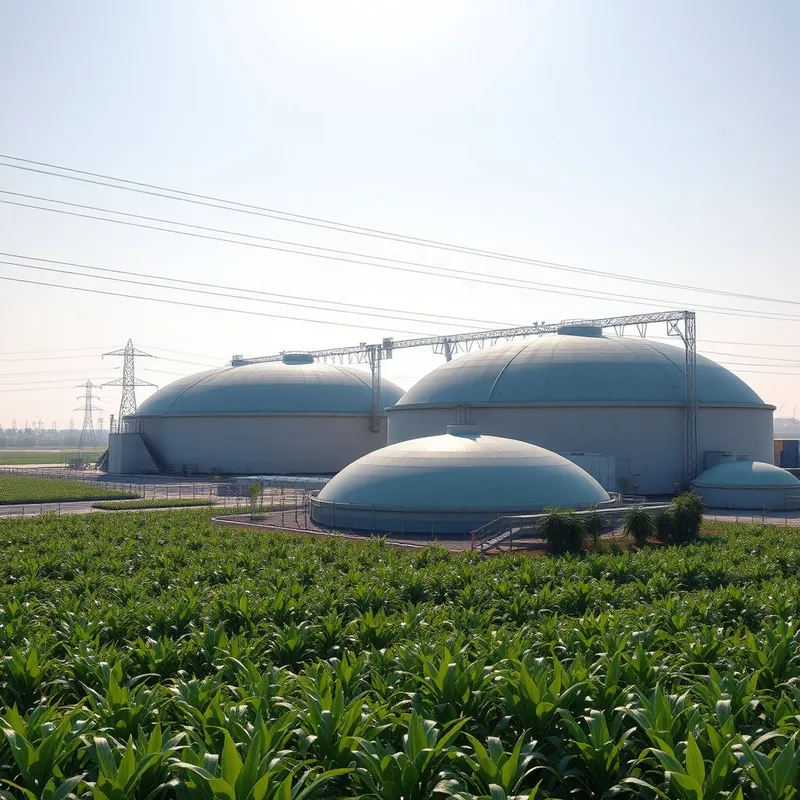
Building on a joint framework established in late 2025, this power ecosystem allows surplus electricity to be routed directly into propriety Bitcoin mining infrastructure rather than sold back to local utility grids at volatile spot market rates. Utilizing in-house open-source mining software, the operator achieves direct administrative oversight over rig uptime, fleet distribution, and per-kilowatt input costs.
What begins as a corporate acquisition story shifts fundamentally into an infrastructure play. While pure-play institutional treasury allocators rely on continuous spot market purchases to expand crypto exposure, alternative operators are securing primary energy generation assets at the source to manufacture digital assets below market cost.
🏦 Anatomy of the Asset-Liability Duration Mismatch
The structural friction emerging within alternative treasury management mirrors classic financial panics seen across traditional banking systems. Consider the structural dynamics of the 1980s Savings and Loan (S&L) Crisis. Institutions gathered short-term demand deposits—which liabilities could be withdrawn immediately by customers—and deployed those funds into long-term, illiquid real estate loans and physical property.
When interest rate regimes shifted and depositors simultaneously demanded their capital back, institutions possessed valid asset books on paper, yet lacked the immediate cash reserves needed to honor withdrawal demands. The resulting duration mismatch triggered systemic insolvencies, forcing regulatory intervention and mass liquidations across asset classes.

Evaluating stablecoin liquidity demands against physical agricultural holdings reveals an identical structural vulnerability. While agricultural assets generate consistent long-term cash flow and real-world utility, they fail the duration test required for high-velocity redeemable tokens. If redemptions accelerate rapidly, illiquid holdings cannot bridge short-term capital gaps.
| Competing Force | The Irreconcilable Friction |
|---|---|
| Token Redeemability vs Physical Illiquidity | 🔁 Trading instant T-bill redemptions for long-term, illiquid agricultural infrastructure. |
| 💰 Spot Market Power Sales vs Mining Arbitrage | Forfeiting guaranteed local grid revenue to capture variable Bitcoin production yields. |
The trajectory of stablecoin issuers is shifting away from pure financial intermediation toward base-layer infrastructure control. Issuers accumulating physical energy plants will build an unassailable operational moat over pure-play treasury buyers. This operational pivot effectively redefines reserve quality from liquid fiat equivalents to physical energy throughput.
🔮 Macro Implications and Structural Risk Vectors
Looking ahead, market participants must monitor how upcoming enterprise financial disclosures quantify the revenue contributions of captive Bitcoin mining operations relative to traditional regional energy off-take agreements. The ultimate test centers on whether co-located mining systems outperform long-term grid power purchase agreements in net profitability.
Furthermore, regulatory authorities are expected to heighten scrutiny on non-cash asset classes backing systemic stablecoins. As global regulatory frameworks tighten reserve transparency standards, holdings involving biological assets, industrial facilities, and physical land will face steep capital haircuts, compelling issuers to separate operational energy ventures from core stablecoin backing structures.
⚡ Cogeneration: The simultaneous production of electricity and useful thermal energy from a single primary energy source, such as burning sugarcane bagasse.
⏳ Duration Mismatch: A financial risk scenario occurring when the liquidity profiles or maturity dates of an institution's assets do not align with its short-term liabilities.
- If non-fiat asset allocations exceed 15% of total reserves → institutional redemption risk moves into an elevated precautionary regime.
- If global regulatory bodies mandate 100% cash-equivalent backing → illiquid real-world asset divestment cycles become statistically imminent.
- If mining hash cost exceeds localized spot power resale rates → energy arbitrage profitability transitions to a negative margin regime.
— — coin24.news Editorial
This analysis is synthesized from aggregated market data and institutional research insights. It is provided for informational purposes only and should not be construed as financial advice. Cryptocurrency investments carry high risk; please conduct your own due diligence before making any investment decisions.
Related Intelligence

Shiba Inu Token Burns Mislead Markets: The Illusion Of Supply Deflation

Solana SKR rally lacks user traction: The Hardware Bottleneck

Phemex targets 82 distressed tokens: The Liquidity Reckoning

Speculators Chase Fake Altcoin Rally: The Liquidity Illusion

Bitcoin rally risks September stall: The ETF Liquidity Undertow