Tokenized Cards Draw 324M Amid Slump: Capital Flees to Physicals
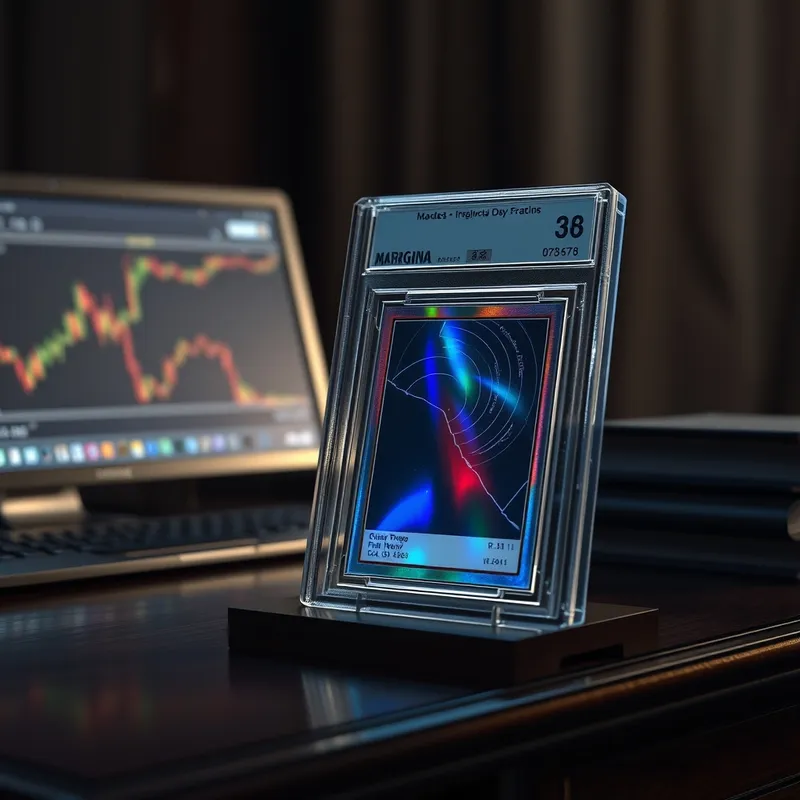
Capital Flees Digital Risk as Tokenized Collectibles Draw $324M
Bitcoin hit a 21-month low while a single 1998 Pokémon card sold for $630,000.

The divergence between digital asset drawdowns and physical collectible inflows exposes a structural shift in how risk capital seeks shelter. While spot Bitcoin ETFs posted heavy outflows in June 2026, on-chain spending on tokenized trading cards surged to a record $324 million—more than five times the volume recorded a year earlier.
🏛️ The Flight to Tangible Scarcity
When macro liquidity tightens and digital assets sell off, capital rarely vanishes—it rotates toward assets with lower correlation to central bank policy and higher perceived permanence. The record-shattering sale of a Commissioned Presentation Galaxy Holo Blastoise at Fanatics Collect is not an isolated collector anomaly; it is a symptom of broader behavioral market dynamics.
With only two copies known to exist from a 1998 North American retail pitch, this specific card represents absolute, unreplicable supply. Unlike algorithmic scarcity or governance-controlled token emissions, physical provenance cannot be forked or diluted. In a risk-off regime, investors are paying a steep premium for assets that exist outside the traditional financial plumbing.

The broader consumer foundation reinforces this trend. Pokémon generated roughly $2.5 billion in US toy sales in 2025, establishing a massive, multi-generational demand floor that traditional crypto-native assets lack. When speculative fervor cools in digital tokens, that underlying cultural equity acts as a natural stabilizer for high-end collectibles.
⚙️ Under the Hood of Vaulted RWA Liquidity
If this cultural demand provides the floor, the on-chain infrastructure built by platforms like Courtyard and Collector Crypt provides the velocity. To understand why capital is flowing here during a downturn, you have to look at the mechanics of vaulted real-world assets (RWAs).
The operational flow bridges physical custody with decentralized settlement. Platforms acquire professionally graded cards—verified by third-party authorities like CGC or PSA—and lock them inside insured, climate-controlled vaults. They then mint 1:1 digital representations on-chain, allowing traders to buy, sell, and collateralize ownership without shipping physical cardboard.
Here is what everyone is ignoring: the redemption metrics prove this is not purely circular wash trading. On-chain data shows Courtyard burns between 5% and 8% of its token supply weekly through physical redemptions, while roughly 30% of Collector Crypt users eventually claim their underlying cards. Those burn rates confirm genuine end-user demand rather than mere speculative rotation.

"Physical redemption is the ultimate proof of reserves."
This creates a structural tension between two distinct stakeholder groups. Liquidity providers and DeFi traders want frictionless, composable tokens that remain on-chain to generate trading fees. Conversely, traditional collectors treat the token merely as a temporary settlement rail before pulling the asset off-chain permanently, which shrinks the active float.
📊 Blastoise Valuation Milestones
Given this structural tension between on-chain velocity and physical scarcity, the recent price progression at the top end of the market reveals how rapidly capital is repricing tier-one collectibles.
| Card Variant | Grading | Sale Price | Market Significance |
|---|---|---|---|
| 1998 Commissioned Presentation Blastoise | CGC 8.5 NM-MT+ | $630,000 | All-time character record; 1 of 2 known copies |
| Prototype Test Holo Blastoise | CGC 6.5 | $241,083.60 | Held the record for only two months prior |
| 1996 Japanese Blastoise | PSA 10 | $231,800 | Held the crown for nine months; now ranks third |
🌊 Sector Rotation and Volatility Outlook
The rapid compression of record-holding timelines—from nine months down to two months before being more than doubled—signals an aggressive repricing of illiquid, high-grade assets. While Charizard remains the apex predator of the Kanto starters, with a Base Set Shadowless 1st Edition PSA 10 recently fetching $954,800, Blastoise is rapidly closing the valuation gap toward the seven-figure threshold.

For the broader crypto market, this capital migration highlights a growing vulnerability in pure-play digital beta. When spot ETFs experience sustained outflows, crypto-native liquidity does not automatically retreat to fiat or Treasury bills. Instead, a measurable portion is rotating into tokenized RWAs that offer asymmetric upside without direct correlation to Bitcoin's drawdown.
The uncomfortable reading of this is that tokenized collectibles are quietly eating the lunch of speculative altcoins during risk-off regimes. In my view, platforms that successfully tokenize culturally entrenched physical assets will continue to capture market share from purely synthetic DeFi narratives whenever macro headwinds intensify.
The current market dynamics suggest that physical-backed tokens are evolving from a novelty into a legitimate defensive allocation. As long as spot crypto ETFs face distribution pressure, capital will favor on-chain assets anchored by off-chain cultural demand.
However, this sector is not immune to liquidity traps. If redemption rates accelerate past minting velocity, on-chain order books could thin out rapidly, creating sharp bid-ask spreads for traders who treat vaulted cards like liquid altcoins.
🏦 Vaulted RWA (Real-World Asset): A physical item stored in a secure, insured facility and represented by a 1:1 tradable token on a blockchain, allowing instant settlement without physical shipping.
🔥 Redemption Burn: The permanent destruction of an asset-backed token on-chain when a holder claims and takes physical delivery of the underlying vaulted item.
- If weekly token redemption burns exceed 10% on major vault platforms → on-chain liquidity will tighten, widening secondary market spreads.
- If spot Bitcoin ETFs post three consecutive weeks of net inflows → speculative capital typically rotates back out of defensive RWAs into digital beta.
- If monthly tokenized card volume sustains above $300M → institutional market makers are likely to enter physical-backed RWA liquidity pools.
— Oscar Wilde
This analysis is synthesized from aggregated market data and institutional research insights. It is provided for informational purposes only and should not be construed as financial advice. Cryptocurrency investments carry high risk; please conduct your own due diligence before making any investment decisions.
Related Intelligence

Bitcoin Bounce Faces Equity Pressure: A 60k Short-Covering Facade

AI Altcoins Defy Bitcoin Market Crash: AI Liquidity Decoupling

Bitcoin Leverage Flush Sets Squeeze: Crowded Shorts Risk Rebound

Bitcoin Price Plunges Under 56000K: Market Liquidity Reset

Bitcoin Market Cycle Signals Downside: Macro Shift to Goblin Town