US Bitcoin Bill Locks Supply 20 Years: Zero New Buying Power

US Bitcoin Reserve Bill (H.R. 8957): Why a 20-Year Supply Lock Means Zero New Buying Power
Washington just advanced a 20-year Bitcoin supply lock with zero dollars allocated to buy more.
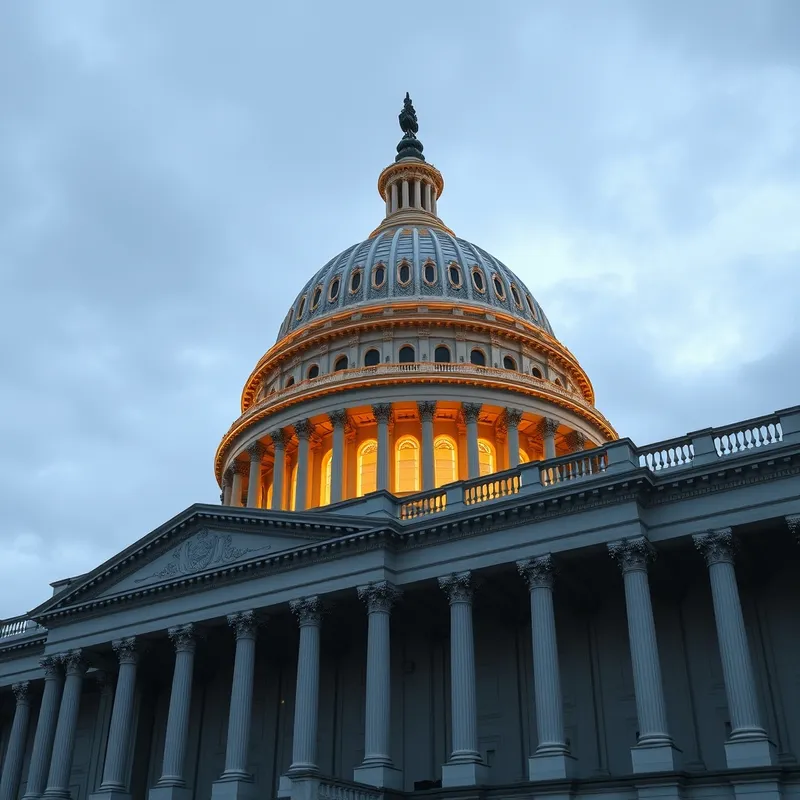
The House Financial Services Committee formally reported the amended American Reserve Modernization Act (H.R. 8957) on November 24, placing it on the House Union Calendar. Co-sponsored by Representatives Nick Begich and Jared Golden, the bill codifies a 20-year prohibition on selling, auctioning, or pledging federal Bitcoin, yet it explicitly bans new taxes, borrowing, or deficit spending to acquire additional coins.
🏛️ From Executive Whim to Statutory Vault: The Structural Shift
To understand why this legislative advancement matters, you have to look past the headline and examine the legal architecture. In March 2025, President Donald Trump issued an executive order establishing a policy against selling reserve Bitcoin. Executive orders, however, are inherently fragile; a subsequent administration can reverse them with a single signature.
By moving the restriction into federal statute, Congress is attempting to build a bipartisan legal moat around sovereign digital assets. Changing a statutory holding requirement demands another act of Congress, which dramatically raises the political friction required to liquidate federal holdings.
This legislative push reflects a broader geopolitical shift toward sovereign balance-sheet fortification. Across global markets, nation-states are increasingly treating scarce digital commodities as strategic reserves rather than mere seized contraband—a behavioral pivot that mirrors how central banks manage gold reserves during periods of fiscal uncertainty.
"A sovereign vault that cannot buy is just a museum for seized assets."
⚙️ Inside H.R. 8957: Quiet Revisions and Liquidity Mechanics
If this statutory lockup establishes a long-term floor, the specific mechanical changes made between the May draft and the November committee report reveal where lawmakers are compromising. Under Section 5, the government is barred from selling, exchanging, auctioning, or pledging reserve Bitcoin as collateral for two decades.

However, the amended text quietly altered two critical operational rules. First, the original bill measured the 20-year lockup from each individual deposit date; the revised version starts the clock from the date of enactment. Second, lawmakers downgraded transparency by replacing quarterly proof-of-reserves reports with annual public audits overseen by the US Comptroller General.
| Provision | Original May Draft | Amended November Text |
|---|---|---|
| Lockup Clock | 20 years per individual deposit | 20 years from law enactment |
| Audit Frequency | Quarterly proof-of-reserves | Annual public cryptographic audit |
| Post-Lockup Exit | Restricted | Up to 10% release per 2-year window |
| Funding Mechanism | ✨ No new debt/taxes | Explicitly bans deficit spending |
What this signals structurally is a classic legislative trade-off between executive flexibility and public accountability. Stretching the audit cycle from four times a year to once a year creates extended blind spots where taxpayers and market participants lack real-time visibility into federal custody.
In my view, the most revealing clause sits in Section 9. It directs the Treasury and Commerce departments to explore acquiring more Bitcoin without increasing national debt—specifically eyeing the conversion of other government-owned digital assets. Strip away the noise and you realize that Washington wants the upside of a strategic reserve without paying the fiscal price of building one.
📉 Market Microstructure: Why Zero-Bid Policies Cap Euphoria
Given these operational constraints, the immediate impact on Bitcoin's market microstructure is far more nuanced than retail narratives suggest. When a sovereign entity permanently removes supply from circulation, it reduces the available float—acting like a one-way valve that prevents sudden government auction shocks.
Yet order books do not rally on the absence of selling alone; they rally on marginal buying pressure. Because H.R. 8957 explicitly forbids new taxation, borrowing, or deficit spending to fund purchases, the US government is effectively sidelined as an active market participant.
The pattern suggests that traders pricing in a massive sovereign bid are misreading the legislative text. While removing future liquidation risk lowers implied volatility over multi-year horizons, the lack of a mandatory purchase schedule means spot liquidity remains entirely dependent on private institutional flows and macroeconomic rate cycles.
"Removing a seller is not the same thing as creating a buyer."

🔮 The Congressional Gauntlet and Sovereign Capital Outlook
Connecting this market reality back to the legislative calendar exposes the final hurdle: H.R. 8957 is still a proposal, not law. Although the House Financial Services Committee approved the measure by a 28-to-21 margin in September, it now sits on the House Union Calendar awaiting a floor vote that has not yet been scheduled.
If the bill stalls before the current legislative session ends, the Strategic Bitcoin Reserve remains tethered to executive authority—leaving it vulnerable to future political reversals. Conversely, if Congress passes the bill into law, it sets a global precedent for sovereign asset retention without fiscal expansion.
The current market dynamics suggest that investors are overestimating near-term sovereign demand while underestimating long-term supply sterilization. If H.R. 8957 becomes law, the primary catalyst will not be Treasury buying, but other nation-states racing to lock up their own seized or existing reserves.
Until the House schedules a floor vote, however, the 20-year lockup remains a political signal rather than a binding market constraint. Smart positioning requires tracking legislative calendars just as closely as spot ETF inflows.
📜 House Union Calendar: The legislative schedule in the US House of Representatives for bills that raise or spend money, or deal with government property—marking the final staging ground before a potential floor vote.
🔒 Supply Sterilization: The permanent or long-term removal of circulating assets from active trading markets, reducing available float without generating new buy-side demand.
🔍 Cryptographic Proof-of-Reserves: An independent verification method using blockchain signatures and Merkle trees to prove an entity actually holds the digital assets it claims.
- If the House fails to schedule a floor vote before session adjournment → sovereign lockup expectations unwind, restoring executive-reversal risk.
- If Treasury initiates altcoin-to-Bitcoin conversions under Section 9 → non-BTC government-held digital assets face immediate relative distribution pressure.
- If annual Comptroller General audits reveal custody discrepancies → institutional confidence in federal cryptographic oversight deteriorates rapidly.
— coin24.news Editorial
This analysis is synthesized from aggregated market data and institutional research insights. It is provided for informational purposes only and should not be construed as financial advice. Cryptocurrency investments carry high risk; please conduct your own due diligence before making any investment decisions.
Related Intelligence

Trump Meme Coin Regulation Collapse: Political Overreach or Market Reckoning

Bitcoin Options Expiry Masks Outflows: The 71k Max Pain Overhang

OpenAI Factorization Threatens RSA: Cryptographic Quicksand

Bitcoin Support Gaps Threaten Losses: Short Gamma Fuels Undertow

Bitcoin ETFs Bleed 4 Billion Dollars: Share Rebound Hides Exodus