US Mint Exploits Trump Speculation: Political Premium Facade
The Political Speculation Engine: How Physical Commemoratives Reveal Crypto's Attention Economy Flaws
Physical currency minting mechanisms are exposing a fundamental mispricing in crypto political speculation assets.

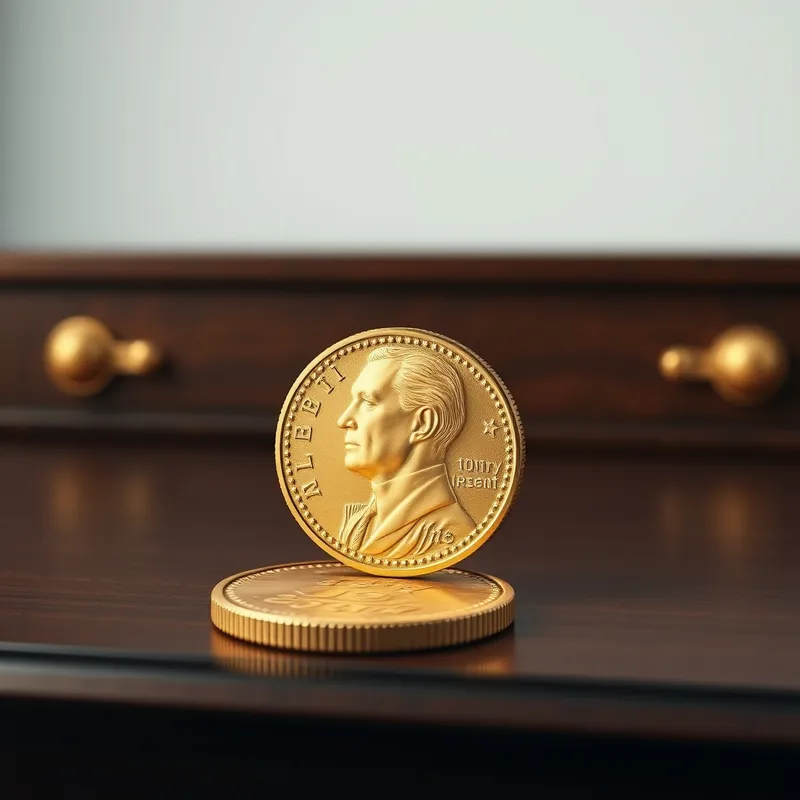
The US Mint opened public purchases for the 2026 President Donald J. Trump $1 coin, offering $61 rolls holding 25 coins and $154.50 bags containing 100 coins. As speculative capital flooded state sales portals to hunt for 250,000 special July 4th-struck privy mark variations, digital asset markets experienced immediate liquidity leakage.
State-sponsored physical currency events are operating as unintentional liquidity drains for political meme tokens. What appears to be an isolated sovereign release actually illustrates how traditional financial assets extract capital directly from digital attention markets.
🏛️ Legal Nuances and Sovereign Minting Arbitrage
The issuance leverages a specific statutory loophole under the Circulating Collectible Coin Redesign Act of 2020. While general federal statutes prohibit living individuals on paper currency, Treasury authorities circumvented standard Presidential $1 Coin Program restrictions via 250th anniversary redesign mandates, bypassing legislative blocks like the proposed TRUMP Act and Change Corruption Act.

From a behavioral standpoint, the distribution model mirrors on-chain "gacha" mechanics or loot box distributions. By dispersing 250,000 special July 4th privy-marked coins across roughly 8.75 million standard coins, the sovereign issuer creates a structured 1-in-35 probability event that drives secondary market speculation.
"State mints are successfully monetizing retail collector psychology using mechanics perfected by decentralized tokenomics."
This dynamic demonstrates how sovereign mints can extract substantial collector premiums. Buying a bag yields a $1.55 per-coin cost compared to $2.44 per coin in a roll—representing a 58% unit cost discrepancy—yet retail demand remains inelastic due to artificial caps of 150,000 rolls and 50,000 bags.
📉 Institutional Displacement: 1926 Commemorative Parallel
To understand the current dynamic, market participants must examine structural precedents where sovereign entities leveraged historical milestones to alter money supplies and speculative interest. The structural parallel lies in the 1926 Sesquicentennial half-dollar release, where sitting President Calvin Coolidge appeared alongside George Washington on legal tender.

During that historical cycle, sovereign authorities monetized public celebration by selling legal tender at a marked-up premium to extract non-tax revenue. What the market is experiencing today is identical in execution: sovereign entities weaponizing artificial scarcity to absorb excess consumer liquidity.
The lesson from the 1926 precedent is stark: physical collectibles issued at steep markups suffer steep secondary market corrections once primary minting windows close and attention drifts back to liquid markets. This institutional dynamic operates as a localized liquidity trap, freezing retail capital in illiquid physical formats.
| Competing Force | The Irreconcilable Friction |
|---|---|
| Sovereign Minting Authority vs. Retail Meme Speculators | ⚖️ Extracting liquid digital capital into non-fungible physical legal tender formats. |
| On-Chain Meme Liquidity vs. Government Physical Scarcity | ✨ Competing for identical retail attention metrics during high-profile political news cycles. |
🔮 The Sovereign Collectible Attention Cannibalization
The immediate consequence of this physical roll launch was felt directly across decentralized exchanges. The Solana-based Official Trump (TRUMP) token fell approximately 6.4% in 24 hours to trade near $2.21, replicating market mispricing observed during previous sovereign physical announcements.
Digital traders consistently misinterpret sovereign physical currency announcements as direct catalysts for affiliated digital tokens. Instead, the data points to capital abstraction: retail buyers reallocate liquid funds into physical mint purchases, temporarily draining volume from related digital token liquidity pools.

Digital assets tied to political figures will face recurrent structural headwinds during physical government product drops. Expect political meme coin liquidity to experience systematic drawdowns whenever sovereign mints execute limited-run physical releases. Capital allocation between physical sovereign collectibles and digital speculative tokens remains a zero-sum game for retail mindshare.
⚖️ Privy Mark: A small, distinctive mark or symbol stamped into a coin die to signify a specific event, minting date, or historical anniversary.
⚖️ Sovereign Premium: The markup percentage charged by a national mint over the legal face value of an issued currency product.
- If political meme token daily volume declines by over 20% during official mint releases → this signals capital reallocation.
- If secondary market markups on privy-marked coins drop below 30% → retail collectible demand is saturating rapidly.
- If DEX liquidity depth for related tokens thins significantly → volatility risk increases across political asset pairs.
— — coin24.news Editorial
This analysis is synthesized from aggregated market data and institutional research insights. It is provided for informational purposes only and should not be construed as financial advice. Cryptocurrency investments carry high risk; please conduct your own due diligence before making any investment decisions.
Related Intelligence

Cardano voting exposes voter apathy: The Danger of Silent Vetoes

Sui Liquidity Masks Quiet Ecosystem: A Capital Facade

Solana Ecosystem Tokens Outperform: Liquidity illusion hides speculative rot

Dogecoin Network Activity Surges: Liquidity Illusion or Structural Shift?

Ripple escrow release masks overhang: The Endless Supply Drag