Wheat Market Collapses While Reserves: Geopolitical Illusion or Deadweight Anchor

Commodity Disconnect: How Paper Shorts and Geopolitical Pricing Are Reshaping Macro Liquidity
Agricultural paper markets are pricing in geopolitical peace while underlying supply fundamentals face historic structural friction.

Chicago wheat futures are teetering on the edge of a historic nine-week losing streak, representing the longest sustained downtrend for the commodity in over 29 years. Since hitting a high near $7.65 per bushel on September 1, prices have slid roughly 21% down to approximately $6.00 per bushel. What makes this capitulation mathematically anomalous is that it coincides directly with the domestic winter crop dipping near a 50-year low, exposing a massive divergence between physical supply realities and paper derivative positioning.
🌾 The Geopolitical Mirage vs Physical Scarcity Mechanics
The aggressive sell-off in agricultural paper contracts is driven largely by speculative positioning on potential peace talks between Russia and Ukraine. Speculators are aggressively selling short on the assumption that Black Sea export corridors will normalized, fully unblocking supply chains. Furthermore, trade route diversions through Baltic ports and incoming yields from the Southern Hemisphere have added short-term paper supply to the market, masking long-term supply impairments.
However, the positioning among institutional money managers indicates an extreme speculative imbalance. Systematic funds have built a massive net short stance of approximately 65,000 contracts in Chicago, driving technical indicators deep into oversold territory. This market structure mirror-images previous macro dislocations, where derivative markets priced in best-case geopolitical outcomes while physical inventory buffers continued to decay silently in the background.
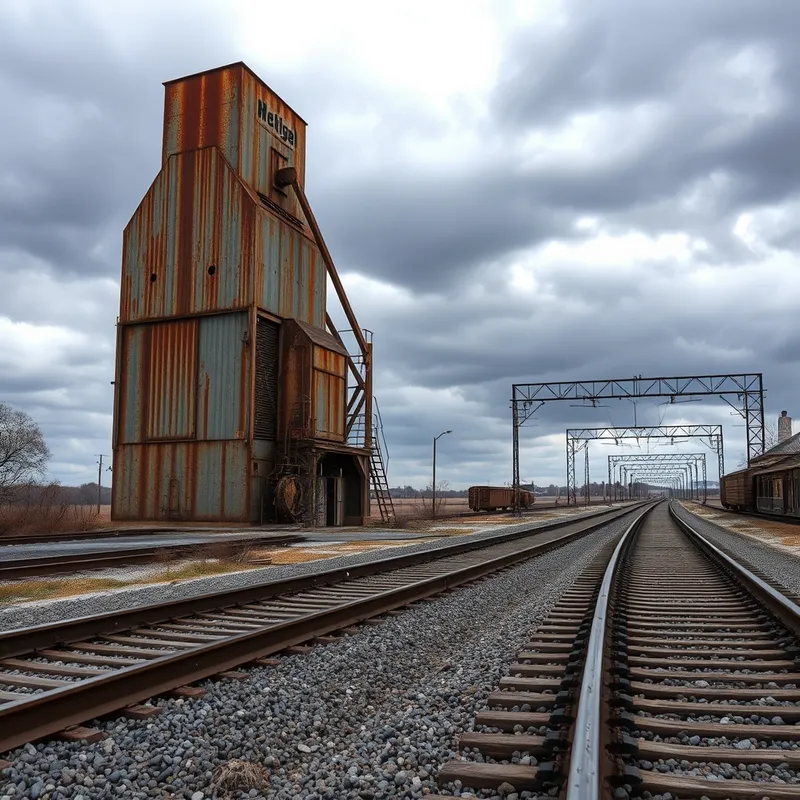
"When paper markets price in peace while physical supply sits at half-century lows, the resulting volatility shock rarely stays contained within commodities."
📊 The Inflation Transmission Lag and Sovereign Liquidity Realities
Understanding commodity transmission channels requires a fundamental grasp of consumer cost composition. Broad economic metrics show inflation measures holding firm, with consumer pricing expanding at 3.7% year-over-year. Within this index, energy costs registered a 20.4% surge, whereas food components rose a modest 2.5%, illustrating that lower raw agricultural prices do not instantly cool consumer-level inflation metrics.
This dynamic occurs because primary agricultural producers capture only a microscopic fraction of retail food costs. For instance, out of a $5.99 retail loaf of bread, primary farmers receive approximately 13 cents, meaning logistics, labor, processing, and energy dominate the final shelf price. Consequently, declining raw grain futures fail to offer immediate relief to interest rate decision-makers at central banks.
With short-term federal interest rate targets anchored between 3.75% and 4.00%, persistent hawkish dissents reflect ongoing concerns over core inflation pressures. As central banks prioritize elevated rates, capital continuously migrates toward high-yield instruments, amplifying volatility across speculative markets, equity index derivatives, and digital assets alike.
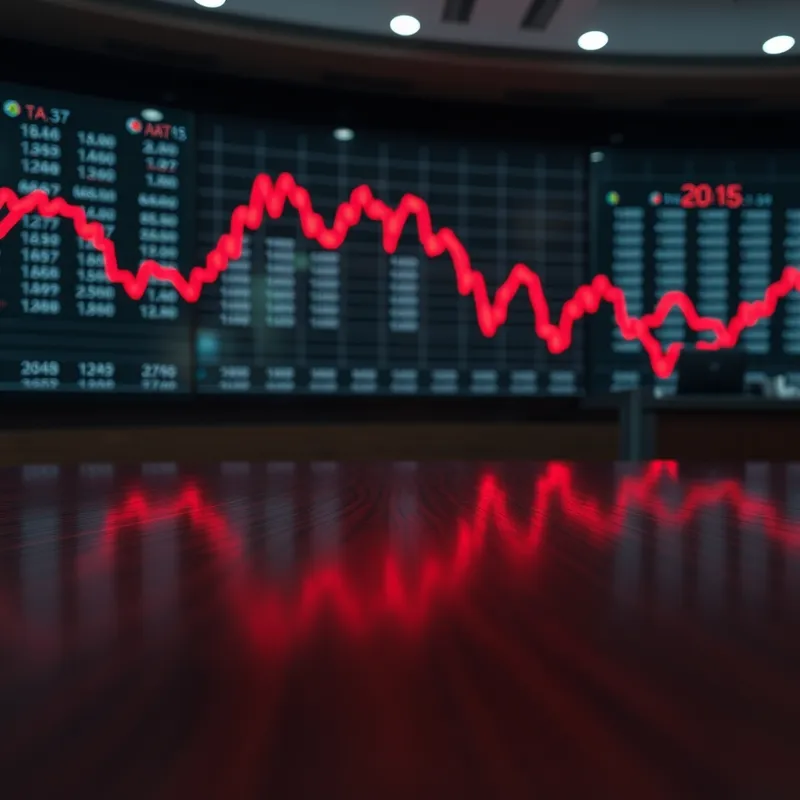
🏛️ Paper Market Financialization: Lessons from the 1980 Hunt Silver Corner
To contextualize the current gap between paper short positions and tight physical supplies, institutional investors must look to the 1980 Silver Thursday crisis. During that era, extreme speculative positioning in derivative contracts completely detached from real-world delivery constraints, driving paper prices to unnatural extremes before a systemic short-squeeze reconnected the derivative asset to its underlying physical inventory.
In today's ecosystem, speculative funds leverage synthetic positions to suppress grain prices despite supply buffers tightening globally. In my view, this setup reflects a classic structural liquidity trap. When derivative markets aggressively sell down an asset whose underlying physical supply is near 50-year lows, the eventual unwinding of those paper shorts is rarely orderly—it triggers systemic price discovery spikes that ripple directly into macro liquidity channels.
The primary difference today is the emergence of decentralized financial venues and tokenized real-world assets (RWAs), which accelerate price propagation. Unlike traditional market closes, on-chain perpetual platforms allow commodity shocks to transmit instantaneously 24/7 across foreign exchange and digital capital markets.
| Competing Force | The Irreconcilable Friction |
|---|---|
| Speculative Short Funds vs Physical Ag Producers | Pricing paper peace while physical inventories face historic 50-year lows. |
| Retail Consumers vs Central Bank Policy Makers | 📉 Discerning raw farm gate price declines from sticky end-user retail inflation. |
| 🏢 Traditional Futures Exchanges vs On-Chain Perpetuals | 🔄 Absorbing continuous 24/7 liquidations during geopolitical headline updates. |
⛓️ On-Chain Real World Assets and Micro-Capital Flight
Extending beyond legacy paper exchanges, commodity exposure is actively migrating to decentralized architecture. Decentralized protocols like trade.xyz on Hyperliquid now facilitate perpetual contracts linked directly to agricultural benchmark indices with up to 20x leverage. Simultaneously, tokenization platforms such as Agrotoken are digitizing grain assets in Latin America, establishing early building blocks for global, borderless collateral settlement.

While tokenized agricultural assets remain modest at approximately $150 million compared to the massive $4.3 billion sitting in tokenized precious metals like gold, the growth vector is unmistakable. Emerging markets experiencing sovereign currency devaluation are bypassing local financial infrastructure entirely, utilizing on-chain dollar stablecoins and tokenized commodities as primary balance sheet hedges.
Consider regional economic data where peer-to-peer crypto liquidity surged fivefold to reach $3.56 billion, dominated almost entirely by dollar-backed stablecoin reserves. When local fiat systems crumble under structural food and energy inflation, capital shifts directly into digital, friction-free alternative assets.
The structural dislocation between short-side paper positioning and physical supply deficits is reaching a critical inflection point. Expect a rapid, non-linear short squeeze in soft commodities if geopolitical resolution delays materialize, triggering a cascading liquidity re-pricing across tokenized RWA ecosystems and broader risk-on markets.
⚖️ On-Chain Perpetuals: Derivative contracts hosted on decentralized protocols that mimic traditional futures contracts without explicit expiration dates, offering continuous trading liquidity.
⚖️ RWA (Real-World Assets): The process of tokenizing tangible off-chain financial assets—such as commodities, real estate, or sovereign debt—onto blockchain infrastructure to enable fractional ownership and global settlement.
- If hedge fund aggregate short interest in agricultural futures exceeds historic 80,000 contract levels → this signals extreme paper oversold conditions.
- If global tokenized commodity market capitalization crosses $500M → active capital allocation shifts into decentralized derivative collateral channels.
- If central bank energy CPI components remain above 15% annually → monetary policy pivots toward sustained high interest rate regimes.
— — coin24.news Editorial
This analysis is synthesized from aggregated market data and institutional research insights. It is provided for informational purposes only and should not be construed as financial advice. Cryptocurrency investments carry high risk; please conduct your own due diligence before making any investment decisions.
Related Intelligence

Hyperscaler Capex Triggers Debt Risk: Liquidity Illusion Exposed

Arbitrum Address Activity Illusion: Network Growth Without Capital Velocity

TRX Options Expand TRON Ecosystem: Derivatives Footprint Meets Stablecoin Dominance

AI Agent Payments Carry Hidden Traps: The Phantom Wallet Drain

OpenAI Refutes Complexity Hypothesis: Algorithm shortcut signals a systemic shift.