XRP Whales Move 281M Tokens To Vaults: A $270M Custody Decoupling

Why $270M in XRP Whale Transfers Signals Custody, Not Capitulation
XRP whales moved $270 million during a 12% crash without touching an exchange.

While XRP slid from roughly $1.29 to approximately $0.97 alongside a broader market pullback that dragged Bitcoin from above $74,000 to around $62,500, on-chain trackers flagged two massive outflows totaling 281 million tokens. Conventional retail wisdom treats any nine-figure transfer during a drawdown as an imminent sell order.

The ledger data tells a different story. An address beginning with rN3t4E dispatched 140,351,238 XRP—worth roughly $136 million—to rLxFWn on Tuesday at 15:22 UTC, mirroring an identical transfer to rMcu8At on November 6.
🔍 Decoding the On-Chain Custody Footprint
To understand why this capital movement defies standard capitulation patterns, we have to examine the operational timeline rather than the headline dollar value. Neither receiving address belongs to a known cryptocurrency exchange, which immediately strips away the primary mechanism for spot-market liquidation.
Instead, the broader trend at play here is institutional custody segregation—a structural shift accelerated by maturing compliance standards across digital asset markets. Large holders are increasingly isolating treasury reserves into multi-layered, non-exchange vaults to mitigate counterparty risk during periods of heightened macro volatility.
| Operational Phase | Wallet / Entity | Transaction Parameters | Structural Signal |
|---|---|---|---|
| Initial Seeding | Bitstamp-linked trail to rN3t4E | May 2020 origin; Jan 22 & Feb activations; ~60M XRPNov 4–6 | 🏢 Historical liquidity lineage, not active exchange control |
| Vault Preparation | rMcu8At & rLxFWn | Activated Oct 5 (2 mins apart) with ~33 XRP; ~16 XRP returned | Standardized operational verification before bulk settlement |
| Primary Migration | rN3t4E to Vaults | Two identical tranches of 140,351,238 XRP (Nov 6 & Tuesday) | Disciplined, pre-scheduled cold-storage allocation |
The uncomfortable reading of this is that retail traders are reacting to raw volume alerts without checking address lineage. When capital moves into pre-tested, isolated wallets, it removes liquid supply from active order books rather than adding to it.

"Markets routinely mistake custody hygiene for capital flight."
⚙️ The Mechanics of Pre-Staged Vault Transfers
If this historical lineage points toward planned storage, the underlying ledger mechanics reveal exactly how the operation was engineered. On the XRP Ledger, an account cannot simply receive funds passively; it must be initialized with a base reserve, and sophisticated entities routinely run round-trip test transactions before committing nine-figure sums.
Think of it like pressure-testing a deep-sea pipeline before opening the main valve. The sending entity initialized both destination vaults weeks in advance, separated by mere minutes, and executed symmetrical micro-returns two days later to confirm cryptographic signing authority.
Here is what the market is missing: the historical funding trail linking the sender back to an exchange-labeled account from years prior does not imply current exchange ownership. In my view, this signals a classic OTC or institutional desk decoupling from legacy exchange infrastructure into self-custodied or third-party qualified vaults.
Conflicting motivations also emerge here between liquidity providers and long-term allocators. While short-term derivatives traders hunt for liquidation cascades during a broader market slide, treasury managers use those exact low-sentiment windows to execute quiet, multi-tranche balance sheet restructurings.
📉 Market Microstructure and Volatility Fallout
Given this operational reality, the immediate impact on spot pricing is driven more by behavioral misinterpretation than actual sell-side order flow. When automated alert bots broadcast massive token movements during a market-wide correction, algorithmic and retail participants often front-run a phantom sell-off.

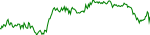
This creates a temporary liquidity vacuum on centralized order books, amplifying downward volatility even when the underlying tokens are locked away. Over the medium term, however, shifting this magnitude of capital off active trading venues tightens available float.
The pattern suggests that once the broader macro pressure on major digital assets stabilizes, reduced exchange-side supply can accelerate upward price elasticity. Still, without confirmed identity attribution, the market must price in the residual risk that these vaults could eventually feed OTC desks rather than remain permanently dormant.
"Phantom sell pressure is the cheapest liquidity event a market can buy."
🧭 Navigating the Post-Migration Landscape
Looking ahead, the divergence between on-chain custody behavior and spot-market price action will likely widen as institutional participation deepens. Regulatory scrutiny and counterparty failures over recent cycles have permanently altered how large holders manage treasury risk.
Investors should expect more frequent, high-volume wallet migrations that bear no correlation to immediate exchange inflows. Distinguishing between a deposit address and a pre-staged cold vault is no longer optional—it is a baseline requirement for reading market microstructure accurately.
The current market dynamics suggest that large-scale wallet migrations during drawdowns are increasingly structural rather than reactive. As capital continues to decouple from legacy exchange rails, headline transfer alerts will lose their predictive power for immediate spot sell-offs.

Over the coming quarters, tightening liquid float on centralized venues could amplify upside volatility once macro headwinds subside, rewarding participants who track destination-wallet behavior over raw transaction size.
🔐 Cold Storage Vault: An offline or isolated wallet architecture designed for long-term asset preservation, keeping private keys disconnected from active trading venues.
🧪 Test Transfer: A small, preliminary transaction sent to a newly activated address—often followed by a partial return—to verify cryptographic control before moving bulk capital.
📊 Exchange Deposit Address: A blockchain wallet controlled by a centralized trading platform, typically serving as the direct precursor to spot-market liquidation.
- If either destination vault routes funds to a known exchange deposit address → this signals a shift toward active distribution.
- If net exchange inflows spike while spot prices test key support → this confirms retail capitulation rather than whale custody.
- If pre-staged vault balances remain dormant through macro stabilization → this establishes a tighter liquid float benchmark for recovery.
— Warren Buffett
This analysis is synthesized from aggregated market data and institutional research insights. It is provided for informational purposes only and should not be construed as financial advice. Cryptocurrency investments carry high risk; please conduct your own due diligence before making any investment decisions.
Related Intelligence

Nvidia Earnings Beat Masks Stock Drag: The Post-Huang Overhang

BlackRock ETF Rebound Masks Fragility: Institutional Trap at 64k

Bitcoin Short Term Holders Bleed Out: Liquidity Under Pressure

AI Trading Agents Surge 5x In Crypto: Autonomous Trading Pivot

Wells Fargo Boosts Bitcoin Position: Brokers Drive ETF Surge