Zuri-Invest Tokenizes Uranium Assets: Commodity Market Pivot

Beyond Sovereign Debt: How Tokenized Uranium Signals the Second Wave of Real-World Asset Architecture
Real-world asset tokenization has officially migrated from paper financial yields to physical energy bottlenecks.

The institutional crypto market is undergoing a structural transformation. Institutional capital managers are pivoting away from simple tokenized U.S. Treasury bills to create direct on-chain access to physical raw materials, exemplified by Zurich-based asset manager Zuri-Invest AG replacing its traditional Actively Managed Certificate (AMC) structure with Tezos-based xU3O8 tokens to back its Physical Uranium Tracker.
⚛️ The Energy-Compute Convergence: Why RWAs Are Moving Up the Supply Chain
Before analyzing on-chain settlement, it is vital to understand commodity supply dynamics. When technology giants sign direct nuclear power purchase agreements, they are not merely buying electricity—they are attempting to ring-fence physical fuel supply chains. Current global mining operations cover roughly 46% of projected 2040 utility requirements, while primary resource deposits face severe depletion windows heading into the mid-2030s.
Hyperscale infrastructure providers including Microsoft, Meta, and Oracle have altered the macro landscape by directly funding nuclear reactor developments and Small Modular Reactors (SMRs) to guarantee uninterrupted baseline power for processing centers. This corporate land-grab for physical power creation has fundamentally disrupted traditional commodity trading desks. Physical uranium traditionally trades in multi-ton bulk lots through opaque over-the-counter contracts, effectively locking out medium-tier institutional balance sheets.

What this signals structurally is the complete convergence of artificial intelligence infrastructure and physical energy commodities. By wrapping audited yellowcake inventory into public blockchain rails, wealth managers can decouple from systemic traditional banking settlement cycles while providing immediate fractional ownership. The move reflects a broader transition: tokenization is evolving from a yield-enhancement tool into a strategic supply-chain coordination network.
⛓️ Deconstructing xU3O8: From Certificate Derivatives to On-Chain Inventory Settlement
If this macro resource squeeze continues to accelerate, the technical architecture used to clear physical asset transactions becomes paramount to market liquidity. Moving from financial certificates to public ledger tokens changes the underlying market infrastructure entirely.
Under the previous certificate wrapper regime, an investor held a synthetic claim managed through intermediary clearinghouses, subjecting the position to management fee drag, market-maker spread exploitation, and delayed clearing windows. Under the Tezos-based xU3O8 architecture, physical uranium inventory stored in specialized vaults is mapped directly to smart contracts. This allows FINMA-regulated asset managers to offer near-instant settlement speed and granular fractional rebalancing without maintaining high cash buffers for inventory management.
"Tokenization is no longer about fractionalizing real estate; it is about liquidating sovereign energy bottlenecks."

Let's be clear about the conflict of interest here. Core developers and protocol foundations desperately need high-utility, low-volatility real-world assets to anchor on-chain Total Value Locked (TVL), whereas institutional asset managers require absolute regulatory compliance and robust custodial verification. Tezos provides institutional-grade formal verification tools, but the primary challenge remains bridge latency between physical vault audits and on-chain ledger updates. In my view as a market strategist, any tokenized commodity protocol that fails to provide daily cryptographically verifiable proof-of-reserve will eventually face severe pricing discounts against physical spot markets.
📈 Market Volatility and Sector Realignment: Commodity Financialization on Tezos
Building on these technical architectural upgrades, the immediate consequence for crypto capital allocation is a structural shift in portfolio diversification. Historically, physical yellowcake inventory has demonstrated an extremely low correlation with broad tech equities and traditional benchmark indexes, offering a genuine hedge against monetary debasement and tech-sector drawdowns.
The introduction of continuous on-chain fractional liquidity lowers the cost of entry for global market participants, effectively financializing a previously illiquid physical sector. As trading venues integrate these tokenized commodity wrappers, capital flows will likely create localized price volatility during initial secondary-market pool bootstrap phases. Early institutional adopters gain a distinct execution advantage by utilizing tokenized inventory as programmable collateral in decentralized lending venues.
Over a longer horizon, this model destabilizes legacy commodity desks. When institutional investors can execute micro-rebalancing transactions on public blockchains 24/7, holding static derivative certificates becomes an unnecessary operational expense. The structural pricing power is shifting from traditional derivative clearing networks directly to transparent on-chain liquidity pools.
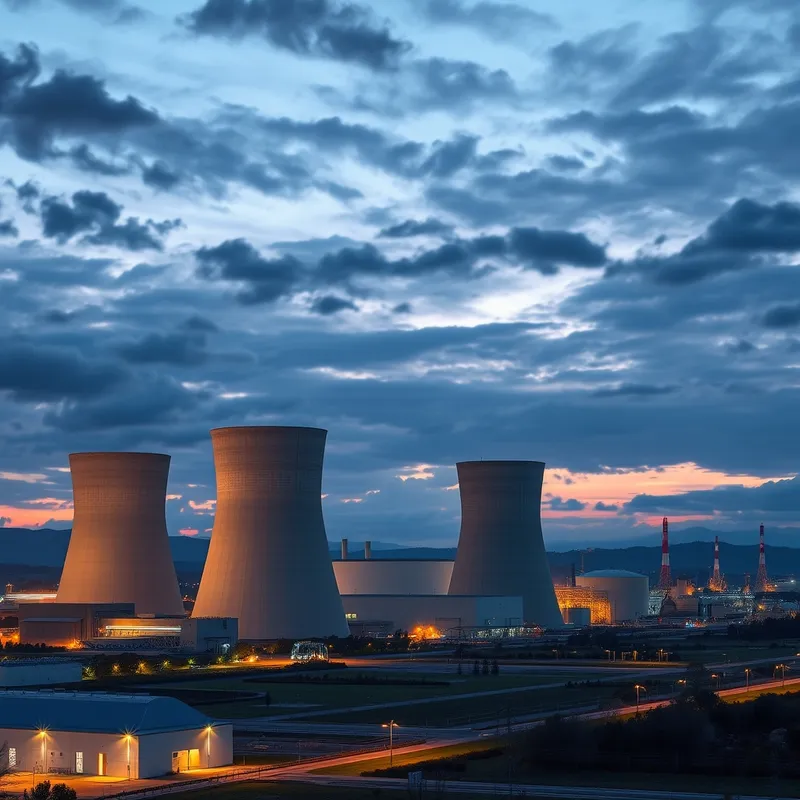
The market is transitioning away from paper derivatives into direct ledger-backed resource claims. Expect sovereign wealth funds and corporate treasuries to begin utilizing tokenized physical energy assets directly on-chain as default balance sheet collateral within the next 36 months. This structural shift will force legacy commodities exchanges to adapt their settlement rails or risk liquidity migration to public networks.
- If commodity token secondary trading spreads exceed 2.5% over spot rates → this signals a breakdown in physical vault arbitrage efficiency.
- If tech-sector power purchasing commitments slow down unexpectedly → the fundamental thesis for nuclear-linked commodity token demand weakens considerably.
- If institutional vault audit frequency drops below monthly cycles → on-chain collateral risk premiums will expand across secondary lending markets.
⚖️ Actively Managed Certificate (AMC): A structured derivative instrument that tracks an underlying basket of assets or commodities under discretionary management, traditionally cleared through legacy financial clearing networks.
📦 Physical Collateral Tokenization: The process of minting digital tokens on a public blockchain ledger that directly represent verifiable ownership of audited physical assets stored in specialized custodial facilities.
— — coin24.news Editorial
This analysis is synthesized from aggregated market data and institutional research insights. It is provided for informational purposes only and should not be construed as financial advice. Cryptocurrency investments carry high risk; please conduct your own due diligence before making any investment decisions.
Related Intelligence

Ripple Evernorth Sparks Resale Fear: The Treasury Overhang

South Korea Extends Crypto Tax Relief: 2029 Buffer Sustains Rally

Moscow Exchange Gates Crypto Access: State-Gated Asset Control

KuCoin TradFi Expands Leverage Risks: 24/7 Liquidity Illusion

Senate Gridlock Stalls Crypto Reform: Bipartisan Illusion Exposed