Anthropic IPO Drains Crypto Liquidity: Macro Drag Tests 62k Floor

Anthropic’s $81.3B IPO Drains Crypto Liquidity as Bitcoin Tests the $62,000 Floor
An $81.3 billion AI equity listing just exposed how shallow crypto’s institutional liquidity actually is.

Anthropic priced its Nasdaq debut under the ticker ANT at $83 per share on November 19, clearing above its $70–$78 marketed range to secure a $1.5 trillion valuation alongside a separate $26 billion private placement from seven tech giants including Nvidia and Google. Simultaneously, Bitcoin tumbled toward $62,000—marking a roughly 24% monthly drawdown—before stabilizing above $63,000 after roughly $2 billion in weekend liquidations.

🌊 The Liquidity Vacuum Behind the AI-Crypto Divergence
What begins as a story about a record-breaking technology listing is ultimately a market microstructure event. Global risk capital does not operate in isolated silos, and when an institutional-grade AI offering commands seven times its available supply in order flow, marginal dollars are pulled from the highest-beta corners of the financial system.
The pattern suggests that crypto’s recent institutionalization has created a double-edged sword. In previous cycles, digital assets operated largely outside the gravitational pull of traditional equity syndication. Today, the same multi-strategy hedge funds and family offices that provide bid-side support for spot Bitcoin products are the exact entities reallocating cash to capture primary-market equity allocations.
"When traditional equities offer venture-style upside with regulatory clarity, crypto becomes the automated ATM for institutional cash."

Ripple CEO Brad Garlinghouse has pointed to SpaceX’s earlier public debut as a direct precedent, arguing that once the listing window closes, sidelined capital rotates back into digital assets. Yet this framing assumes that the capital leaving crypto is merely waiting on the sidelines, rather than being permanently repriced by shifting interest rate expectations.
📉 Macro Drag vs. Capital Rotation: Where the Data Points
If this historical precedent of post-IPO relief holds true, the immediate question is why AI equities themselves are struggling alongside digital assets. Strip away the noise and the correlation reveals a deeper macro fault line: hotter-than-expected US inflation data has forced traders to aggressively reprice Federal Reserve rate-hike probabilities.
Bitwise CIO Matt Hougan attributes the violent flush primarily to this macro repricing and the resulting weekend leverage wipeout, rather than equity syndication alone. Grayscale’s Zach Pandl reinforces this view, pointing to sustained stablecoin outflows and broader spillover from AI stock losses as the true culprits behind the drawdown.
| Market Catalyst | Primary Mechanism | Observed Impact | Expected Duration |
|---|---|---|---|
| Anthropic IPO (ANT) | 7x oversubscribed book-building | $81.3B public + $26B private capital lockup | Short-term (ends post-listing) |
| US Inflation Shock | Aggressive Fed rate-hike repricing | $2B weekend crypto liquidations | Medium-term (policy dependent) |
| AI Equity Spillover | Cross-asset risk-off correlation | 24% monthly BTC drawdown | Ongoing until earnings stabilize |
Here is what the market is missing: both hypotheses can be simultaneously true, and together they explain the severity of the drop. Even CoinShares CEO Jean-Marie Mognetti acknowledges that artificial intelligence is draining crypto liquidity, yet falling AI stock prices prove that the entire risk-asset complex is confronting tighter financial conditions.
⚙️ Under the Hood: How Equity Syndication Drains On-Chain Order Books
Given this macro tension, the technical mechanics of an institutional IPO explain how capital disappears from crypto before a single share trades on Nasdaq. To understand the plumbing, consider that primary-market equity allocations require hard fiat settlement—cash that must be raised days or weeks in advance of the listing date.

Institutional desks facing a seven-times oversubscribed book cannot rely on margin; they must post liquid collateral. Consequently, desks unwind liquid, 24/7-traded positions—chiefly Bitcoin and Ethereum—and redeem stablecoins back into US dollars to fund their brokerage accounts. This creates a mechanical, non-discretionary sell pressure on crypto order books over the weekend, when traditional banking rails are closed and market-maker depth is thinnest.
In my view, this exposes a structural asymmetry between traditional underwriters and crypto-native liquidity providers. Underwriters lock up institutional capital in primary offerings with zero immediate secondary-market bleed, whereas decentralized and centralized crypto venues absorb the immediate liquidation shock. What this signals structurally is that until crypto yields or on-chain utility compete with primary-market equity returns, digital assets will remain the liquidity buffer for Wall Street’s biggest deals.
🔭 Navigating the Post-Listing Regime
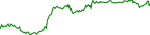
With the Anthropic listing now live and leveraged positions largely flushed out, the market enters a decisive testing phase. If the primary shock was indeed the combination of rate-hike repricing and IPO settlement, the current price zone represents a critical inflection point where forced selling subsides.
However, the uncomfortable reading of this is that a post-IPO relief rally will fail to gain traction if stablecoin supply continues to contract. Investors should watch whether institutional desks rotate profits back into digital assets or keep capital parked in short-duration Treasuries as inflation fears linger.
"Leverage has been cleared, but liquidity has not yet returned."

While Hougan’s outlook suggests stronger performance heading into 2027 if Bitcoin defends its current floor, and Pandl views these levels as compelling entry points, the path forward will be dictated by macro liquidity rather than crypto-native catalysts.
The current market dynamics suggest that the immediate selling pressure from equity syndication has peaked. However, the absence of fresh stablecoin minting indicates that institutional capital is not rushing back into risk-on crypto positions.
Until inflation expectations cool enough to halt aggressive rate-hike pricing, Bitcoin’s recovery will likely remain range-bound rather than explosive. The true test of this floor begins when Wall Street’s AI euphoria collides with tighter Federal Reserve policy.
⚖️ Book-Building: The process by which an underwriter determines the price and allocation of an IPO by gauging institutional investor demand prior to listing.
💧 Stablecoin Outflows: The net redemption of dollar-pegged tokens (like USDT or USDC) back into fiat currency, signaling capital leaving the crypto ecosystem.
🔄 Cross-Asset Spillover: The transmission of volatility or selling pressure from one asset class (such as AI equities) into another (such as Bitcoin) due to shared institutional ownership.
- If US inflation prints force another upward repricing in Fed rate-hike odds → expect renewed pressure on Bitcoin’s current support floor.
- If net stablecoin supply turns positive for five consecutive sessions → this signals institutional capital rotating back from equity settlements.
- If AI equities stabilize post-listing while Bitcoin holds its current range → cross-asset correlation risk diminishes significantly.
— — coin24.news Editorial
This analysis is synthesized from aggregated market data and institutional research insights. It is provided for informational purposes only and should not be construed as financial advice. Cryptocurrency investments carry high risk; please conduct your own due diligence before making any investment decisions.
Related Intelligence

Nvidia Drops 4 Percent As Tech Bleeds: A Crypto Decoupling Test

Babylon Pivots To Native BTC Lending: Yield Exit Meets Debt Risk

Cathie Wood Dumps Nvidia For SpaceX: Beyond The Crypto Narrative

Housing Collapse Signals Rate Peak: Fed Clash Tests Rate Ceiling

XRP Whales Move 281M Tokens To Vaults: A $270M Custody Decoupling