Bybit Perpetuals Expand TradFi Scope: Crypto Exchanges Absorb Wall Street
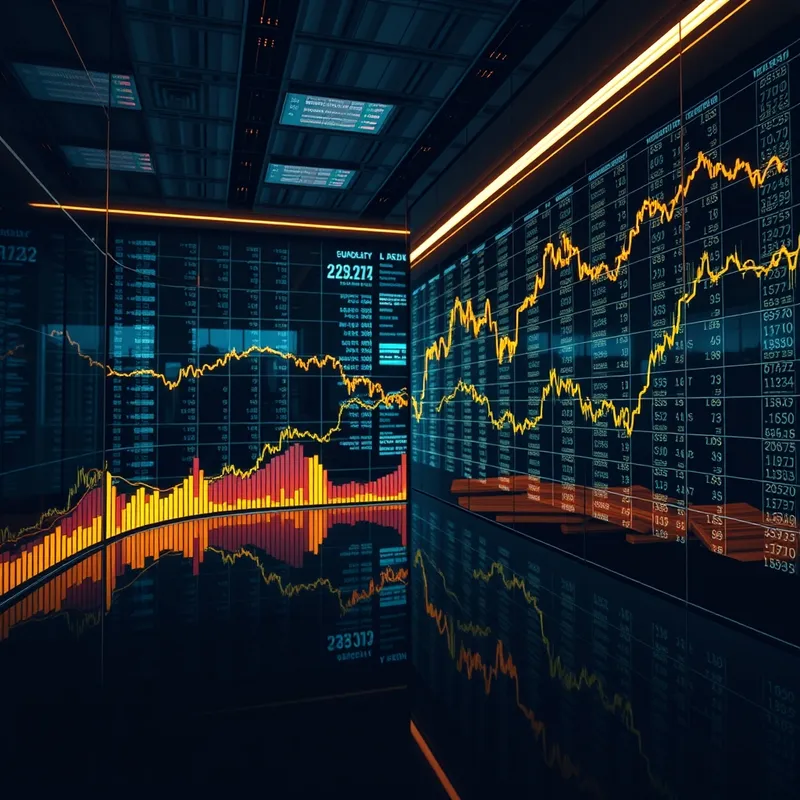
Crypto Exchanges Are Quietly Eating Wall Street’s Lunch Through Perpetuals
Perpetual contracts on stocks and commodities now command $98 billion in weekly volume, proving crypto venues no longer need crypto alone to print liquidity.

For years, the boundary between digital assets and traditional equities was enforced by settlement clocks and brokerage logins. Today, that wall is dissolving inside the order books of major crypto exchanges. By wrapping equities, gold, oil, and indices into 24/7 perpetual futures, platforms like Bybit are transforming from niche token casinos into borderless, round-the-clock macro venues.
🏛️ Why Legacy Markets Are Losing the Liquidity War
To understand why a retail trader in Asia or Latin America prefers trading Nvidia or gold on a crypto exchange rather than a traditional brokerage, look at the friction of legacy finance. Traditional stock markets close at 4:00 PM, lock out weekend price discovery, and trap capital behind clunky T+1 settlement cycles. Crypto exchanges simply stripped away the calendar.
This structural shift is already visible in the raw volume data. In the first quarter of 2026 alone, perpetual contracts tied to stocks, commodities, and indices generated $524.8 billion in trading volume—surpassing the entire full-year total of 2025. By late November, weekly turnover in these synthetic traditional assets reached roughly 63% of Bitcoin perpetual volume across the two largest venues.
What this signals is a profound change in competitive dynamics. Crypto exchanges realized that during periods of muted altcoin volatility, their core user base still craves high-beta macro exposure. Rather than watching capital bleed back to traditional brokerages, platforms brought Wall Street onto their own matching engines.

"When a single matching engine prices both Bitcoin and Anthropic stock at 3:00 AM on a Sunday, the legacy brokerage model looks less like a fortress and more like a museum."
⚙️ Inside the Multi-Asset Perpetual Architecture
If legacy markets are losing ground on accessibility, the technical architecture of these new trading arenas explains how exchanges are accelerating the capture. A perpetual contract on an equity or commodity does not require the exchange to custody physical gold bars or hold shares at a clearinghouse. Instead, the contract tracks an underlying index price through a funding rate mechanism—periodic payments between longs and shorts that keep the derivative tethered to spot reality.
Bybit’s recent rollout illustrates how aggressively this infrastructure is being deployed. After launching its traditional finance perpetual suite in April, the venue expanded past 200 contracts covering equities, ETFs, metals, indices, and oil, before adding over 1,000 US-listed spot stocks and ETFs in October. Even newly listed equities like Anthropic are now immediately wrapped into USDT-margined perpetuals.
Here is where it gets structural: exchanges are now using gamified liquidity events to stress-test multi-asset order books. Bybit’s World Series of Trading (WSOT) 2026, which wraps up on December 2, features more than 1,500 squads competing for a dynamic prize pool scaling up to 10 million USDT. Crucially, the Global Assets Showdown ranks participants by volume rather than profit, turning the tournament into a live laboratory for how much capital rotates from crypto into stocks and commodities when both sit on the same screen.
| WSOT 2026 Arena | Primary Ranking Metric | Key Structural Feature |
|---|---|---|
| Squad & Individual Showdowns | Profit & Loss (P&L%) | 🌊 Volume thresholds cut up to 70% mid-race to pull in smaller accounts |
| Global Assets Showdown | 🔁 Total Trading Volume | Includes TradFi Perps (stocks, gold, oil) and Spot equities |
| AI Showdown | P&L via AI Subaccounts | Walled-off subaccounts with strict leverage and permission caps |
In my view, the inclusion of an AI Showdown alongside traditional asset leaderboards reveals the next phase of exchange competition. Bybit’s subaccount architecture walls off automated trading agents from a user’s primary balance, allowing traders to cap leverage and position sizes. The exchange is no longer just selling leverage; it is selling risk-sandboxed automation across every asset class simultaneously.

📉 Market Impact: Capital Rotation and Volatility Spillovers
Given this technical convergence, the immediate impact on market microstructure is a blurring of liquidity regimes. Previously, crypto-native capital sat in stablecoins during equity market hours, waiting for Bitcoin to break out. Now, that exact same USDT collateral can seamlessly chase an earnings catalyst in tech stocks or a geopolitical spike in crude oil without ever leaving the exchange.
This creates a subtle but critical tension for altcoin markets. Every dollar of margin deployed into a gold or equity perpetual is a dollar of speculative liquidity not bidding up mid-cap tokens. Multi-asset perpetuals solve the exchange's revenue problem during crypto winters, but they simultaneously institutionalize capital flight away from speculative altcoins.
Furthermore, excluding institutional market makers and European Economic Area residents from these retail-focused tournaments highlights the ongoing regulatory tightrope. Exchanges are building global macro casinos for offshore retail, even as Western regulators scrutinize synthetic equity derivatives.
"Crypto exchanges didn't just build a better mousetrap for digital tokens; they built a 24/7 liquidity vacuum that is quietly draining speculative volume from traditional retail brokerages."
🔮 The Next Frontier for Borderless Trading Venues
As the December 2 leaderboard close approaches, the gap between crypto-only volume and traditional asset volume will serve as a bellwether for 2027. If retail traders prove willing to execute equity and commodity strategies on crypto-native rails at scale, traditional brokerages will face an existential choice: either adopt 24/7 settlement and perpetual-style margin efficiency, or cede the next generation of global macro traders to offshore venues.

At the same time, this convergence invites inevitable regulatory friction. Offering synthetic exposure to US-listed equities to global retail audiences under a single USDT margin umbrella is a direct challenge to securities regulators worldwide. The platforms that survive the next cycle will be those that balance this explosive multi-asset demand with enforceable risk controls.
The convergence of traditional equities and crypto perpetuals marks a permanent evolution in market structure. Exchanges are no longer competing solely against each other for token volume; they are competing against Wall Street for global retail attention.
As AI-driven subaccounts lower the barrier to automated execution, expect cross-asset volatility spillovers to intensify. Traders who treat crypto and macro as separate worlds will increasingly miss the liquidity flows driving both.
🔄 Perpetual Contract (Perp): A derivative contract with no expiration date that uses a funding rate mechanism to keep its price anchored to the underlying spot asset.
⚖️ Funding Rate: Periodic payments exchanged between long and short traders based on the difference between perpetual contract prices and spot prices.
🤖 AI Subaccount: An isolated trading account that walls off automated bots from a user's main balance, enforcing strict leverage and position caps.
- If weekly TradFi perpetual volume exceeds 75% of BTC perpetual volume → this signals a structural rotation of speculative margin away from altcoins.
- If major jurisdictions issue cease-and-desist orders against synthetic equity perps → offshore venues face immediate liquidity fragmentation and delisting risk.
- If AI subaccount adoption accelerates post-tournament → expect tighter bid-ask spreads and faster cross-asset arbitrage during weekend macro events.
— — coin24.news Editorial
This analysis is synthesized from aggregated market data and institutional research insights. It is provided for informational purposes only and should not be construed as financial advice. Cryptocurrency investments carry high risk; please conduct your own due diligence before making any investment decisions.
Related Intelligence
Apple Stock Defies AI Selloff Pressure: Lean Capex Becomes Safe Haven

Dogecoin December Data Signals Risk: 2017 Outlier Masks Undertow

Tokenized Gold Collateral Stalls Out: Liquidity Illusion - DeFi Only

Bitcoin ETFs Bleed Capital Amid Rally: The Liquidity Undertow

US Dollar Rally Masks Deep Fissures: Liquidity Illusion Before the Reset