Circle exploits UK regulatory gaps: A MiCA Frontrun Play
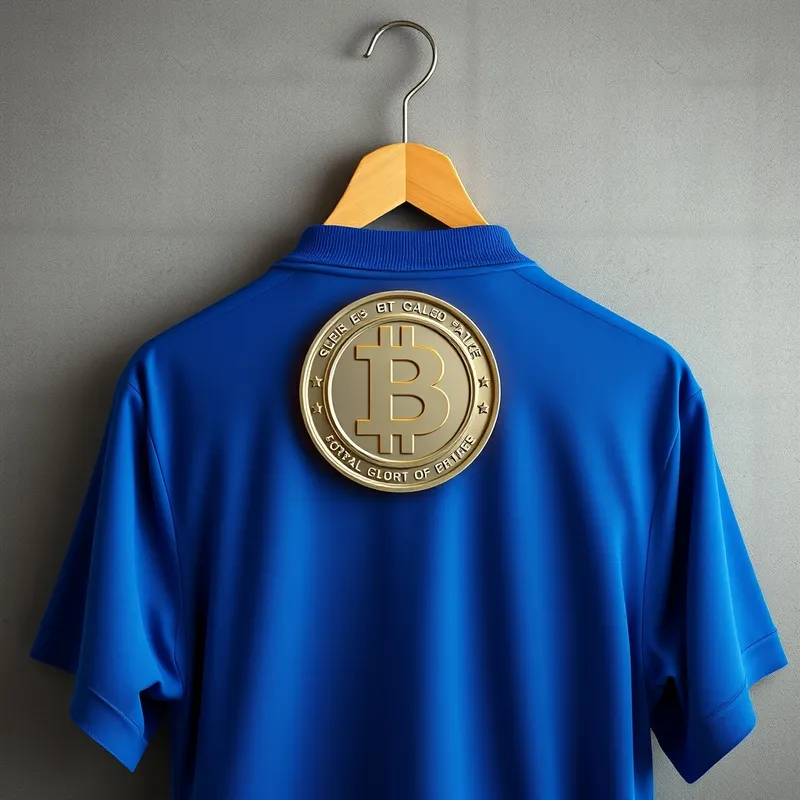
Circle's Premier League Sponsorship Exposes Regulatory Arbitrage Window Ahead of FCA Crackdown
Institutional legitimacy is no longer bought in boardrooms; it is purchased on football shirts.

The single-season partnership between stablecoin giant Circle and Chelsea Football Club marks a tactical masterclass in regulatory positioning. By locking in front-of-shirt placement in English football's top tier, the issuer of the roughly $73.6 billion market cap USDC is capitalizing on a brief operational window before local regulatory enforcement hardens.
⚽ Maximizing Mass Adoption Before the Rulebook Tightens
The deal arrives following a prolonged period where Chelsea went without a permanent main shirt partner, facing valuation declines that saw commercial appraisals fall from baseline expectations toward £33.6 million. While legacy commercial buyers hesitated, Circle stepped in with an agreement estimated near the club's targeted £50 million per season market rate. This provides the stablecoin issuer with global televised exposure across European and international markets.

The timing exposes a distinct structural divergence between UK and European regulatory timelines. Circle secured its European Union footprint by becoming the first major stablecoin issuer compliant with MiCA (Markets in Crypto-Assets) rules after obtaining an e-money license in France in July 2024. However, the United Kingdom's domestic framework remains in transition. Comprehensive oversight by the Financial Conduct Authority (FCA) for digital asset issuers will not fully activate until October 2027.
"Regulatory arbitrage is not merely about jurisdiction; it is about timing marketing efforts to precede local mandate enforcement."
By executing a one-year deal for the current competitive calendar, Circle embeds its branding into broadcast television and sports media five months prior to the FCA's finalized oversight framework taking effect. This strategy pushes past recent regulatory warnings issued directly to top-tier sports organizations regarding unvetted financial promotional partners.

🏛️ The Regulatory Lag Mechanism: Precedent and Execution
In traditional global markets, structural gaps between legislative intent and regulatory enforcement frequently create windows where compliant global entities absorb market share while domestic incumbents lag. A direct parallel can be observed in the implementation of the European Union’s MiFID II framework in 2018. During that regulatory shift, financial institutions with existing international licenses rapidly expanded cross-border promotional strategies within secondary jurisdictions while local authorities finalized granular enforcement rules.
What the market is witnessing today in digital asset marketing follows the exact same structural template. Circle's MiCA compliance acts as an operational defense against regulatory blowback, even as it operates within a UK sports sponsorship landscape that the FCA has actively cautioned. The outcome of these historical gaps is consistent: early movers establish normalized brand trust that becomes exceptionally sticky once strict licensing regimes ultimately lock out later entrants.
| Competing Force | The Irreconcilable Friction |
|---|---|
| Circle (EU MiCA Compliant) vs FCA (UK Regulatory Delay) | Capturing domestic retail mindshare before localized issuer licensing takes full effect. |
| Premier League Commercial Needs vs Regulatory Warning Directives | Prioritizing premium sponsorship revenue despite ongoing supervisory warnings on financial products. |
📊 Liquidity Expansion and the Shift in Stablecoin Distribution
This sponsorship deployment signifies a shift in how stablecoin issuers capture market share. Rather than relying purely on decentralized exchange pairs or yield campaigns, global issuers are moving aggressively into mainstream consumer channels. For USDC, securing visibility before millions of global viewers aims to drive utility outside purely speculative trading environments.

Given this macro tension, market liquidity dynamics suggest that retail familiarity directly lowers the barrier to entry for cross-border payments, merchant settlements, and fintech integration. As centralized exchanges expand non-USD pairs and fintech platforms integrate digital dollar rails, consumer trust becomes the primary bottleneck for volume growth.
The integration of regulated digital dollar branding into premier global sports leagues accelerates the normalization of stablecoins as everyday payment infrastructure. Expect competing issuers to mirror this strategy by acquiring traditional media real estate ahead of localized regulatory implementation windows.
⚖️ MiCA (Markets in Crypto-Assets): The comprehensive regulatory framework implemented by the European Union to harmonize digital asset rules, token issuance, and service provider licensing across member states.
⚖️ Regulatory Arbitrage: The practice of taking advantage of the discrepancies between different legal or regulatory regimes to deploy products or marketing in favorable windows before local rules align.
- If the FCA accelerates enforcement directives against foreign-licensed crypto sports sponsors → expect a rapid transition toward defensive off-shore marketing setups.
- If USDC transfer volumes on European payment gateways surge post-sponsorship → this confirms consumer conversion beyond pure venue exposure.
- If domestic UK stablecoin legislation mandates local reserve segregation → observe capital reallocations across regional treasury centers.
— — coin24.news Editorial
This analysis is synthesized from aggregated market data and institutional research insights. It is provided for informational purposes only and should not be construed as financial advice. Cryptocurrency investments carry high risk; please conduct your own due diligence before making any investment decisions.
Related Intelligence

Ethereum supply plunges on exchanges: The Great Decoupling

IBIT Structured Notes Reveal: The Institutional Exit Trap

Federal Reserve Targets Stablecoins: The Sovereign Capture

Alpha Modus stock drops 25 percent: A desperate corporate treasury dilution trap.

MEXC Crowns Alpha Arena Champions: Live demo contest exposes hidden trader survival metrics