ERA Wallet Eliminates Custody Trade: Security friction meets the app era
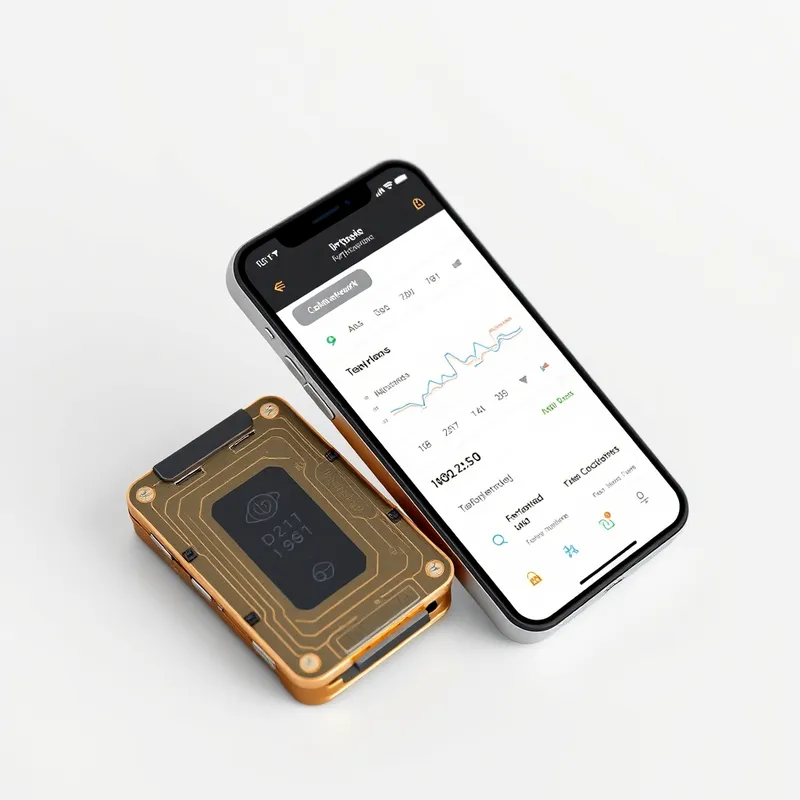
Cold Storage Meets Mobile UX: ERA's Ecosystem Evolution Exposes the Infrastructure Bottleneck
Self-custody failed to scale because absolute security created absolute friction.

For years, institutional and retail capital alike have faced a binary dilemma: isolate private keys offline and endure clunky execution, or embrace mobile agility at the expense of signing integrity. The deployment of companion mobile architectures bridging air-gapped hardware directly to multi-chain execution marks an essential pivot away from this structural trade-off.
📱 The Execution Bottleneck: Shifting Cold Storage to Mobile Rails
The core vulnerability of modern Decentralized Finance (DeFi) rarely stems from cryptographic key extraction; it lies in the intentional opacity of payload signing. As networks proliferate, managing balances across disparate Layer-1 and Layer-2 environments forces users into fragmented software solutions that expose transaction construction to hostile mobile operating environments.
By decoupling transaction preparation from key storage, next-generation architectures allow mobile interfaces to handle complex tasks—like cross-chain swaps, address validation, and decentralized application (dApp) routing—without touching the underlying secrets. Operating across 14 networks, including Bitcoin, Ethereum, Solana, and key EVM Layer-2 solutions like Base, Arbitrum, and Optimism, companion apps maintain strict key separation by offloading transaction execution entirely to offline signatures transmitted via QR or NFC protocols.

"Security without usability is merely an expensive way to lose access."
This decoupling reflects a broader behavioral reality in digital asset infrastructure: capital retention scales only when operational security mirrors consumer-grade user experiences. Integrating third-party routing aggregators directly within isolated front-ends guarantees that complex bridging operations display comprehensive quotes before hardware sign-off, eliminating blind smart contract execution.
🛡️ The Blind Signing Trap: Translating Hex Code Into Intent
If security hardware acts as a digital safe, transaction decoding functions as the glass window that lets the owner confirm what is inside. The most prominent exploits in recent years did not break private key encryption; they tricked users into signing malicious payload authorizations that drained approval limits behind clear text descriptions.
Advanced transaction-decoding frameworks address this explicit vulnerability by translating raw hexadecimal payloads into human-readable operations on-device. Modern security suites are expanding coverage to account for sophisticated standards like EIP-7702, ERC-7821, and Safe multi-calls. Decoding these contract types directly on isolated screens ensures that dangerous parameters—such as un-capped token allowances granted to unverified smart contracts—are flagged visually before cryptographic execution.
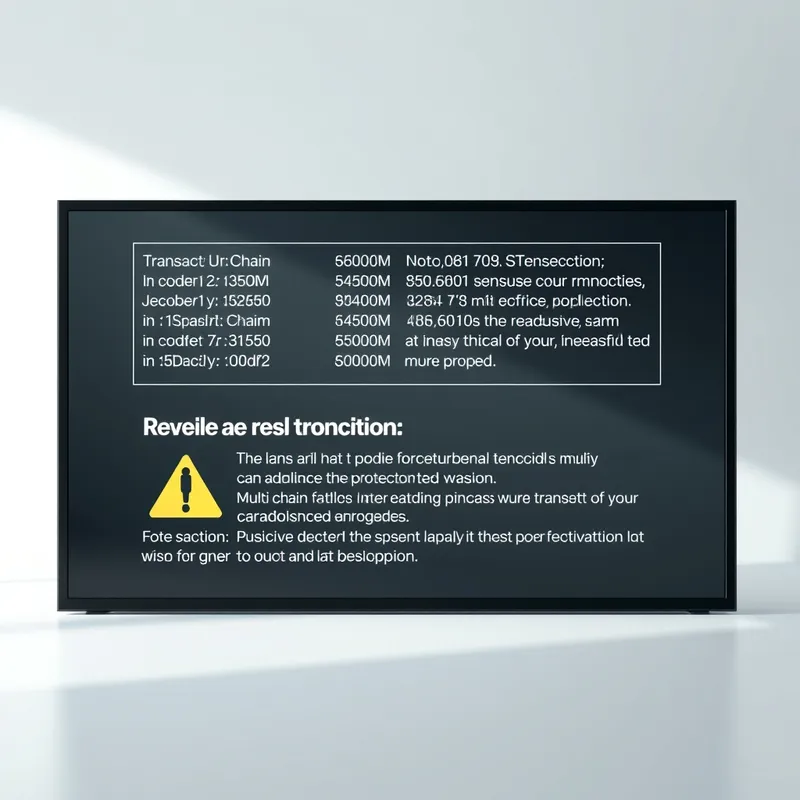
Furthermore, front-end security now actively combats social engineering tactics like address poisoning. Between July and August 2026, security telemetry captured 66 spoofed transactions across 24 poisoned addresses, spanning multiple network environments. Implementing strict algorithmic checks that automatically block outbound transfers to near-identical addresses strips away the human error that modern exploiters relentlessly target.
🏛️ The Paradigm Shift: Structural Parallels to Early Internet Banking Security
The current phase of self-custody infrastructure mirrors the evolution of commercial banking hardware tokens in the mid-2000s. During the expansion of global online banking, institutions realized that software-only authentication succumbed inevitably to keyloggers and session hijacking. The remedy was not forcing users into physical bank branches, but distributing dedicated, out-of-band authenticators to verify transaction data independently of the web browser.
What the market is witnessing today is the crypto-native equivalent of that paradigm shift. As hardware manufacturers incorporate features like multi-signature co-signing, hardware-bound Time-based One-Time Passwords (TOTP), and cryptographic device attestation via factory-burned keys, the line between consumer crypto devices and institutional Hardware Security Modules (HSMs) continues to blur.
This structural convergence allows retail participants to deploy institutional-grade security models—such as threshold 2-of-3 Bitcoin multisig schemes—without sacrificing mobile execution speeds. The lesson of the mid-2000s web banking transition remains clear: protocols that unify hardware-level isolation with seamless software transport capture the overwhelming majority of market share.
| Competing Force | The Irreconcilable Friction |
|---|---|
| Pure Air-Gapped Isolation | 🔁 Trading execution velocity for total immunity from mobile vectors. |
| Hot Wallet Convenience | 🗝️ Sacrificing key integrity to enable rapid multi-chain dApp interaction. |
| Decoded On-Device Intelligence | Increasing firmware complexity to mitigate blind-signing exploitation risks. |
🔮 Macro Outlook: How Integrated Security Reshapes Capital Allocation
As self-custody solutions mature, the structural drag on decentralized liquidity caused by cold-storage dormancy will begin to dissipate. Historically, vast amounts of capital remained locked in static cold wallets due to the operational friction of moving funds to active yield or trading environments. Eliminating this barrier via air-gapped mobile companions will likely increase the velocity of capital across major Layer-1 and Layer-2 ecosystems.
From a regulatory and risk-management standpoint, third-party white-box security audits—such as those conducted by independent security firms like Cure53—are quickly becoming a non-negotiable prerequisite for consumer trust. Independent verification of QR and BC-UR signing flows, combined with public penetration test reports, establishes an auditability baseline that institutional capital allocators require before taking self-directed custody risks.
The integration of clear-text transaction decoding alongside physical key isolation signals a decisive market shift. Within two years, wallets that rely on raw hex transaction displays will be completely obsolete for mainstream capital. As multi-chain dApp usage grows, security models that merge mobile accessibility with physical air-gapped signatures will capture the operational core of decentralized finance.
⚖️ Air-Gapped: A security mechanism where a physical device has zero network interfaces (no Wi-Fi, Bluetooth, or cellular capabilities), communicating exclusively via visual channels like QR codes.
⚖️ Address Poisoning: An exploit where attackers spam a target wallet with zero-value transactions from a spoofed address that mirrors the target's past transfer recipient, hoping the user accidentally copies it later.
- If smart contract approval thresholds remain unlimited across mobile interfaces → revoke permissions immediately to prevent drainer protocol exploits.
- If hardware wallet firmware lacks plain-language decoding capabilities → migrate active capital away from raw hex signing flows.
- If outgoing transaction history displays unverified lookalike addresses → cross-reference complete character strings to mitigate address poisoning risks.
— — coin24.news Editorial
This analysis is synthesized from aggregated market data and institutional research insights. It is provided for informational purposes only and should not be construed as financial advice. Cryptocurrency investments carry high risk; please conduct your own due diligence before making any investment decisions.
Related Intelligence

Uniswap v4 Hooks Exploit DeFi Traders: The execution price illusion

TON network masks empty bot activity: A Flawed Engagement Facade

XRP Regulatory Reality Check Fails: Senate Setback Exposed

Zoomex Launches ETF Perps: Bridging TradFi Derivatives With Crypto
Solana scales transaction limits to: Engineering velocity meets structural limits