Fidelity Chainlink ETF Launch Test: Institutional Capital Flow Illusion

Fidelity Wants a Chainlink ETF. Who Is Actually Buying One?
Wall Street is filing paperwork for products nobody is currently buying.

Fidelity has officially submitted a registration filing with the United States Securities and Exchange Commission for a spot Chainlink exchange-traded fund, setting the stage for the instrument to list on the Nasdaq. This move arrives hot on the heels of the firm introducing direct token trading on its platform, giving retail and institutional clients a dual-pathway into the ecosystem. Yet, a glaring structural disconnect underpins this corporate enthusiasm. The financial vehicles that already exist to provide similar exposure are not seeing capital inflows; they are bleeding assets.

📊 The Great Disconnect Between Wall Street Access and Organic Demand
Asset managers continue to expand product shelves based on long-term thematic positioning rather than immediate order book health. Grayscale launched its vehicle in December 2025, with Bitwise following suit shortly after, yet these early entries are staring down their first month of net negative flows with roughly $1.5 million exiting the asset class over the course of November. Aside from a lone positive session on November 23, the tape has been characterized by consistent distribution rather than accumulation.

Combined net assets across these operating funds have compressed to approximately $159 million, sitting well below their late-September peak valuations. Much of this drawdown tracks the underlying asset's price depreciation rather than aggressive capital flight, but the reality remains that new wrappers are launching into a liquidity vacuum. The broader digital asset complex is enduring severe cyclical pressure, underscored by US spot Bitcoin ETFs bleeding roughly $4.9 billion during the same monthly window.
"Access without appetite is just an expensive filing cabinet."
📉 Microstructure Realities and Technical Vulnerabilities
Market pricing reflects this overarching risk-off sentiment, keeping spot valuations tethered below crucial technical boundaries. The token changes hands around $9.22, marking a double-digit percentage decline over a thirty-day window and extending a protracted slide that began in October. While a minor intraday bounce of about 6% offers temporary relief, technical analysis suggests the recovery lacks the structural volume required to flip macro momentum.

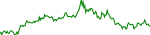
Chart technicians note that the recent rebound off local lows remains strictly corrective, failing to breach overhead resistance zones sitting between $8.759 and $9.717. As long as the price stays pinned underneath the descending macro trend line, downside vulnerability persists with secondary support levels lurking near the $7.63 threshold if current local floors fail to hold. Fidelity's massive brokerage distribution network changes the equation on paper, but infrastructure cannot force capital to deploy into a defensive market regime.
The rush to file alternative asset wrappers highlights an industry-wide scramble for future fee capture rather than a response to current retail hunger. Until premier anchor assets like Bitcoin halt their multi-billion-dollar monthly bleed, altcoin-focused investment products will serve as dormant placeholders rather than growth engines. Strategic market participants recognize that distribution architecture is a lagging indicator of true capital formation.
⚖️ Spot ETF Wrapper: A regulated financial instrument that holds the underlying digital asset directly in custody, allowing traditional brokerage clients to gain exposure without managing private keys.

📉 Net Outflows: The aggregate monetary value departing an investment fund over a specified timeframe when investor redemptions outpace incoming capital subscriptions.
- If net daily flows across legacy altcoin investment products remain negative for two consecutive weeks → risk-allocation models should shift toward defensive cash equivalents.
- If underlying asset spot volume drops below key moving average bands → secondary support tests become the primary baseline for evaluation.
- If broader index ETF redemption pressures ease below the billion-dollar threshold → structural preconditions for altcoin accumulation begin to form.
— — coin24.news Editorial
This analysis is synthesized from aggregated market data and institutional research insights. It is provided for informational purposes only and should not be construed as financial advice. Cryptocurrency investments carry high risk; please conduct your own due diligence before making any investment decisions.
Related Intelligence

Bitcoin ETFs Bleed 4 Billion Dollars: Share Rebound Hides Exodus

Apple Stock Defies AI Selloff Pressure: Lean Capex Becomes Safe Haven

SpaceX Stock Dilution Risks Rise Now: Trump Accounts Dilution Trap

Elon Musk Sends Warning to Bitcoin Creators After $271,000 Fraud Case

API3 Engine Caps Supply at 200M Token: Deflation Illusion or Real Yield?