LBank Expands Stock Trading In 2027: Tokenized equity facades mask regulatory risks
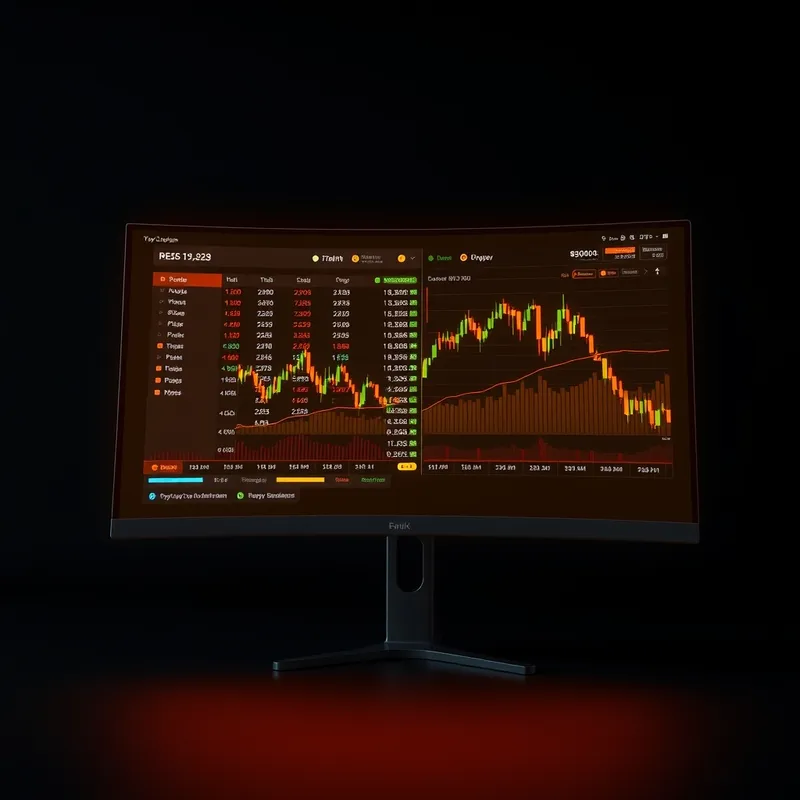
Tokenized Equity Illusions: Why Synthetic Stock Trading Exposes Offshore Exchange Vulnerability
Exchanges are selling Wall Street exposure without giving investors a single legal share.

Offshore crypto platforms are aggressively pivoting into traditional finance instruments, transforming tech bellwethers like Nvidia into synthetic, platform-native derivative contracts. The latest metrics reveal that tokenized stocks boast an on-chain footprint of roughly $3.17 billion across the sector, marking a rapid 395% year-over-year expansion.
Behind the surge in retail interest—bolstered by promotions like a 500,000 USDT Pudgy Penguins campaign and over 250 equity-linked trading pairs registering peak daily volumes topping $3 billion—lies a massive structural transformation. Trading venues are desperate to capture AI-driven equity momentum to protect their customer retention pipelines.
🏛️ The Structural Illusion of Synthetic Equity Portfolios
When an investor purchases a synthetic tech stock on an offshore exchange, the order book does not route to Nasdaq. Instead, users acquire a purely synthetic contract—a financial wrapper that matches the spot price of an equity without conferring shareholder rights, voting privileges, or direct claims on corporate dividends.
This dynamic signals a broader ecosystem restructuring where centralized platforms evolve from native crypto venues into pseudo-prime brokerages. By bundling public mainnets—such as Robinhood's newly launched infrastructure—alongside speculative equity tokens, exchanges are erecting internal walled gardens designed to trap native liquidity within their proprietary matching engines.

"A borrowed ticker is not legal ownership."
The operational danger emerges when liquidity dries up during extreme macro volatility. A trader watching a price on a digital screen is entirely dependent on the platform's internal liquidity depth; without a real-world clearinghouse backstop, execution slippage can evaporate synthetic gains before an order clears.
📉 Microstructure Fractures: When Price Matching Masks Asymmetry
Expanding on the mechanics of synthetic execution, the risk profile transforms drastically once market orders hit secondary order books. In traditional equity structures, secondary execution benefits from continuous national market systems and regulated market makers obligated to preserve liquidity depth across transparent trading venues.
Offshore synthetic products operate within an informational void where matching rules and order routing remain entirely at the operator's discretion. The promise of "100x gains" popularized by marketing funnels distorts normal asset pricing, obscuring how thin liquidity books routinely punish retail participants upon exit.
Strip away the noise and the reality becomes clear: offering equity tickers on a crypto dashboard is an exercise in balance sheet absorption. If an offshore operator fails to maintain full collateralization against open synthetic interest, the exchange effectively morphs into an internal bucket shop, taking the opposite side of client exposure during severe market dislocations.

📜 The 1907 Bucket Shop Playbook and Unhedged Exposure
Before introducing financial mechanisms, bucket shops were decentralized wagering venues where punters bet on stock prices without the broker ever purchasing actual shares on an official exchange. This structural detachment is precisely how modern synthetic equity trading functions today.
During the 1907 Panic, bucket shops proliferated across North America, allowing retail speculators to gamble on synthetic stock quotes distributed via telegraph tickers. When liquidity evaporated and panic rippled across credit markets, these unregulated bucket shops could not honor customer withdrawals because they held zero underlying physical equity. They simply absorbed user capital and folded under simultaneous exit demand.
In my view, current crypto venues engineering synthetic equity instruments are deploying identical mechanics under modernized branding. The core friction is unchanged: the counterparty promises price performance while retaining the right to restrict liquidation, modify spreads, or freeze withdrawals when underlying macro equities diverge from platform reserves.
| Competing Force | The Irreconcilable Friction |
|---|---|
| 🏦 Offshore Retail Exchanges | 📊 Monetizing speculative fee volume without holding regulatory custody reserves. |
| ⚖️ Global Securities Regulators | 👥 Enforcing equity registration and cross-border custodial investor protection mandates. |
| 💰 Retail Market Participants | Demanding liquid stock exposure while absorbing hidden counterparty default risks. |
🔮 Regulatory Traps and the 2027 Liquidity Squeeze
Having established the structural fragility of synthetic equities, regulatory authorities are unlikely to remain passive as these derivatives command billions in trading activity. Traditional securities frameworks maintain explicit jurisdiction over instruments designed to track regulated assets, regardless of the technological rails used for settlement.
As offshore derivative volumes swell, international cross-border enforcement will intensify. Major global watchdogs will target unlicensed venues offering synthetic versions of blue-chip equities, forcing sudden delistings, frozen order books, and restricted liquidity corridors that leave token holders trapped in untradable contracts.

"Convenience is often counterparty risk in disguise."
The uncomfortable reading of this transition is that centralized platforms are running out of crypto-native growth. Chasing equity market share is an act of competitive survival, but without transparent custodial architecture, these synthetic suites remain fragile regulatory targets.
The trajectory of off-chain asset tokenization indicates an aggressive convergence between centralized crypto rails and traditional market pricing. However, unregulated synthetic assets will face severe cross-border crackdowns, forcing platforms to transition toward fully audited, custodian-backed wrappers.
Platforms unable to prove one-to-one verifiable equity reserves will suffer sudden capital flight when regulatory scrutiny escalates. Investors must prioritize transparent redemption guarantees over frictionless single-app portfolio management.
⚖️ Synthetic Equity Token: A derivative cryptocurrency instrument designed to mirror the market price of a traditional public stock without providing direct ownership, dividend claims, or voting rights.
📦 Bucket Shop: A brokerage operation that facilitates speculative wagers on asset prices without executing corresponding transactions on an official, regulated public exchange.
📉 Order Book Slippage: The difference between the anticipated execution price of an order and the price at which the order actually fills, typically amplified by low liquidity depth.
- If regulatory warnings target synthetic equity offerings → execute rapid risk reduction to prevent capital lockups during asset freezes.
- If synthetic token trading spreads widen beyond standard market benchmarks → defensive liquidation prevents extreme execution slippage losses.
- If proof-of-reserve attestation lacks audited third-party custody → treat platform tokenized equities as purely unhedged derivative exposure.
— Walter Bagehot
This analysis is synthesized from aggregated market data and institutional research insights. It is provided for informational purposes only and should not be construed as financial advice. Cryptocurrency investments carry high risk; please conduct your own due diligence before making any investment decisions.
Related Intelligence
Solana Price Dips Amid Institutional: Liquidity Drain vs. On-Chain Surge

Gate Exchange Pivots Into Equities: A Structural Retention Trap

Crypto App Super Model Traps Liquidity: Retention Illusion Masks Risks

Zoomex Exchange Subsidizes Trading: The Liquidity Illusion

Quack AI Rally Exposes Risk Metrics: Leverage traps meet supply walls