Lightchain AI Challenges Closed AI: The Agentic Network Pivot

Lightchain AI’s Agentic Network Pivot: Can Decentralized Compute Break Closed AI’s Platform Monopoly?
Open-weight AI models now trail closed-source frontiers by just four months, yet centralized tech giants still control 100% of the payment and execution rails.
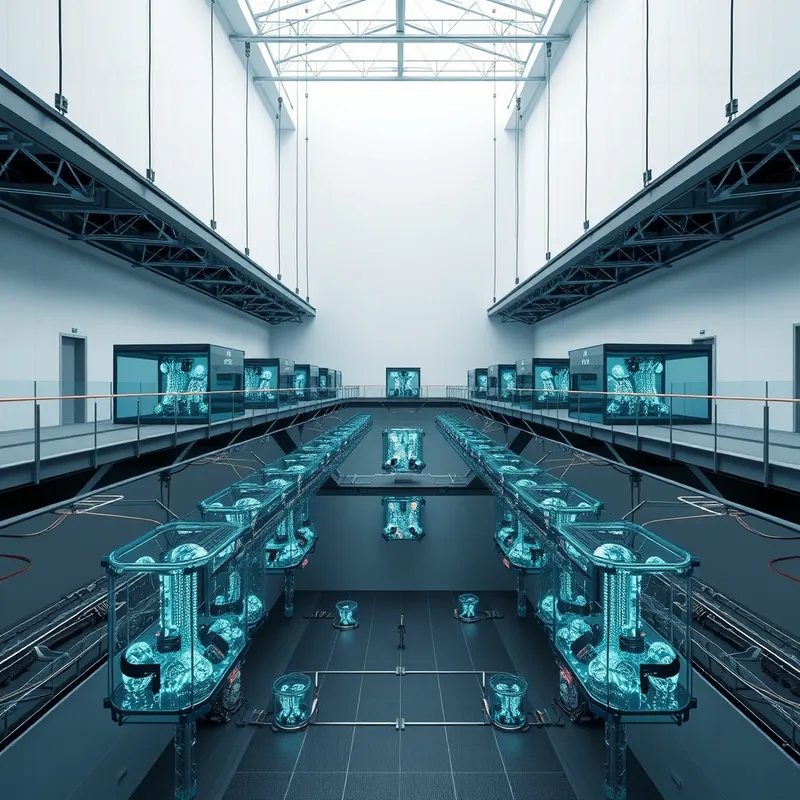
The battleground for artificial intelligence is no longer about who can train the smartest model. It is about who owns the infrastructure that serves, bills, and verifies the work.
While open-weight architectures like OpenAI’s gpt-oss, Alibaba’s Qwen3, and Meta’s Llama have closed the capability gap from a full year in 2024 to mere months in 2026, running them still requires centralized cloud intermediaries. Lightchain AI’s newly unveiled three-month roadmap—spanning November 2026 through January 2027—targets this exact bottleneck by moving autonomous AI agents, pay-per-call settlement, and cryptographic job verification onto an open Layer-1 blockchain.
⚙️ The Platform Bottleneck: Why Model Weights Are No Longer the Moat
To understand why Lightchain AI is pivoting toward agentic infrastructure, investors must look beyond tokenomics and examine the broader technological adoption curve. In traditional software cycles, open-source alternatives eventually commoditize proprietary layers, forcing incumbents to monetize hosting, APIs, and workflow integration.
That exact dynamic is playing out in AI today. Even an open-weight model remains functionally closed if a single corporate entity controls the servers, sets the API pricing, and reserves the right to throttle access.
Lightchain AI’s Layer-1 architecture attempts to unbundle this stack. Currently, the network routes prompts across 14 open models—ranging from lightweight Llama and Gemma builds to heavyweights like gpt-oss 120B and DeepSeek R1—served by independent GPU operators who stake LCAI. Every prompt submitted through Lightchain Chat, Lightchain Desktop, or Lightchain Studio is treated as an on-chain job with fees held in escrow.

"Open weights without open execution rails are just a marketing gimmick for centralized cloud providers."
🤖 Inside the Agentic Roadmap: From Static Prompts to Autonomous Settlement
If commoditized model weights are the backdrop, autonomous agents are the immediate catalyst for Lightchain’s next development phase. An AI agent is not a passive chatbot; it is software capable of executing multi-step tasks, calling external APIs, and transacting with other software.
Under the hood, Lightchain’s three-month testnet-to-mainnet rehearsal introduces an on-chain registry and settlement layer for these agents. Rather than relying on corporate API keys, applications will look up agents by on-chain names—starting with the deployment of atlas.lcai—and settle compute costs per request using an x402-inspired pay-per-call mechanism.
| Rollout Phase | Core Technical Milestone | Verification & Reliability Upgrade |
|---|---|---|
| November | Agent contracts & atlas.lcai live on testnet | Disputer re-runs 100% of testnet jobs; endpoint lockdown |
| December | x402-style LCAI pay-per-call & Claude Code demo | Validators spread across 7+ servers & 3+ providers |
| January | External contract audit & official worker build | Full mainnet launch rehearsal; Merkle payout roots |
The December milestone highlights a pragmatic competitive strategy. By demonstrating a cross-platform call from Anthropic’s Claude Code directly to an on-chain agent paid via script, Lightchain is positioning itself as a neutral execution backend rather than a walled garden.
What this signals structurally is a shift from speculative AI narratives to verifiable machine-to-machine commerce. However, the uncomfortable reading of this is that pay-per-call microtransactions on a Layer-1 chain introduce latency and gas-overhead risks that centralized Web2 APIs simply do not face.
🔍 Cryptographic Verification vs. The Uptime Reality Check
Moving from execution mechanics to network security, Lightchain’s value proposition rests on solving the "black box" trust problem. When a user queries a centralized AI provider, they must take the company’s word that the requested model actually ran without silent quantization or tampering.

Lightchain addresses this by encrypting prompts before they hit the chain while logging job IDs, timestamps, and worker identities publicly. A dedicated checking service—the disputer—re-runs a sample of mainnet jobs (and every single job on testnet) to catch dishonest operators, giving users a 24-hour window to challenge outputs.
Yet the network’s own recent history exposes the fragility of decentralized infrastructure. Following a testnet outage on November 8, Lightchain’s engineering team was forced to prioritize basic resilience: locking down public endpoints, adding backup connections, and distributing validators across at least seven servers and three distinct hosting providers.
Here is what the market is missing: cryptographic verification is meaningless if the underlying validator set goes dark under load. An autonomous agent ecosystem is like an air-traffic control tower—if the radar flickers for even five minutes, commercial developers will retreat to centralized clouds regardless of how decentralized the tokenomics are.
"Developers will tolerate higher latency for censorship resistance, but they will never tolerate downtime."
📈 Market Impact: Token Velocity, Operator Economics, and Governance
Given these operational realities, how does this three-month execution sprint impact LCAI’s market structure? Under the hood, Lightchain’s economic loop relies on a delicate balance between GPU worker incentives and genuine developer demand.
To keep independent operators online, the network is rolling out a transparent grants program that logs hourly uptime and calculates rewards based on actual jobs served, publishing a verifiable payout root for every distribution cycle. Combined with its legal structuring as a Wyoming DUNA (Decentralized Unincorporated Nonprofit Association), the project is clearly attempting to insulate itself from regulatory friction while courting institutional-grade node operators.

In the short term, successful testnet rehearsals and the December cross-platform coding demo could drive speculative inflows into AI-infrastructure tokens. Long term, however, LCAI’s valuation will be dictated by real fee burn and escrow velocity—not testnet transaction counts.
The current market dynamics suggest that Decentralized Physical Infrastructure Networks (DePIN) are entering a brutal "show-me-the-revenue" phase. Projects that merely subsidize idle GPUs with inflationary token emissions will not survive 2027.
If Lightchain’s January mainnet rehearsal delivers seamless pay-per-call settlement without repeating November’s outage, it will establish a credible blueprint for autonomous machine commerce. Watch developer retention after the grants program matures—that metric, not hype, will decide whether open agents can steal market share from closed tech monopolies.
🤖 x402 Pay-Per-Call: A micro-payment protocol standard enabling software agents to autonomously pay for API requests or compute jobs per individual call without pre-funded corporate accounts.
⚖️ DUNA (Decentralized Unincorporated Nonprofit Association): A Wyoming legal framework designed to give DAOs and decentralized networks legal personhood and limited liability without centralizing governance.
🔍 Payout Root: A single cryptographic fingerprint (Merkle root) representing an entire list of operator grant distributions, allowing anyone to independently verify reward calculations.
- If mainnet agent rehearsal slips past January or experiences another validator outage → enterprise developer adoption stalls, favoring centralized AI APIs.
- If independent GPU worker count rises alongside non-subsidized escrow fees → organic network demand is validating the pay-per-call model.
- If external contract audits reveal critical escrow or disputer vulnerabilities → expect defensive capital rotation out of LCAI ahead of mainnet.
— — coin24.news Editorial
This analysis is synthesized from aggregated market data and institutional research insights. It is provided for informational purposes only and should not be construed as financial advice. Cryptocurrency investments carry high risk; please conduct your own due diligence before making any investment decisions.
Related Intelligence

AI Agent Guardrails Risk Crypto Funds: The 281k Access Fault Line

One Love Coin Builds Real Art Utility: Niche Utility Defies Bear

Aave Integrates TRON Stablecoin Yield: Liquidity Influx or Risk Facade

US Crypto Crime Center Tightens Grip: 95M Federal Tracking Grid

Hyperscale Data Dumps Bitcoin Reserves: AI infrastructure funding illusion exposed