South Korea Tech Stocks Plunge Today: Liquidity Illusion in Asian AI
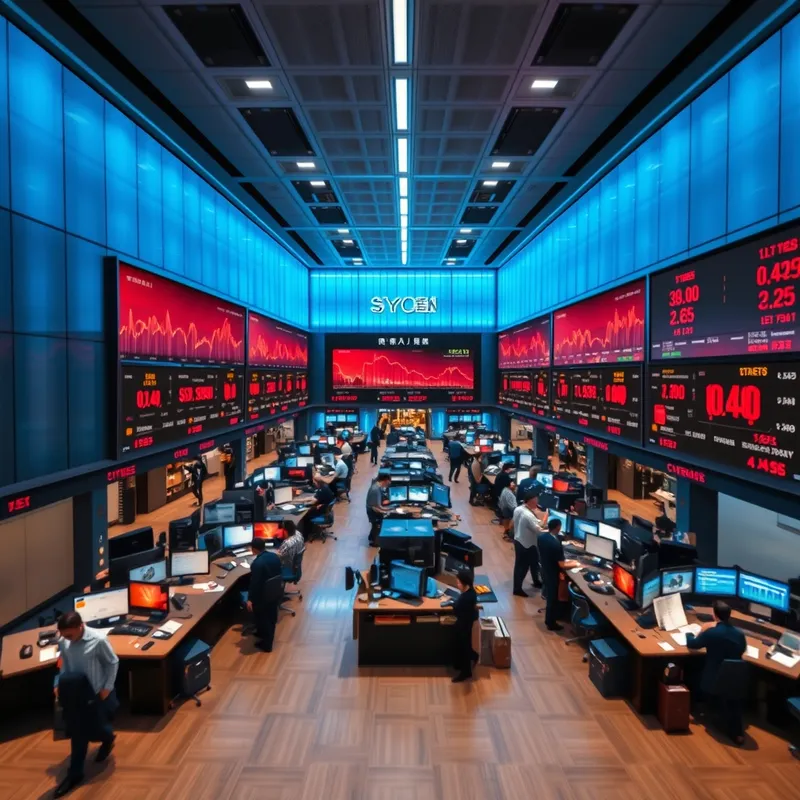
Samsung and SK Hynix Drag KOSPI Down 6%, and Foreign Investors Are Running
Asian equity markets just learned that state-backed liquidity funds cannot cure a structural margin collapse.

South Korea’s financial landscape is experiencing a violent reality check as benchmark indices erase massive amounts of wealth in a compressed timeframe. The KOSPI index recently plummeted 6.16% in a single session, dragging the index down to 4,697.51 and instantly obliterating the previous day's brief relief rally. This magnitude of capital destruction reflects a severe loss of confidence across the region.
When macroeconomic sentiment shifts, retail liquidity often tries to catch a falling knife while institutional capital quietly heads for the exit. Foreign participants dumped a net 1.9 trillion won, roughly $1.4 billion, while domestic retail accounts stepped in to absorb the falling shares. Strip away the daily volatility, and the picture reveals an 81% majority of listed equities trading below their year-start levels.

📉 The Anatomy of an Asian Liquidity Vacuum
The broader Asian technology ecosystem is suffering from a simultaneous contraction in earnings multiples and forward-looking growth estimates. Heavyweights like Samsung and SK Hynix absorbed brutal double-digit corrections, dropping 9.87% and 11.05% respectively, as memory chip outlooks faced severe downgrades from major investment banks. The contagion quickly spread past domestic boundaries, aligning with sharp overnight drops in global bellwethers like NVIDIA and Micron.
Market stabilization mechanisms are struggling to keep pace with the velocity of the sell-off. Automated circuit breakers, known locally as sidecars, fired for a fourth consecutive session, bringing the yearly total past one hundred interventions. Meanwhile, Seoul policy planners and the Korea Development Bank are attempting to scale up an 10.76 trillion won stabilization fund to calm jittery investors. Yet, financial research indicates that pools of capital amounting to less than 0.3% of the main board valuation rarely alter primary trend directions.
"[Artificial liquidity injections cannot override deteriorating fundamental demand.]"

Primary market activity has ground to a near-total standstill as a direct consequence of the carnage. Five separate companies pulled their initial public offerings in a single month, setting a five-year record for frozen issuance pipelines. Out of more than fifty corporate debuts this year, only a microscopic fraction manages to trade above initial offering prices.
⚙️ Structural Vulnerabilities Across Global Tech Corridors
The current unwinding goes far beyond regional trading friction; it exposes the fragile interdependence of global semiconductor supply chains. When institutional forecasting firms flag potential memory oversupply cycles out to 2028, capital allocators immediately re-price entire indexes. The risk of prospective trade barriers and Washington-led tariff pressures over industrial subsidies further compounds the downward pressure on export-heavy economies.
Foreign exchange dynamics amplify the stress as capital flees local currency denominations. The Korean won softened toward 1,343 per dollar, reflecting persistent capital outflow pressures. Risk assets across neighboring jurisdictions feel the ripple effects as liquidity tightens globally, squeezing leveraged market participants who relied on uninterrupted upward momentum.
The aggressive sell-side activity observed across Asian equity markets highlights a broader global rotation away from high-beta technology exposure. When sovereign-backed stabilization efforts fail to halt consecutive sidecar activations, market participants are forced to re-evaluate systemic risk limits.
Sustained foreign capital outflows combined with primary market freezing signal a prolonged defensive regime rather than a routine mid-cycle correction.
⚖️ Sidecar Mechanism: An automated trading halt designed to temporarily suspend program orders during sudden index volatility spikes.
📉 Capital Flight: The rapid outflow of foreign institutional capital from domestic markets into safer foreign currency reserves or safe-haven assets.
- If net foreign capital outflows exceed multi-year averages for consecutive weeks → portfolio risk models should shift toward defensive capital preservation.
- Monitor primary market IPO withdrawal rates as a primary leading indicator of systemic liquidity contraction and investor capitulation.
- Evaluate sovereign stabilization fund sizes relative to total market capitalization to gauge the true efficacy of state intervention policies.
— — coin24.news Editorial
This analysis is synthesized from aggregated market data and institutional research insights. It is provided for informational purposes only and should not be construed as financial advice. Cryptocurrency investments carry high risk; please conduct your own due diligence before making any investment decisions.
Related Intelligence

SpaceX Stock Dilution Risks Rise Now: Trump Accounts Dilution Trap

Michael Burry Exits Nasdaq Short Bets: Temporary Bullish Undertow

Bitcoin and Gold Face Inflation Trap: Liquidity Illusion

Nasdaq 100 Surges 6.8% As AI Stocks Rebound, Potential Move For BTC

Dell Stock Drops Amid Tariff Fears: Macro Drag On AI Momentum