Trezor Breach Exposes Hardware Risk: Supply Chain Reality Check

Hardware Wallet Supply Chain Breach: Why the Cold Storage Doctrine Just Broke
Cold storage promises mathematical isolation, yet an Indonesian supply chain attack proved hardware cannot survive distribution.
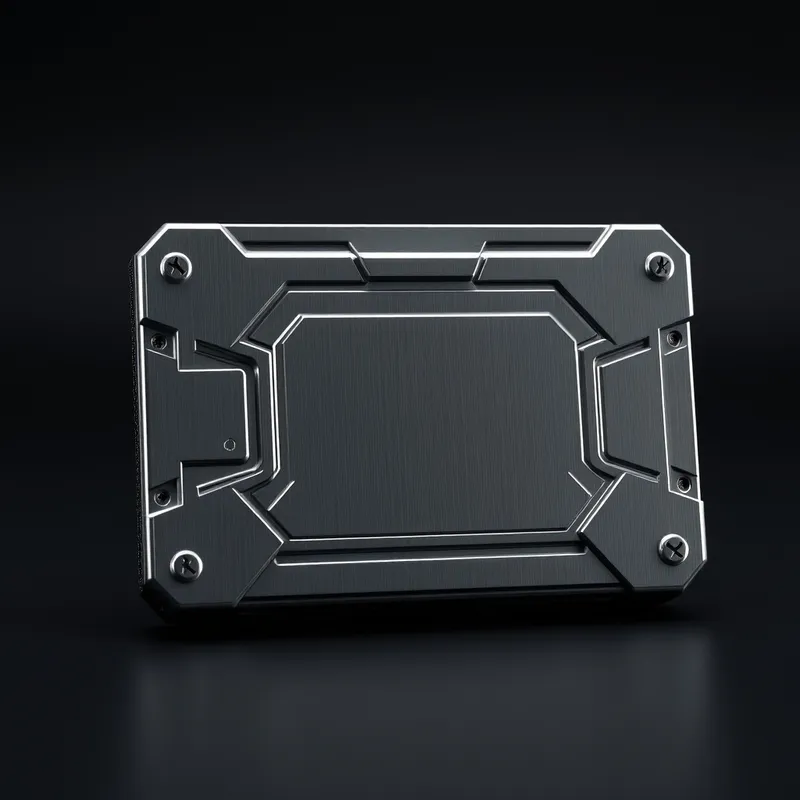
Hardware wallet manufacturer Trezor has officially warned its user base following an alleged physical compromise of its flagship Safe 5 device. Customers who acquired hardware units via Southeast Asian distributor CryptoBilis since March 2026 are urged to migrate assets immediately. The disclosure, received on October 28, revealed a malicious secondary circuit board containing a cellular transmitter wired directly between the main logic board and the screen.
The compromised unit was originally ordered via Indonesian e-commerce platform Tokopedia during August 2026. While forensic laboratory confirmation remains pending, executive leadership prioritized speed over procedural delays. Trezor Chief Commercial Officer Danny Sanders stated the firm opted to warn users instantly rather than risk asset drainage during verification.
Trezor had already severed ties with the distributor earlier in October, trailing reports that Ledger devices moving through identical transit routes had suffered hardware alteration. Competitors including OneKey have likewise cut ties with the vendor, halting onboarding and offering hardware exchanges. Analysts calculate that previous unconfirmed compromises linked to this intermediary account for upwards of $86 million across Bitcoin, Ethereum, and Tron networks.
🔍 The Micro-Implant Architecture That Bypasses Cryptographic Air Gaps
Cold storage is fundamentally a discipline of isolation, designed to generate and sign transactions without exposing raw entropy to network interfaces. The disclosed Safe 5 exploit bypassed firmware protections by attacking the physical rendering pathway itself.

An unauthorized micro-PCB was nestled between the native motherboard and the display matrix. The secondary board carried an independent cellular radio and trace antenna, siphoning unencrypted visual signals directly off the ribbon cable before wireless transmission over commercial mobile networks.
"When physical displays are intercepted, mathematical air gaps cease to exist."
The mechanics circumvent secure boot routines and device attestation. Secure microcontrollers can verify software signatures through complex cryptographic handshakes, but they cannot assess external parasites piggybacking on the display pins. By capturing recovery phrases as they render visually to the user, the attacker renders on-device cryptographic security irrelevant.
🌐 Third-Party Logistics and the Institutional Custody Trilemma
If physical distribution points present this level of vulnerability, institutional capital faces an operational reckoning regarding asset protection. The broader market trend points away from naive consumer retail delivery toward verifiable hardware attestation and zero-trust custody configurations.
This development arrives during a liquidity cycle characterized by institutional custody consolidation. While individual allocators chase localized yield across emerging smart contract networks, sovereign wealth and balance-sheet operators focus on minimizing human and logistical attack surfaces. The breakdown of this regional supplier proves that supply chain fragmentation is the soft underbelly of personal custody.
The tension pits retail accessibility against defense-grade supply assurance. Distributed local vendors expand regional adoption across Asia, Latin America, and Africa, yet they lack cleanroom validation. What the market is missing is that secondary distributors represent unregulated hardware checkpoints capable of subverting multi-million-dollar balances.
| Custody Model | Primary Attack Vector | Regulatory / Logistical Friction |
|---|---|---|
| Single-Sig Reseller Hardware | Physical interdiction; cellular bus tapping | Low friction; zero delivery guarantees |
| Multi-Vendor Multisig (Air-Gapped) | Coordinated multi-firm supply compromises | Medium friction; requires operational parity |
| 🏛️ Institutional MPC & Qualified Custody | ⚖️ Key-share collusion; legal jurisdiction freezing | High friction; full regulatory exposure |
🛡️ Structural Vendor Divergence and Ecosystem Repositioning
Given the cascading fallout across multiple original equipment manufacturers, vendor isolation protocols will inevitably split the self-custody sector into two opposing strategies. In my view, the single-vendor hardware model is fundamentally broken for any portfolio exceeding seven figures.
Consider the conflicting operational mechanics between manufacturers and logistics entities. Hardware builders prioritize high-volume distribution to sustain low-margin consumer hardware sales, relying heavily on third-party marketplace storefronts. Conversely, asset owners require forensic supply-chain integrity reminiscent of defense-grade components, where packaging integrity is physically irreproducible.
The pattern suggests manufacturers will accelerate the phasing out of regional distributors in favor of direct-from-foundry logistics paired with verifiable cryptographic device registration. Without visual cryptographic pairing between microcontrollers and authenticated companion mobile software, external hardware remains an untrusted computing environment.
The supply chain infiltration across leading hardware wallet brands demonstrates that off-the-shelf retail distribution cannot safeguard high-net-worth liquidity. Expect a rapid migration toward multi-institution multisig protocols where no single physical supply chain governs key material.

Over the coming quarters, enterprise hardware manufacturers will face mandatory cleanroom delivery verification, pushing retail custody costs upward while pricing third-party resellers entirely out of legitimate market circulation.
- If hardware was purchased via third-party regional hubs → migrate assets to newly generated multi-vendor schemes immediately.
- If device setup lacks optical factory attestation → treat the visual display module as an unverified execution environment.
- If individual cold addresses exceed portfolio concentration caps → transition allocations toward quorum-based multi-party computing solutions.
📦 Hardware Interdiction: The covert interception and mechanical or electronic alteration of consumer devices during transit between factory production and end-user receipt.
📟 Display Bus Tapping: The hardware-level extraction of unencrypted visual signals directly from the display ribbon cable prior to screen generation, bypassing cryptographic processor security.
🏢 Attestation Protocol: A cryptographic routine enabling client software to verify the device's internal secure element against authentic manufacturer-signed certificates.
— — coin24.news Editorial
This analysis is synthesized from aggregated market data and institutional research insights. It is provided for informational purposes only and should not be construed as financial advice. Cryptocurrency investments carry high risk; please conduct your own due diligence before making any investment decisions.
Related Intelligence

South African Crypto Growth Threatens: Treasury Permission Chokehold

South Africa Crypto Economy: Regulatory Chokehold Threatens Growth

XRP Ledger Security Updates: Protocol Hardening or Code Correction?

XRPL tightens token compliance rules: Closing Institutional Gaps

Autonomous AI Agents Exploiting DeFi: The New Autonomous Risk