XT Exchange Instruments Deliver Value: Instruments Versus Intentions

The Synthetic Equities Mirage: Why Crypto Perps Cannot Replace True Share Ownership
Exchanges offer you corporate tickers, but hand you synthetic leverage disguised as TradFi access.

Centralized crypto platforms are rapidly blurring the boundary between traditional equity markets and synthetic speculation. Global venue XT Exchange, which was established back in 2018 and currently supports an ecosystem spanning roughly 12 million registered accounts across more than 200 jurisdictions, has doubled down on integrating traditional finance exposure directly into crypto accounts. The mechanism centers on tethered settlement through stablecoin-margined perpetual futures, alongside tokenized spot representations.
Yet an insidious structural friction is unfolding across trading desks worldwide. Retail and institutional participants routinely conflate the legal reality of asset ownership with mere directional derivative exposure, ignoring the catastrophic drag imposed by perpetual funding mechanics and collateral maintenance.
⚙️ The Microstructure Trap: Demystifying Synthetic Delta vs. Real Equity
A derivative contract is an agreement to exchange cash flows based on an external index, not a legal deed to an enterprise. When venues package public company benchmarks into dollar-pegged perpetuals, the trader inherits an entirely different risk architecture than a traditional equity investor. Real equity grants governance voting rights, statutory claim on liquidation residual value, and unencumbered tenure through macroeconomic downturns without the persistent threat of forced closeouts.
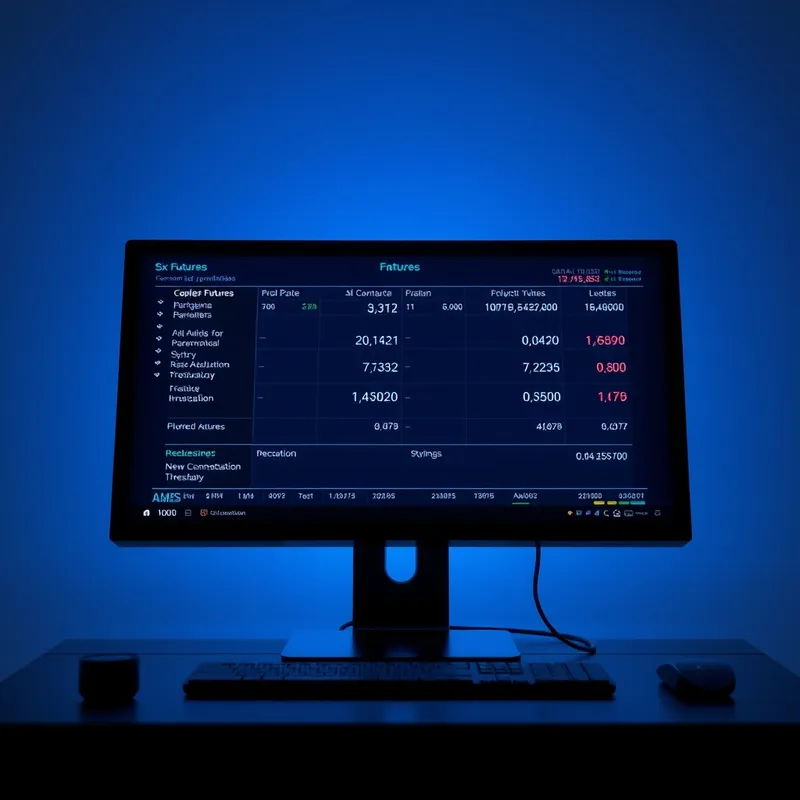
Conversely, perpetual contracts rely on continuous liquidity rebalancing. Traders taking views on corporate events via stablecoin margin are exposed to dynamic financing fees that adjust every few hours. In high-volatility environments, the cost of simply keeping the position open creates negative carry that quietly drains capital, rendering multi-quarter holding strategies mathematically irrational.
"Leverage converts fundamental conviction into temporal vulnerability."
The friction worsens when considering exchange liquidation engines. An investor who accurately predicts that a firm will dominate its sector over five years can easily be wiped out during a momentary intraday liquidity flash crash. Being fundamentally correct on a corporate balance sheet means nothing if your instrument demands intra-hour collateral maintenance.
🏛️ The Bucket Shop Precedent: Lessons from the 1907 Panic
The proliferation of offshore synthetic equities is not an unprecedented innovation, but rather a digital recreation of late nineteenth-century speculative plumbing. Prior to the Wall Street crisis known as the Panic of 1907, unregulated brokerage storefronts called "bucket shops" allowed retail participants to place directional wagers on listed stock tickers without the broker ever purchasing a single underlying share on an exchange. Clients merely bet against the house on ticker tape fluctuations.

In my view, modern perpetual platforms offering synthetic traditional equities operate on identical economic plumbing, updating bucket shop mechanics with cryptographic collateral. When systemic margin strains hit early twentieth-century markets, these bucket venues faced immediate insolvency cascades because internal paper exposures lacked legitimate clearing backing. What crypto venues promote today as democratic access is fundamentally an internal liquidity silo where synthetic traders absorb platform risk while enjoying zero actual statutory claim on corporate assets.
| Competing Force | The Irreconcilable Friction |
|---|---|
| Synthetic Perpetuals (Tactical Arbitrage) vs Long-Term Shareholders (Capital Preservation) | 💱 Trading temporal liquidity while sacrificing corporate governance, statutory seniority, and capital duration. |
| 📊 Crypto Brokerages (Internal Volume Monetization) vs TradFi Depositors (Custodial Protections) | Exchanging regulated SIPC protections for unsegregated counterparty solvency risk. |
🔮 The Impending Shakeout in Offshore Synthetic Securities
If this historical precedent holds true, the immediate impact on global capital flows will reveal a stark bifurcation between trading venues. As global regulators finalize comprehensive frameworks governing tokenized real-world assets, exchanges distributing unregulated synthetic derivatives linked to corporate tickers face aggressive jurisdictional containment. Major jurisdictions will not permit retail synthetic bucket shops to siphon retail liquidity indefinitely under the guise of financial inclusion.
Strip away the noise and the forward path becomes clear: offshore equity perps will increasingly become the domain of high-frequency algorithms and short-duration macro event arbitrageurs. Long-duration capital will migrate exclusively toward legally enforceable, asset-backed tokenized securities clearing through institutional custodians. In the interim, traders deploying capital across synthetic equity interfaces must treat every open ticket not as a corporate investment, but as a direct credit exposure to the platform hosting it.
The market is aggressively underpricing the survival costs of long-term synthetic exposure. Over multi-quarter horizons, cumulative funding rate drag routinely consumes large portions of underlying capital gains, transforming what looks like market delta into a slow capital bleed.
Expect regulatory crackdowns to trigger sudden product delistings over the coming quarters. Traders relying on synthetic equity contracts will face severe basis dislocations relative to real-world shares as platform margins tighten. True capital formation will decouple from exchange-issued derivative representations.
- If synthetic equity funding annualized costs exceed traditional borrowing benchmarks → this signals capital reallocation into cash-settled regulated securities.
- If exchange stablecoin reserve outflows accelerate over seven consecutive days → this triggers an immediate liquidation of all synthetic exposure.
- If synthetic derivative basis diverges from underlying primary stock feeds → this confirms a breakdown in exchange order book depth.
⚖️ Perpetual Contract (Perp): A derivative agreement that mimics spot index prices without an expiration date, sustained through recurring funding fee payments between long and short parties.
🏛️ Synthetic Asset: A financial instrument engineered to simulate the price performance of an underlying security without granting legal ownership, dividend claims, or liquidation seniority.
— — coin24.news Editorial
This analysis is synthesized from aggregated market data and institutional research insights. It is provided for informational purposes only and should not be construed as financial advice. Cryptocurrency investments carry high risk; please conduct your own due diligence before making any investment decisions.
Related Intelligence

Israel Deadlock Elevates Risk Premium: Oil and Crypto on Edge

South African Crypto Growth Threatens: Treasury Permission Chokehold

South Africa Crypto Economy: Regulatory Chokehold Threatens Growth

XRP Ledger Security Updates: Protocol Hardening or Code Correction?

XRPL tightens token compliance rules: Closing Institutional Gaps