US SEC Rules Reshape Crypto Custody: Institutional Enclosure

The SEC Custody Pivot: How Agency Bureaucracy Is Quietly Building Crypto’s Wall Street Highway
Congress failed to pass market rules, so regulatory agencies simply wrote their own.

When the Senate stalled on comprehensive digital asset legislation with a 49-50 vote rejecting cloture on the CLARITY Act on Sept. 15, Washington seemed deadlocked. Yet, between 横 Aug. 18 and Oct. 1, financial regulators unleashed nine targeted executive actions spanning offering exemptions up to $75 million, clearing house registrations, and proposed custody frameworks for investment advisers.

With Bitcoin trading around $84,600, institutional desks are taking notice. Major banking institutions like Citi have already adjusted their 12-month projections upward to $113,000 from a previous $82,000 target, pointing directly to expanding ETF inflows and long-term tokenization models projected between $2.7 trillion and $8.2 trillion by 2030, even as asset allocations hover at a modest 1.2% in recent industry surveys.
🏛️ Executive Rulemaking Fills the Legislative Void
The sudden surge of administrative activity represents a classic structural pivot within regulatory history. When statutory pathways collapse in legislative chambers, executive bodies routinely utilize conditional exemptions, staff guidance, and registration grants to build a de facto regulatory environment under existing statutory mandates.
Rather than waiting for broad congressional mandates, regulatory bodies have constructed an end-to-end framework. This administrative stack spans early-stage capital formation exemptions, automated clearinghouses, state trust recognitions, and derivatives routing. What appears to be fragmented agency guidance is actually the methodical assembly of traditional market plumbing.

"Administrative guidance has quietly replaced statutory consensus as the operating system for institutional crypto."
This rapid shift mirrors global liquidity trends where capital seeks operational certainty above all else. For asset managers previously sidelined by compliance barriers, these temporary exemptions and proposed safekeeping guidelines offer sufficient operational air cover to begin deployment.
📈 Market Volatility and the Institutional Liquidity Paradox
Building on this regulatory momentum, market dynamics show a distinct split between spot asset behavior and derivative market mechanics. As institutional capital enters via regulated custody structures, spot supply moves into cold storage, compressing available liquid tokens across major venues.
This structural supply restriction creates asymmetric upside potential during bullish market phases, but it also introduces heightened derivative sensitivity. When trading activity shifts toward regulated clearing nodes and permissioned automated market makers, liquidity becomes highly concentrated within a small cluster of approved intermediaries.
"Concentrated liquidity channels turn routine rebalancing into systemic price shocks."
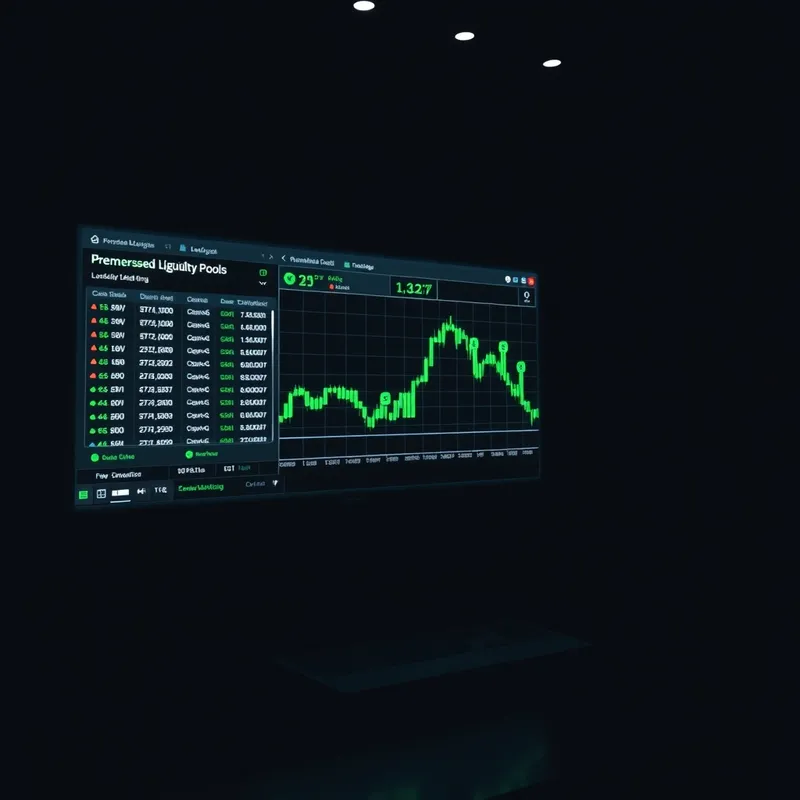
In my view, investors are confusing operational access with immediate structural stability. The integration of traditional clearing infrastructure creates a dual-track market where institutional order flows operate inside protected corridors while retail liquidity remains exposed to heightened slippage.
📜 The Rule 144A Blueprint and Executive Capture
To understand the structural implications of this administrative enclosure, one must examine the SEC's adoption of Rule 144A in 1990. That historic regulatory change created a private marketplace for institutional investors to trade unregistered securities, effectively walling off lucrative early-stage opportunities from individual market participants under the banner of investor protection.

The current regime of staff positions, conditional venue exemptions, and qualified custody proposals follows this exact institutional playbook. By establishing strict compliance hurdles for token custody and secondary trading, regulators are effectively restricting primary market liquidity to regulated funds and institutional entities.
The pattern suggests that history is repeating itself not through crisis, but through systemic structural institutionalization. While Rule 144A institutionalized corporate debt markets thirty-five years ago, today’s conditional exemptions are siloing liquid digital assets behind institutional gates. Strip away the promotional rhetoric, and the outcome is identical: enhanced systemic safety exchanged for restricted open-market participation.
| Competing Force | The Irreconcilable Friction |
|---|---|
| Executive Regulators vs. Legislative Intent | 🌍 Substituting temporary agency exemptions for binding, permanent statutory market law. |
| 🏛️ Institutional Fiduciaries vs. Crypto-Native Exchanges | 🏢 Mandating qualified state-trust custodians over self-custodial and exchange-based storage. |
| 🔁 Capital Formation Rules vs. Open Token Trading | 🏛️ Enforcing standard security exemptions onto borderless, non-custodial software networks. |
🔮 Regulatory Fragility and the Multi-Trillion Horizon
If these agency proposals successfully transition into finalized administrative rules alongside pending market oversight frameworks, the institutional pipeline will solidify rapidly. This alignment directly underpins aggressive multi-trillion-dollar valuation projections, as sovereign wealth funds, pension plans, and registered advisers gain clear compliance pathways.

However, what happens if this administrative compromise breaks down? Because these rules rely on agency discretion rather than statutory law, they remain vulnerable to judicial challenges and future leadership changes. A single adverse court ruling could invalidate key venue exemptions overnight, suddenly stranding institutional capital in compliance limbo.
Investors must recognize that administrative policy is an imperfect substitute for congressional clarity. While current executive actions offer a temporary bridge toward six-figure asset valuations, the underlying regulatory architecture remains inherently brittle.
The current reliance on administrative actions creates an illusion of permanent resolution. Without federal legislation fixing agency boundaries, institutional access remains entirely dependent on political continuity.
From my perspective, institutional capital will continue accumulating through regulated channels, but smart money will maintain strict hedge positions against potential administrative policy reversals.
⚖️ Qualified Custodian: A regulated institution, such as a bank or state-chartered trust company, authorized to hold client assets on behalf of registered investment advisers under federal rules.
🛠️ No-Action Letter: Written guidance from agency staff confirming they will not recommend enforcement action if a firm executes a specific business model under defined conditional parameters.
- If federal appellate courts strike down conditional venue exemptions → institutional liquidity channels face immediate distribution pressure.
- If exchange reserves decline below multi-year lows while regulated custodian holdings rise → spot market volatility increases sharply.
- If institutional portfolio allocations exceed two percent globally → market infrastructure transitions permanently toward clearinghouses.
— Ludwig von Mises
This analysis is synthesized from aggregated market data and institutional research insights. It is provided for informational purposes only and should not be construed as financial advice. Cryptocurrency investments carry high risk; please conduct your own due diligence before making any investment decisions.
Related Intelligence

Bitcoin Rally Conceals Demand Deficit: The Distribution Undertow

SEC targets crypto token buybacks: Decentralization Mandate Creates Regulatory Quicksand

Strategic Oil Release Drives Inflation: Liquidity Illusion

Bitcoin Long Positions Facing Reality: Leverage Flush Threatens Rally

US INFLATION THREATENS BITCOIN PLUNGE: Macro Reckoning Hits Risk Assets