Iran Hormuz Fee Escalates Bond Stress: Yield Spike Endangers US Debt

Strait of Hormuz Transit Tolls Threaten US Sovereign Debt Mechanics
Tehran weaponizes the world's most critical maritime chokepoint just as Washington's borrowing costs breach two-decade highs.

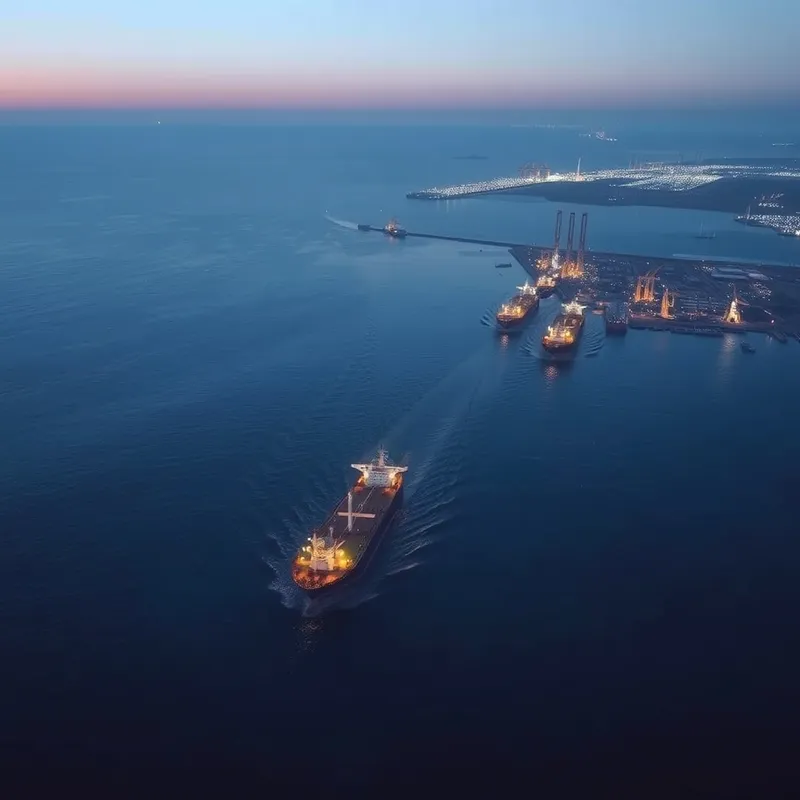
Iran's National Security and Foreign Policy Commission advanced draft legislation mandating transit service fees on maritime vessels navigating the Strait of Hormuz. The regulatory maneuvering preceded an aggressive financial offensive coordinated by US Treasury Secretary Scott Bessent, setting up a clash over an artery responsible for roughly a fifth of global petroleum transit.
The sovereign standoff directly coincides with extreme fiscal sensitivity in Western fixed-income markets. Rather than causing an immediate price explosion, crude futures softened as WTI slipped 1.3% to settle at $85.93 per barrel while Brent retreated 1.87% to $93.22, exposing a severe mispricing of structural geopolitical friction.
⚓ The Strategic Monetization of Maritime Chokepoints
Sovereign states possess the authority to enforce domestic maritime boundaries, but establishing unilateral toll gates over international shipping straits reshapes global trade equilibrium. By advancing legislation to extract compulsory fees from commercial vessels, Tehran is transforming an essential logistics channel into a direct fiscal extraction mechanism.
Islamic Revolutionary Guard Corps representative Sardar Mohebi and Supreme National Security Council Secretary Mohsen Rezaei signaled that states cooperating with Western economic restrictions will face direct maritime penalties. Washington counterpunched through Treasury declarations framing the impending measures as maximalist economic pressure, designed to neutralize adversary capital flows without initiating kinetic engagements.
"Logistical friction is the silent compounding interest of global inflation."

The market overlooks how maritime tolls function as an extraterritorial tariff on international commerce. The core mechanism creates an unavoidable supply-chain surcharge that bypasses traditional corporate margins and transfers operational expense straight to the end consumer.
📉 The Sovereign Yield Feedback Loop
Government debt yields reflect the cost a nation incurs to borrow capital from the open market. When energy supply chains contract, headline inflation accelerates, forcing central banks to maintain higher interest rates and intensifying the refinancing pressure on sovereign balance sheets.
This dynamic hits a debt market operating near historical stress points. Long-term sovereign borrowing benchmarks hovering around 5.3% reflect persistent structural inflation and expanding issuance pipelines. With domestic obligations surmounting the $40 trillion threshold, elevated interest rates trigger an aggressive compounding cycle of treasury service expenses.
Energy logistics serve as a primary transmission channel into headline consumer metrics. When maritime transit fees artificially raise the price floor of raw fuel, monetary authorities lose the flexibility to lower base policy rates, leaving the sovereign debtor trapped inside an escalating debt-servicing spiral.
🏛️ 1956 Suez Crisis: The Mechanics of Chokepoint Disruption
Examining historical parallels requires looking back to the 1956 Suez Crisis, when the unilateral nationalization and operational closure of the Suez Canal forced global commercial shipping into protracted, expensive detours around the African continent. The resulting transportation bottleneck catalyzed a severe liquidity squeeze across European economies and exposed the underlying fragility of sovereign currency reserves under structural supply-chain friction.
The clear structural lesson from the mid-twentieth-century supply shock was that maritime chokeholds do not merely disrupt commodity logistics; they instantly expose sovereign balance sheet vulnerabilities. In my view, Tehran's legislative strategy represents a calculated asymmetric lever engineered specifically to exploit the domestic fiscal vulnerability of the world's primary reserve currency issuer.

Unlike the localized currency panics of the previous century, current capital markets are interconnected via algorithmic derivatives and multi-trillion-dollar debt issuance schedules. When maritime tolls elevate sustained operational costs today, the shock immediately impairs sovereign liquidity profiles worldwide.
| Competing Force | The Irreconcilable Friction |
|---|---|
| US Treasury Policy vs. Maritime Realpolitik | Enforcing unilateral sanctions while demanding frictionless global energy distribution channels. |
| Federal Reserve Policy vs. Energy-Driven Inflation | Controlling sovereign borrowing costs while external supply shocks drive persistent inflation. |
| Eastern Energy Consumers vs. Western Sanctions Compliance | 🏛️ China securing discounted hydrocarbon flows while navigating dollar-clearing secondary banking restrictions. |
🌐 Secondary Secondary Sanctions and Systemic Liquidity Realignment
The geopolitical dimension extends directly to bilateral international settlement pipelines. Because Asian superpowers process the vast majority of exported petroleum originations out of the Persian Gulf, any Western enforcement extending secondary sanctions against offshore purchasers will test the structural architecture of cross-border capital clearing.
Targeting Asian industrial consumers risks splitting international settlement infrastructure into non-dollar clearing frameworks. Capital fragmentation across geopolitical fault lines weakens foreign demand for Western sovereign paper, compounding the supply indigestion across sovereign treasury auctions.
"Sovereign debt ceases to be risk-free when its servicing requires perpetual devaluation."
When sovereign bonds offer negative inflation-adjusted yields amid recurring geopolitical supply shocks, the institutional incentive structure undergoes an irreversible shift. Alternative liquid balance-sheet reserves and cryptographically enforced hard assets transition from speculative instruments into vital sovereign-hedge allocations.
The prevailing macroeconomic configuration suggests that traditional risk-off pricing models are failing. Fixed-income securities no longer offer reliable hedging value during structural supply-side disruptions, as heightened fiscal deficits prevent central banks from suppressing sovereign yields.

As maritime bottlenecks elevate logistics costs and fuel persistent inflation, institutional portfolios will increasingly treat decentralized digital scarcity as the premier hedge against fiscal dominance and monetary debasement.
- If long-duration treasury yields close above 5.50% consecutively → this signals accelerating fiscal stress and sovereign debt distribution.
- If secondary sanctions target Asian commercial buyers → bilateral settlement fragmentation accelerates, elevating demand for non-sovereign liquid hedges.
- If crude transportation risk premiums expand past quarterly averages → institutional capital reallocation toward hard-cap monetary networks intensifies.
⚓ Chokepoint Transit Premium: The structural cost increase levied on maritime logistics when critical international navigation straits face geopolitical tolls or blockades.
🏛️ Fiscal Dominance: An economic environment where sovereign debt levels force central bank policy to prioritize debt affordability over inflation targets.
🔄 Sovereign Yield Feedback Loop: The self-reinforcing mechanism where elevated bond yields expand treasury servicing costs, necessitating larger issuance and higher structural rates.
— John Adams
This analysis is synthesized from aggregated market data and institutional research insights. It is provided for informational purposes only and should not be construed as financial advice. Cryptocurrency investments carry high risk; please conduct your own due diligence before making any investment decisions.
Related Intelligence

Alibaba Issues Shares for AI Squeeze: A $10 Billion Dilution Mirage as Cash Outflows Explode

Treasury Buybacks Mask Fiat Dilution: Kiyosaki Flags Debasement Risk

Nvidia Hikes Expose Memory Scarcity: DRAM Squeeze Threatens Margins

Treasury Yield Caps Fuel Asset Surge: Yield Controls Trigger Bull Run
Oil Prices Fall as Supply Risks Fade: Exposing the Sanction Illusion