Pelosi Trades Spark Energy Rally: Grid bottleneck drives a 38 percent upside
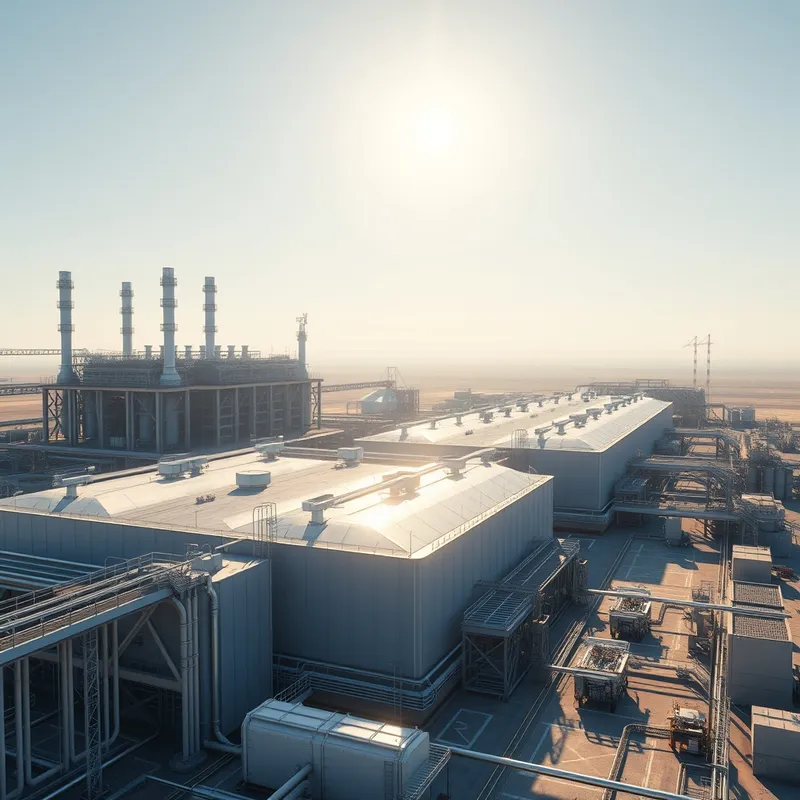
Politicians Bet on Grid Bottlenecks: Capital Rotates to Infrastructure
Power is the ultimate constraint of the modern digital economy.

While mainstream markets debate raw computing hardware, institutional insiders are aggressively positioning in off-grid energy infrastructure. Recent regulatory disclosure filings reveal significant capital deployment into alternative power generation providers right before massive earnings re-rates.
Artificial intelligence data centers and crypto mining operations face a shared structural crisis: traditional utility grids require years to approve heavy load connections. On-site power providers bypass this physical queue entirely by generating electricity at the point of consumption through specialized fuel cells.
"Grid access queues are turning sovereign compute capacity into a game of localized generation."

🔌 The AI Power Crunch Meets High-Conviction Flow
When high-profile political figures execute large option purchases during a localized sell-off, smart money takes notice. A prominent congressional household acquired up to $13.5 million worth of equities and long-dated call options options targeting alternative energy providers and semiconductor giants in late July.
Specifically, purchases encompassed 15,000 equity shares of Bloom Energy (BE) alongside long-dated call options structured at a $100 strike price expiring in June 2027. These entries occurred directly into market weakness, shortly before the company delivered quarterly revenue reaching roughly $1.07 billion—a 165% year-over-year surge—which immediately drove a 26.49% single-session price expansion.
Simultaneously, allocation was directed toward legacy chipmaking via 10,000 shares of Intel (INTC) and corresponding options. While semiconductor returns currently lag near $85.60, Wall Street consensus maintains a median price target of $116.84, representing a anticipated 36% upside trajectory.
🏛️ The Political Trading Playbook: A History of Front-Running Cycles
Before evaluating the infrastructure thesis, understanding how regulatory access creates asymmetric market timing requires observing traditional financial history. The intersection of legislative awareness and capital market execution is far from novel.

Consider the 1920s railroad expansion and public utility holding company booms, where individuals holding policy insight consistently accumulated infrastructure assets prior to public allocations. The mechanism remains identical today: statutory disclosures, such as those governed under the 2012 STOCK Act, provide retail investors with a delayed window into institutional positioning.
In my view, tracking these filings is not about chasing past gains, but identifying where policy and structural demand intersect before the public market catches on.
| Competing Force | The Irreconcilable Friction |
|---|---|
| Legacy Electrical Grids vs. High-Density Compute | Multi-year interconnect delay forces immediate pivot to on-site generation. |
| Short Sellers (Supply Chain FUD) vs. Record Revenues | Short claims on raw materials crushed by 165% top-line growth. |
| Legislative Transparencies vs. Delayed Public Execution | A 45-day reporting lag creates asymmetry between disclosure and entry. |
🔮 Microgrids as the Settlement Layer for Future Energy Demand
Building on this structural energy bottleneck, the future market landscape will increasingly treat private power generation as an asset class closely linked to decentralized technology. High-density data infrastructure cannot operate on speculative promises of future grid updates.
As computational demand continues to outpace infrastructure capabilities, localized power systems are poised to become essential components of the modern tech stack. Investors who recognize this shift early will be well-positioned to capitalize on the next wave of energy-driven growth.

The market is shifting capital toward off-grid energy providers as utility grids hit capacity limits. Securing localized power delivery will determine market leadership across high-density computing sectors. Early allocations toward localized fuel infrastructure represent a key strategic hedge against grid-level delays.
⚡ On-Site Power Generation: Electricity produced directly at the location where it is consumed, bypassing public utility transmission lines.
📜 STOCK Act: Federal legislation requiring U.S. lawmakers to publicly disclose personal financial transactions within a strict timeframe.
- If public utility interconnect wait times exceed 36 months → this triggers capital reallocation toward private microgrid equities.
- If quarterly corporate guidance revisions drop below 20% annual growth → this signals demand saturation across localized power providers.
- If long-dated call option open interest drops precipitously near expiration → this indicates institutional unwind of leveraged power exposure.
— — coin24.news Editorial
This analysis is synthesized from aggregated market data and institutional research insights. It is provided for informational purposes only and should not be construed as financial advice. Cryptocurrency investments carry high risk; please conduct your own due diligence before making any investment decisions.
Related Intelligence

Bitcoin Faces Warsh Jackson Hole Risk: Decoding eight years of Fed speeches to expose the dangerous liquidity illusion hiding behind Powell's shadow.

MicroStrategy Halts Purchases of BTC: Preferred Yields Force USD Hoard

Liquidity Drives Bitcoin Rally: Treasury buybacks outpace Fed rhetoric as structural capital flows dictate market momentum.

Nvidia Earnings Break AI Market Trade: Wall Street faces a high-stakes valuation reckoning as record capital demands collide with mounting credit risks.

Peter Schiff Bitcoin Capital Trap: The Hidden Risk of HODLing Through Speculative AI Realignments