Why Is the US Stock Market Crashing? 3 Reasons Behind the $2 Trillion Wipeout

The $2.5 Trillion AI Capex Shock: How Power Grid Politics and Hardware Fatigue Crushed Global Markets
When concentrated Capex assumptions collide with localized energy grids, paper wealth evaporates instantaneously.

Markets witnessed a historic unwind today as US equities wiped out approximately $2.5 trillion in market capitalization within sixty minutes of the opening bell. The sell-off saw the Nasdaq Composite tumble 5.3% into correction territory, while the Philadelphia Semiconductor Index plunged 11.2% in its sharpest intraday contraction since March 2020.
Even a temporary $114 billion liquidity drawdown from the US Treasury’s cash account at the Federal Reserve between October 27 and November 3 failed to cushion the shock. The failure of sovereign cash injections to offset fundamental valuation pressure underscores a structural shift across broader risk assets, including high-beta digital assets.
⚡ The Energy Bottleneck: How State Politics Intersected Tech Infrastructure
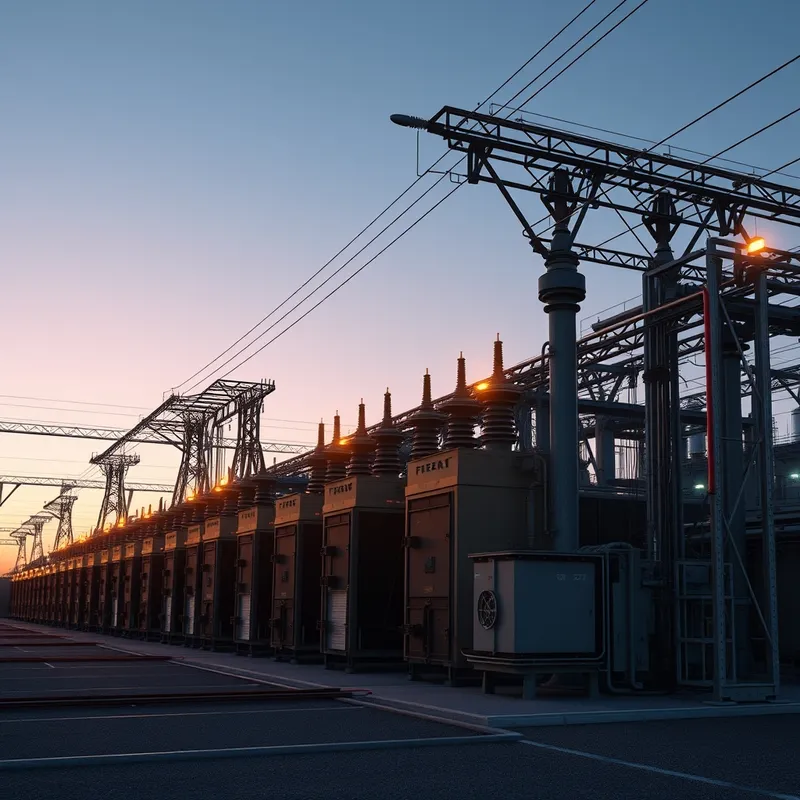
When hyper-scale technology platforms build compute clusters, they rely heavily on regional electrical grids and targeted tax abatements to sustain continuous high-voltage workloads. The structural breakdown in equities began when political shifts across major energy-producing states threatened this foundational framework.
Newly elected leadership across key industrial and energy corridors moved almost simultaneously to challenge unrestricted infrastructure expansion. Policy proposals calling for immediate construction moratoriums, mandatory utility bill protections for residential consumers, and full cost-internalization for utility hookups effectively disrupted the growth models of major hardware buyers. What the market is missing is that computational growth is ultimately bound by physical infrastructure; software balance sheets cannot bypass local power grids.

"The modern technology bull market did not run out of institutional buyers; it ran into the hard physical reality of regional electrical transformers."
In my view, institutional investors had priced artificial intelligence infrastructure as an frictionless asset class capable of scaling indefinitely. Building hyper-scale computational capacity without secured, long-term power delivery guarantees is like installing a jet engine into a wooden airframe—the chassis structural integrity gives way long before reaching maximum velocity.
📉 Semiconductor Microstructure and the Fragility of Capex Assumptions
Building on the political friction surrounding energy allocations, semiconductor manufacturers faced a secondary structural blow from degrading consumer hardware demand. The dual pressure of slowing consumer handset shipments and mounting questions over enterprise return-on-investment triggered an aggressive liquidation of leveraged long positions.
Weakness in mobile hardware revenue highlighted a broader margin compression across global supply chains. As memory component prices escalated, consumer electronics manufacturers passed costs onto end-users, depressing total unit volumes to historic multi-year lows. Consequently, major chipmakers suffered double-digit equity drawdowns as earnings visibility deteriorated overnight.
This dynamic exposed an uncomfortable reality regarding capital expenditure cycles. Enterprise hyper-scalers have committed record volumes of capital to build out high-performance compute clusters, yet monetization metrics remain speculative. When debt-funded expansion meets rising interest rates and operational delays, market participants rapidly reprice equity risk premiums.

| Market Segment | Observed Intraday Shock | Primary Structural Vulnerability |
|---|---|---|
| Semiconductor Giants | -7.0% to -15.0% | High exposure to data center Capex delays and supply chain costs |
| Mobile Chip Designers | 🔻 -11.8% to -26.0% (Rev Drop) | Plunging consumer handset demand and margin compression |
| 📈 Cybersecurity & Enterprise | -9.0% | 🆙 Correlation sell-off and enterprise software budget repricing |
| Sovereign Liquidity Buffer | +$114 Billion (TGA Drain) | Inability of routine Treasury spending to absorb equity repricing |
🏛️ Treasury Liquidity Drawdowns vs. Systemic Solvency Fears
The Treasury General Account serves as the federal government's primary checking balance at the central bank, where cash drawdowns inject immediate reserves directly into commercial banking channels. While fiscal authorities released significant capital into banking reserves via routine mandatory disbursements, this structural liquidity failed to arrest the market slide.
The failure of fiscal reserve expansion to stem equity liquidation reveals a critical market structural shift. Liquidity injections can resolve short-term funding squeezes, but they cannot force corporate balance sheets to purchase hardware when the operational path to profitability is blocked by regulatory and energy constraints. The capital did not vanish; it actively migrated out of risk-on assets and into defensive sovereign yields.
"Central bank liquidity can cushion bank balance sheets, but it cannot print megawatt-hours or generate enterprise software revenue."
This dynamic creates a serious spillover risk for the broader crypto ecosystem. High-beta assets, including Bitcoin and major smart-contract platforms, rely heavily on excess global fiat liquidity. When equity markets experience structural drawdowns driven by debt-financed Capex unwinds, institutional desks liquidate liquid crypto positions to satisfy margin calls across legacy portfolio books.
The unwinding of high-valuation technology equities represents a structural regime shift rather than a routine pullback. Capital allocation strategies will increasingly prioritize physical resource access over purely speculative technology roadmaps.

As state governments demand greater infrastructure cost parity, technology conglomerates will be forced to restructure their debt profiles. Investors should expect extended capital re-allocation away from pure hardware plays toward specialized energy infrastructure providers and efficient decentralized compute protocols.
⚖️ Treasury General Account (TGA): The operational account maintained by the US Treasury at the Federal Reserve; changes in its balance directly alter reserve levels within the commercial banking system.
⚡ Grid Moratorium: A legally enforced policy halt on new electrical connection approvals, preventing large-scale industrial facilities from securing high-voltage power access.
📉 Capex Compression: A period where major enterprise corporations systematically reduce capital expenditure commitments due to rising debt costs or diminishing profit margins.
- If state-level energy moratoriums extend across adjacent utility networks → institutional capital shifts defensive allocations toward balance-sheet-resilient cash flows.
- If high-yield corporate credit spreads expand past critical moving averages → debt-financed infrastructure build-outs face severe refinancing friction.
- If Treasury cash balances rebuild above quarterly target levels → risk-asset markets experience secondary capital compression forces.
This analysis is synthesized from aggregated market data and institutional research insights. It is provided for informational purposes only and should not be construed as financial advice. Cryptocurrency investments carry high risk; please conduct your own due diligence before making any investment decisions.
Related Intelligence

Geopolitical Shock Threatens Equities: The 120 Dollar Oil Shock

Manufacturing Surge Ignites Altcoins: The factory liquidity catalyst

Banks Rebuild Global Payment Rails: Quiet Institutional Takeover

Thailand SEC Hits Bitget Operations: Offshore Arbitrage Endgame
Bitcoin Miners Hold Key AI Power Moat: Mispriced Energy Advantage